Catalog All books
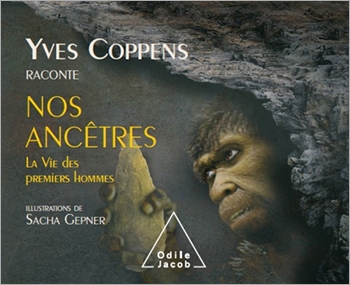
Yves Coppens
How the First Humans Lived
Beautifully illustrated and vividly told, this chronological history of the first humans covers the foremost events...
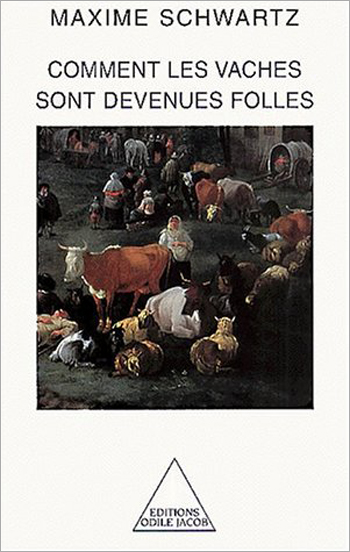
Maxime Schwartz
How the Cows Became Mad
Fear of the condition popularly known as mad cow disease has created a state of collective hysteria: some consumers are so afraid of contracting the disease that they have stopped eating beef; others havent stopped eating beef simply because they believe it is too late to do anything to prevent catching the illness. This book examines the outbreak of this disease and concludes with the reply to the question that is on everyones lips: Should we be afraid? Maxime Schwartz teaches at the Institut Pasteur, in Paris.
Chris Frith
How the Brain Creates Our Mental World
“…a fascinating guided tour through the elusive interface between mind and brain written by a pioneer in the field. The author’s obvious passion for the subject shines through every page.” V. S. Ramachandran
Libby Purves
How Not to Raise Perfect Children
All parents want to raise exceptional children : well-balanced, healthy, clean behind the ears and gifted for everything...
Stéphanie Hahusseau
How Not to Endure Any Longer Deconditioning Oneself from One’s Past
A book for a general audience and for health-care professionals that explains how behavioral disorders, can be hiding repressed issues of abuse
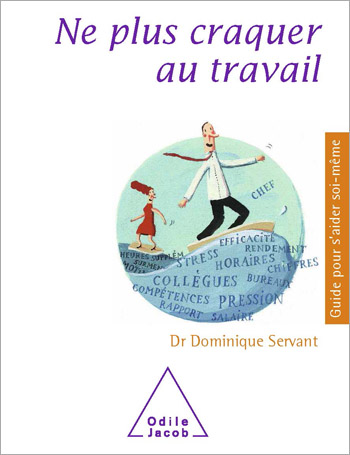
Dominique Servant
How Not to Crack Up at Work
What can be done, in a concrete fashion, to overcome work-related problems and to obtain professional satisfaction and fulfilment?
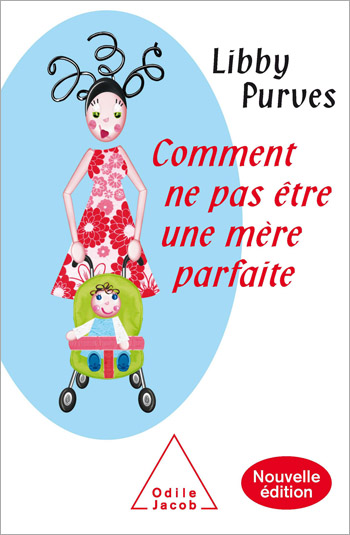
Libby Purves
How Not to be a Perfect Mother
Are you one of those perfect mothers or are you a real mother? Perfect mothers always smile, always have immaculate homes, never raise their voices....
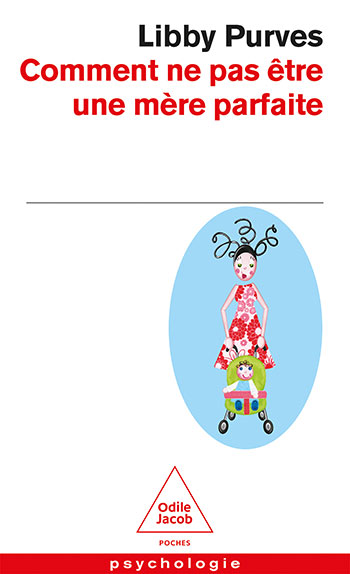
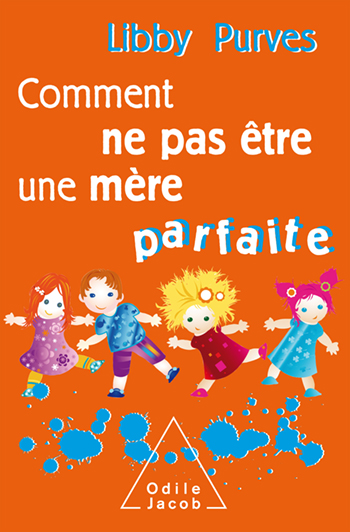
Libby Purves
How Not to Be a Perfect Mother
Are you a perfect mother or a real mother? Perfect mothers are forever smiling, their homes are immaculate, and they never raise their voices.
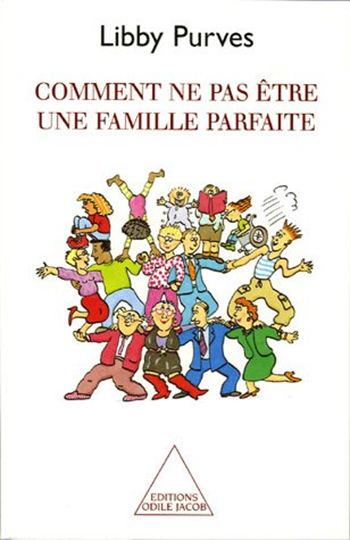
Libby Purves
How Not to be a Perfect Family
Perfect families, as we know, live in perfectly kept houses, have admirably well-organized vacations...
Sophie Tran Van, Emmanuel Goldenberg
How My Shrink Saved My Life A Patient and Her Therapist Open Up
A true story, that of encountering, and curing, a young patient at her wits end who staked everything on a final treatment with a therapist.
Jeanne Siaud-Facchin
How Meditation Changed My Life and Could Also Change Yours!
The book contains a wealth of information on mindfulness meditation, juxtaposing recent findings in the neurosciences with actual experiences.
Yasmine Liénard
How Meditation Can Help You to Really Be Yourself Meditation, a path to finding your true Self
Dealing with and resolving the widespread malaise and mental suffering that characterise the society we live in. A psychological approach inspired by Buddhism.
Barbara Demeneix
How Fossil Fuels Are Destroying our Health, the Climate and Biodiversity
Based on the most recent scientific studies, this book shows the interdependence between the climate, biodiversity and our health. It will give food for thought to environmentalists
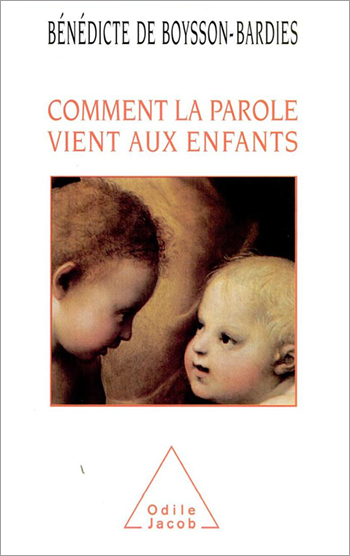
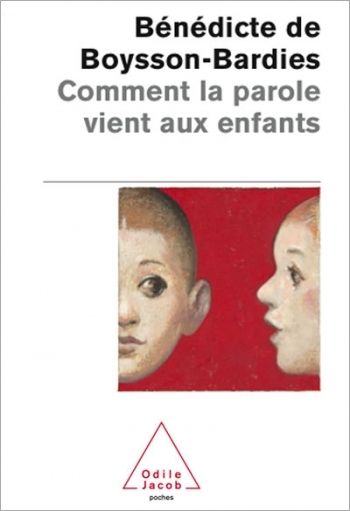
Bénédicte de Boysson-Bardies
How Does the Power of Speech Come to Children ?
How does the newborn, from his cradle, perceive the sounds that make up words? How does he hear and extract sounds, and then recognize, organize and analyze them? How does an infant come to understand and reproduce language? How does the power of speech come to children? Benedicte de Boysson Bardies invites the reader to follow the newborn from his first minute of life to his first sentence, retracing step by step the process of acquiring speech. As a psycholinguist, Benedicte de Boysson Bardies specializes in the acquisition of language by young children.
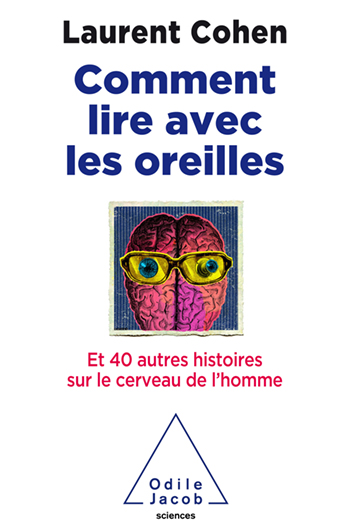
Laurent Cohen
How Do You Read With Your Ears? And 40 other stories about the human brain
The new book by one of our most brilliant neurologists gives us a concise and comprehensive overview of the latest advances in neuroscience. Forty short, strange, entertaining but always instructive stories about the functioning and dysfunctioning, ordinary or extraordinary, of our brain.
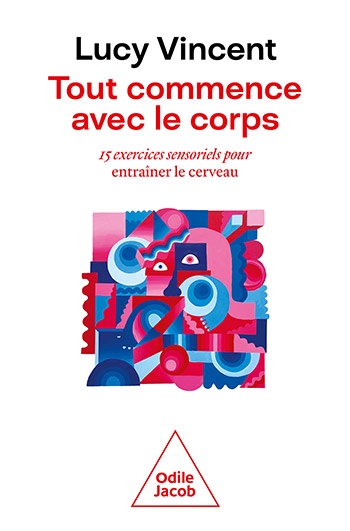
Lucy Vincent
How Do you Feel? 15 sensational exercises to reprogram your brain
The way we move and our intellectual, cognitive and emotional development are closely linked. It’s time to get back to the body.

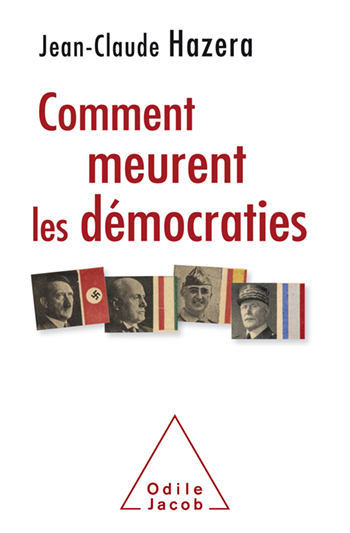
Jean-Claude Hazera
How Democracies Die Democracies now know they are mortal
How can one explain the fact that the greatest and the oldest democracies were able, in just a few weeks, sometimes in just a few days, to collapse?

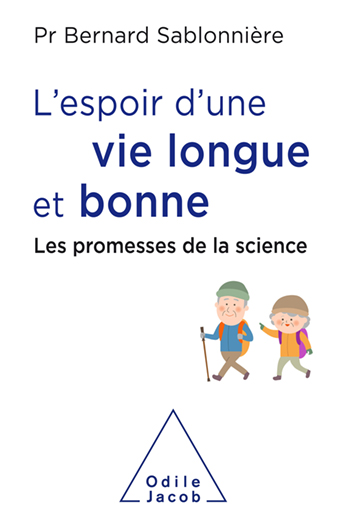
Bernard Sablonnière
Hopes For a Long and Good Life
A very accessible, clear book with rigorous scientific explanations, enabling the reader to see the differences between false miraculous recipes and true possibilities to act against aging.
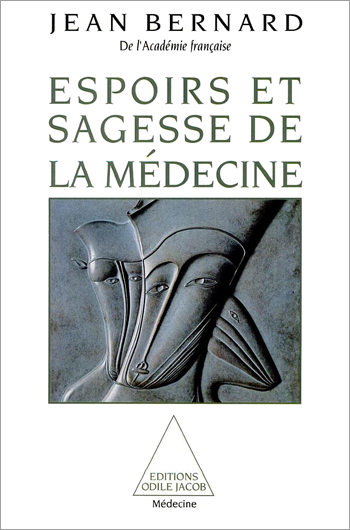
Jean Bernard
The Hopes and Modesty of Medicine
It is possible to predict the medical science of the twenty-first century. This book attempts to describe its essential traits. It will be inspired by two sentiments: hope and modesty. Hope that the misfortune of man will diminish thanks to the progress of medicine. A doubled modesty before the perverse effects of progress and the repercussions of unpredicted events.
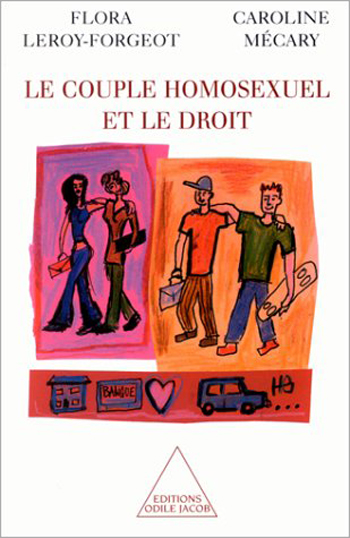
Flora Leroy-Forgeot, Caroline Mécary
The Homosexual Couple and the Law
"Should homosexual unions be recognised? Can foreign models of homosexual unions serve as a point of reference? What was the process of recognition? What could be the consequences? These are but some of the questions raised in this book, which provides all the necessary historical references concerning the social recognition of same-sex couples through the ages. Above all, it provides information on the various legal forms that such social recognition has taken in France as well as in other countries in Europe and North America. Flora Leroy-Forgeot and Caroline Mécary Flora Leroy-Forgeot is a researcher at the Institut Michel-Villey of Legal Studies and Philosophy of Law, at the University of Paris II. Caroline Mécary is a lawyer on the Paris bar and teaches at the University of Paris XII.
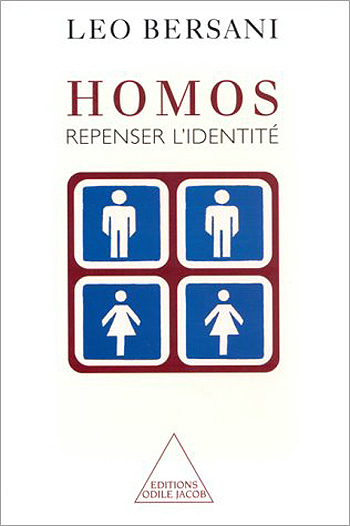
Léo Bersani
Homos Reassessing the Identity
What does it mean to be homosexual today ? Is it necessary to form communities and if so, why ? Is the primary aim equality in society such as it is, or the challenging of society itself ? Up to what point do homosexuals distinguish themselves ? Must there be a link between sexual claims and political dispute ? The gay and lesbian communities necessarily ask themselves these questions. On a wider scale, they also encourage a redefinition of the human being in contemporary societies. Already considered a classic in the United States, Homos presents an innovative, critical reflection on identity and the dangers in the withdrawal of a community from society. An expert in French literature, Leo Bersani is a professor at the University of California. He has notably published Baudelaire and Freud, and Theory and Violence.
Coralie Chevallier, Mathieu Perona
Homo sapiens In the Public Arena How to Adapt Public Policies to Human Psychology
Finding solutions to the problems citizens are confronted with requires taking into account our complex cognitive functioning as Homo sapiens. An original an innovative book.