
Catalog All books

Harlan Lane
When the Mind Hears (Coll. Opus) A History of the Deaf
This historical work recounts the struggle of deaf-mutes against prejudice, so that their rights and their language, sign language, were recognised. The people figuring in this book run from the abbey de l'Épée to Laurent Clerc, the spokesman for this community in the United States. A linguist, psychologist, and specialist in sign language, Harlan Lane teaches in Boston. He is the author of The Wild Child of Aveyron, which inspired the famous film by François Truffaut.
Françoise Héritier
On Violence A Seminar
How can violence can be put in the service of religion ? What political gains can be made from cruelty ? How does a belief system encompassing hatred end in the massacre of entire populations ? Through reflections on, amongst other things, the Bible, Muslim law, the situation in Colombia, the ethnic cleansing in the former Yugoslavia and the genocide of the Rwandan Tutsi, this book, the product of a seminar organised at the Collège de France by Françoise Héritier in 1995, benefits from a multi-disciplined approach in order to identify and understand a phenomenon which has occasionally plunged societies into a destructive frenzy. Françoise Héritier is a professor at the Collège de France where she heads the Laboratory of Social Anthropology.
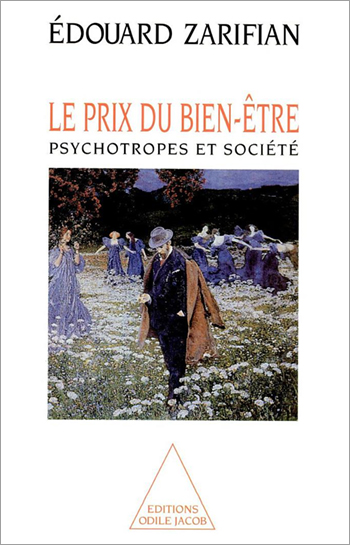
Édouard Zarifian
The Price of Well-being
Why is France one of the countries which has the highest rate of consumption of psychotropic drugs (tranquillisers, hypnotics, antidepressants, neuroleptics) ? Are the French more ill than other nationalities ? No, says Edouard Zarifian, it is rather that in this country, we offer medication for the least emotional trouble. It is thus a cry of warning that Professor Zarifian voices in this book, directly inspired by his celebrated report to the Ministry of Health which the public have not had access to up until now.

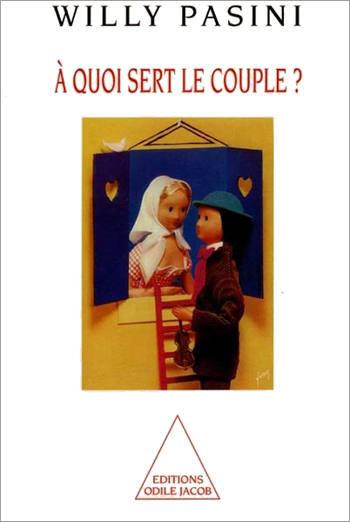
Willy Pasini
What use do couples serve ?
What use do couples serve? How can a solid couple be distinguished from a fragile one? Is 'living together' preferable to marriage? How can a healthy balance be maintained between intimacy and autonomy? How can passion be made to last? Can shaky bonds be salvaged? When should a therapist be consulted and how can the most suitable therapy for a specific case be chosen? At a time when the couple as a unit is undergoing a severe crisis, this book demonstrates that if every love story carries with it a risk, happiness within the couple is nevertheless possible. Willy Pasini is the founder of the European Federation of Sexology. He teaches psychiatry and medical psychology at the University of Geneva.
Jean-Baptiste Fages
History of Psychoanalysis after Freud (New Edition)
For all those who want an introduction in simple terms to psychoanalytical thinking this book highlights the great post-Freudian figures and principal movements. It examines in their turn the individuals who have made remarkable contributions (such as Sandor Ferenczi), those who were leaders and their spheres of influence (Adler, Jung, Lacan), the personalities united by their research area (for example the child psychoanalysis of Anna Freud and Mélanie Klein) or by cultural convergence (such as the New York School, the cultural tendency, etc.). Sociologist, and doctor of the history of philosophy, Jean-Baptiste Fages teaches at the Sorbonne in the capacity of CELSA.