
Catalog All books
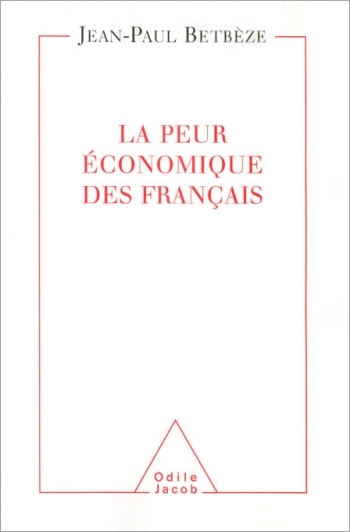
Jean-Paul Betbèze
French people's economic fear
France has economic possibilities, but it remains blocked in several areas. Although the country's leaders are aware of this, they seem unable to make the necessary reforms to move forward. France seems to be the prey of fears that paralyse it, but which have benefited a new class of economic as well as social rentiers who constitute a powerful economic, ideological and political group. These new rentiers are fully cognisant that the defence of their acquired privileges is not a practical long-term solution - as has been shown by rising deficits, decreased competitiveness and job losses. The author argues that it is necessary to make changes and implement reforms - and to do so it is essential to understand and overcome existing fears. It cannot be expected that everything will be changed at once, but some initial efforts must be made. The single reform that will fix everything does not exist, he says, but this is hardly an excuse for refusing to make a start. In other countries, programmes for economic reform are being implemented. Yet France is only beginning to consider such reforms. The object of this book is to provide a greater understanding of the present situation, in the form of a how-to manual. A ruthless analysis of some of France's psychological blocks, apprehensions and economic fears, this book can be regarded as a sort of economic psychotherapy. In addition, the author provides a critique of the false solutions that hinder modernisation and proposes his own solutions for change and reform. Jean-Paul Betbèze is a professor of economics at the University of Paris Panthéon-Assas and a member of the French prime minister's Council for Economic Analysis. He is a consultant to the president and the C.E.O. of a major bank and the author of Les Dix Commandements de la finance, which was awarded the Risques-Les Echos Prize in 2004.


Nicolas Mariot, Claire Zalc
Faced with persecution The Destruction of the Jews of Lens, 1940-1945
The history of the Holocaust in France, seen from an entirely new angle. This book does not simply describe the numerous possible attitudes: it aims to explain them.

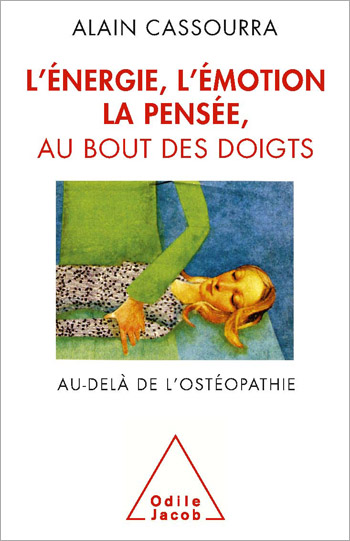
Alain Cassourra
The Energy, Emotion, Thought at your fingertips
From the body to the psyche, a new look at our aches and pains and what they mean.
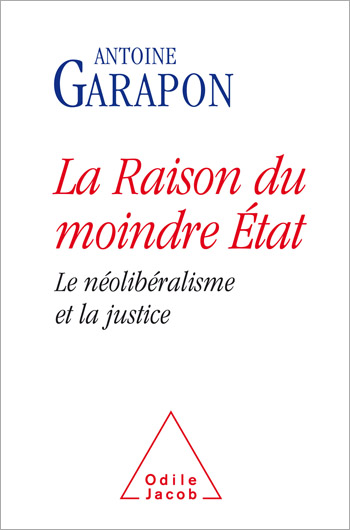
Antoine Garapon
Neoliberal Justice
An indispensable tool of critical thought to reach an independent opinion.

Thierry Lodé
Amorous Biodiversity Sex and Evolution
A new approach to evolution, linked to sexuality, for a better understanding of the history of biodiversity

Anka Muhlstein
Balzac at Table
A luminous essay of “literary gastronomy” for food lovers as well as for anyone interested in the nineteenth-century novel
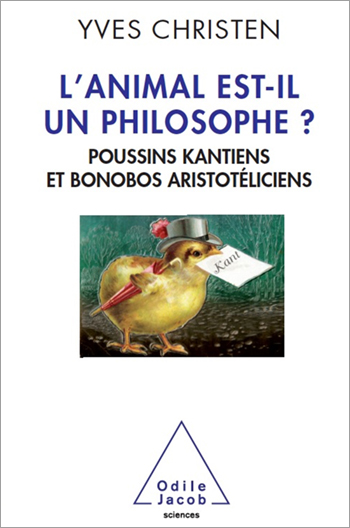
Yves Christen
Are Animals Philosophers? Kantian Chickens and Aristotelian Bonobos
Because animals, both human and non-human, are not the passive toys of the surrounding world but, on the contrary, active creators and because they are carriers of weltanschauung, I regard them as philosophers.
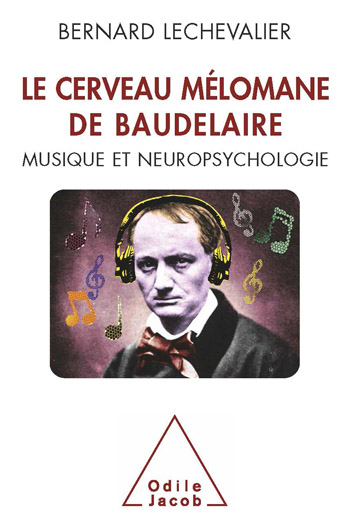

François Ansermet, Pierre Magistretti
The Enigmas of Pleasure Between Psychoanalysis and Neurosciences
A fascinating exploration of some contemporary forms of malaise, individual and collective: destructiveness, fanaticism, violence, as well as boredom, depression, dependence on gadgets, hyperactivity and addictions


Daniel Sibony
Islam, Phobia, Guilt
The uneasy relations between Islam and the West, analysed by the psychoanalyst Daniel Sibony