Catalog All books
Patrick Guyomard
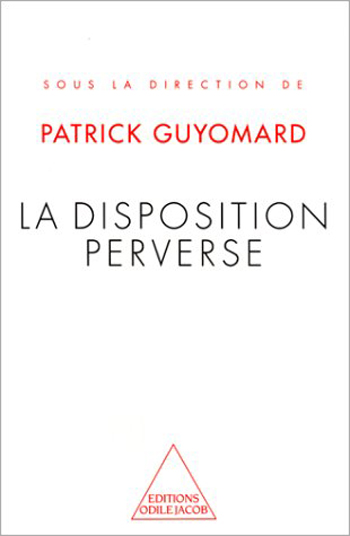
The Tendency for Polymorphe Perverse Behaviour
It is the child that Freud predominantly identifies as polymorphe perverse in his Three Essays on Sexual Theory, but he recognised that it is in fact a universally human and original trait. Certainly, clinical experience suggests that this characteristic is not solely reserved for children. It is evident in each psychoanalytical treatment as common to all mankind. It is also found in science and in politics. If the tendency for polymorphe perverse behaviour is a universally human trait, everyone who has human thought patterns is affected. It is for this reason that this book gathers together reflections from psychoanalysts, clinicians specialising in both adults and children, scientists, anthropologists, and historians in order to revaluate the perversion and give a new perspective on the controversies it can trigger. Organised by the Freudian Psychoanalyst Society.
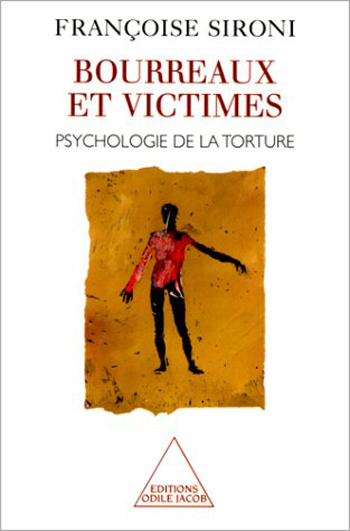
Françoise Sironi
Torturers and Victims The Psychology of Torture
To fight against torture, a simple denunciation of violence is not enough. It is necessary to help the victims find a "normal life" again. According to Françoise Sironi, this supposes an penetration into the mind of the torturer. How is it possible to influence someone to the point of forcing them to confess, reveal information and betray others? Physical violence alone does not suffice. What psychological methods are used ? The mechanisms of torture can only be understood by an examination of how torturers are "created". Françoise Sironi is a lecturer in clinical psychology and psychopathology at the University of Paris-VIII and director of the Georges Devereux Centre for Ethnopsychiatry at the University of Paris-VIII. She is also the co-founder of the Centre Primo Levi, which specialises in the treatment of victims of torture and collective violence.

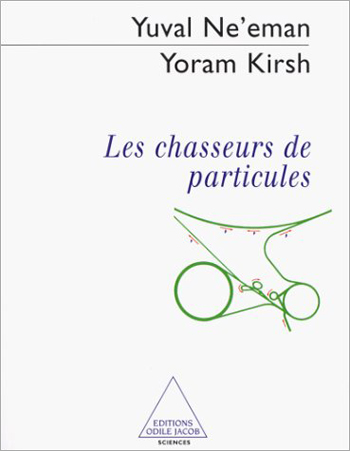
Yuval Ne'eman, Yoram Kirsh
The Particle Hunters
In this book, Yuval Neeman and Yoram Kirsh recount the story of particle physics in the twentieth century. They explain how physicists first discovered the various levels of the atom and then tried to describe its structure, culminating in the most recent "standard model". Assuming that the readers knowledge of physics is limited to basic notions such as energy, mass, and electrical charge, the authors explain the theory of relativity and the fundamental principles of quantum mechanics, which have guided physicists in their search for the ultimate particles of matter. Yuval Neeman teaches theoretical physics at the University of Tel Aviv. Yoram Kirsh teaches physics at the Open University of Israel.
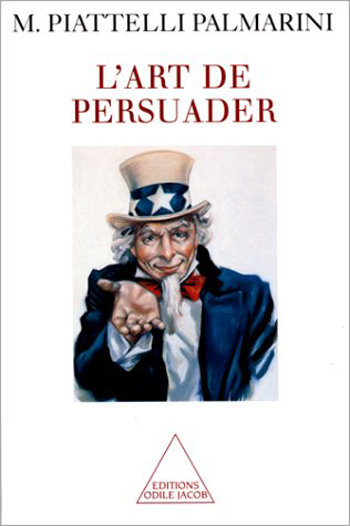
Massimo Piattelli Palmarini
The Art of Persuasion
In love as in politics, in history as in everyday life knowing how to persuade people is a valuable skill. How can one person convince another to renounce his or her opinion, freely and willingly, without appealing to authority, pity or trust? What essential rules must one follow, and what psychological motives must one play on in order to produce this effect ? Using the most recent discoveries in psychology and reasoning as a starting point Massimo Piattelli Palmarini show us how to anticipate the motivation and mental paths of others and so to be even more persuasive. Massimo Piattelli Palmarini is the head of the Department of Cognitive Sciences at the Instituto San Raffaele, in Milan.