Catalog All books
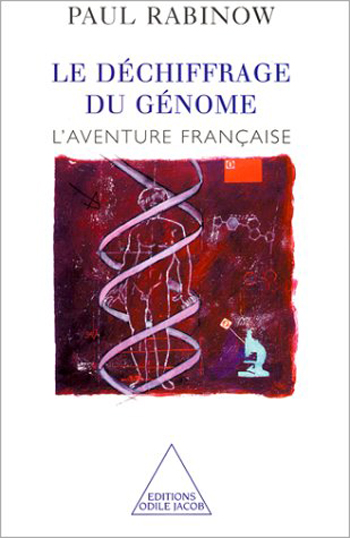
Paul Rabinow
French DNA: Trouble in Purgatory
This book offers some surprising viewpoints: an anthropologist tells the story of the human genome sequencing project; a scholar of the humanities follows the crisis between a French laboratory, the Centre dÉtude du Polymorphisme Humain (CEPH), and a U.S. rival; an American intellectual describes the politics within the French scientific community. This exceptional survey of the most recent research trends and of the state of international competition in the field of genetic research gives us a notion of how our future health care is being prepared. Paul Rabinow teaches anthropology at the University of California at Berkeley.
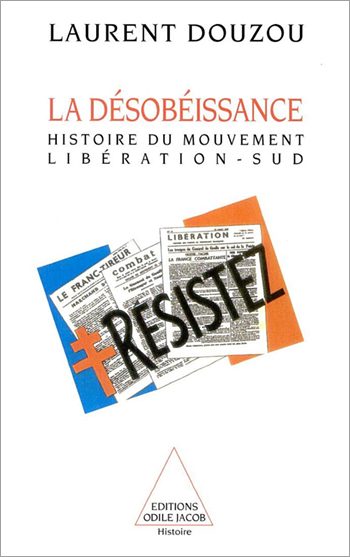
Laurent Douzou
Disobedience History of the Liberation Movement
Not everybody in the world become a Pétainist after the debacle and not all the resistance movements were infiltrated by communists working for the benefit of Moscow. Drawing upon numerous archives, Laurent Dazou explains why several men and women as diverse as a freewheeling navy officer, a normalien philosopher obsessed with maths, a young militant communist from the Latin Quarter and a founding banker from an anti-Semetic league, refused to crack under pressure, joining the ranks of disenchantment, and learning to resist by organizing themselves to fight and to blaze the trail of disobedience. Laurent Douzou is a specialist in the history of the Resistance.


Ann Premack, David Premack
The Baby, the Ape and Man
The issue of the differences and similarities between humans and their cousins the chimpanzees governs the definition of human identity. How can this difference be explained? By studying the learning process of chimpanzees and comparing it to that of children, Ann and David Premack were gradually able to discover a series of differences, none of which were radical but when put together showed a yawning gap between the two species. The results they obtained enabled them to reconstruct little by little the sum of the differences that make up human identity. Ann and David Premack are specialists in the study of primates.
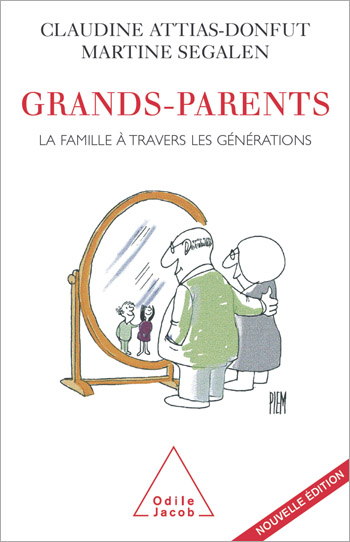
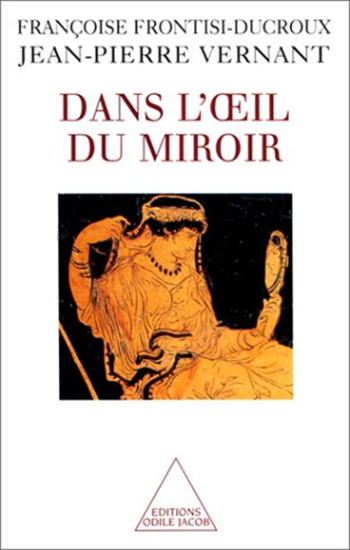
Jean-Pierre Vernant, Françoise Frontisi-Ducroux
In the Eye of the Mirror
How do the Greeks think of themselves ? Why do mirrors rarely reflect the true image of the person that looks into them ? And what image are they trying to project on others ? Formulated from an abundance of literature, iconography, and archeology, this book discusses the beginning foundations of individual representation. It is primarily a study of realities and appearances in an interpersonal society where social and personal status are dependant on how one is viewed and received in society. Secondly, the book analyses sexual identity and what it was in ancient Greece, through the study of a universal symbol, the mirror. Jean-Pierre Vernant and Françoise Frontisi-Ducroux teach at the College of France.
Samantha Besson
Inventing Europe Collège de France Autumn Colloquium 2021
This book was published under the direction of Samantha Besson, current occupant of the International Institutional Law Chair at the Collège de France



Dava Sobel
Galileos Daughter
This is a most unusual biography about Galileos daughter. Galileo Galilei (1564-1642) was regarded by Albert Einstein not only as the father of modern physics but as the father of all modern science. His eldest child, Virginia, mirrored Galileos own brilliance, industry and sensibility, and by virtue of these qualities became his confidante. Their correspondence, reproduced throughout the book, reveals their intense relationship, based on tender attachment and intellectual stimulation. The little-known life of Maria Celeste gives a human dimension to one of the major seventeenth-century scientists. His struggle with the Church is a lasting symbol of the conflict between science and religion. Galileos Daughter offers a powerful account of papal Rome and of Florentine intellectual life during the time of the Medicis. Dava Sobel is a writer who lives in New York

Yves Michaud
Equality and Inequalities Volume 10
This volume continues and prolongs the earlier, highly successful series "LUniversité de tous les savoirs" (365 lectures, published in six volumes by Editions Odile Jacob). Renowned specialists in their fields examine the inequalities that exist between countries as well as among individuals: unequal access to education, the technological gap, unequal treatment before the law, economic inequalities, and disparities concerning health and hygiene.

Denis Stora
Guide to the Main Medications and Their Generic Equivalents
Since October 2003, France's health-care system has required users to purchase generic medications, when these exist, if they wish their medical prescriptions to be covered. Physicians have agreed that 75% of all prescriptions will be for generic medications, and pharmacists are committed to making the necessary substitutions. Physicians, pharmacists and users will thus be utilising an increased volume of generic medications. Presented here in alphabetical order are the 150 molecules contained in approximately 1600 medications that are on the market today. More than a list of generic equivalents, this is an intelligent guide to medications. Each molecule listed is described with its pharmacological activity, therapeutic indications and contra-indications, dosages and major recommendations. This is a highly useful pedagogical guide, since brand names will gradually disappear in favour of their chemical names (paracetamol instead of Doliprane, fluoxetine instead of Prozac). Denis Stora, the holder of a doctorate in pharmaceutical studies, has been a licensed pharmacist for twelve years. He is a teacher and the author of numerous practical books for nurses and pharmacists.

Mario Bettati
The Drug Trade Why Drug Trafficking Must be Internationally Controlled
An up-to-date review of international drug rings and of the legal and administrative measures to combat them



Barry Eichengreen
Exorbitant Privilege The Rise and Fall of the Dollar and the Future of the International Monetary System
As the dollar keeps falling, and in the run-up to the G20 summit, what are the options to reform the international monetary system? Barry Eichengreen urges the creation of a multipolar system

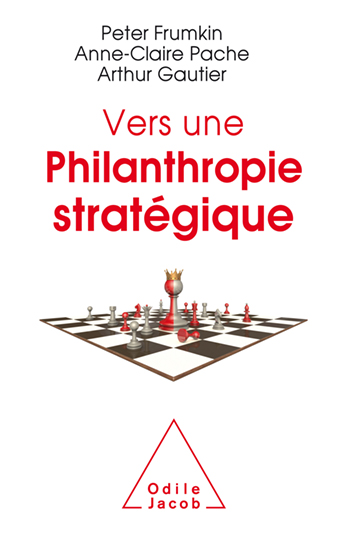
Peter Frumkin, Anne-Claire Pache, Arthur Gautier
Philanthropy as Strategy
Within a French context marked by the polemics created by the fire of Notre-Dame, this book, the first on the subject in France, has the potential to become the work of reference on the subject.
Daniel Sibony
Shakespeare
An author popular with readers interested in psychoanalysis and books about literature. A highly original and exhaustive examination of one of the world’s most popular playwrights.



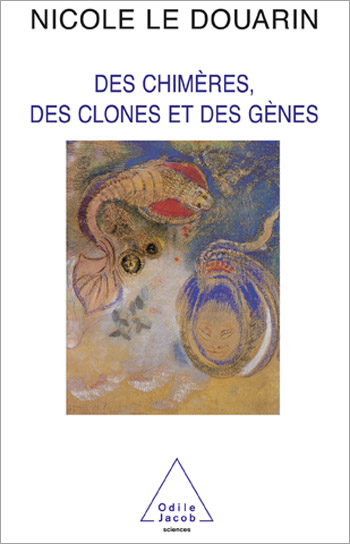
Nicole Le Douarin
Dreams, Clones and Genes
This book affirms that we are at the dawn of a new type of medicine which will no longer be concerned only with palliative measures and repairs, but will also be capable of regenerating diseased tissues via the introduction of embryonic cells. This major upheaval will oblige us to reconsider the meaning of the individual and of life itself. Nicole Ledouarin teaches at the Collège de France.



Alain Berthoz, Claude Debru
Anticipating and Predicting A Colloquium — From Thought to Mental Journey
What are the psychological and neurobiological mechanisms that enable humans to anticipate events and actions?

Vincent Trybou, Baptiste Brossard, Marianne Kedia
Self-harm Understanding and Treatment
The first book to offer a complete and pragmatic approach to the treatment of self-harm behavior