
Catalog All books
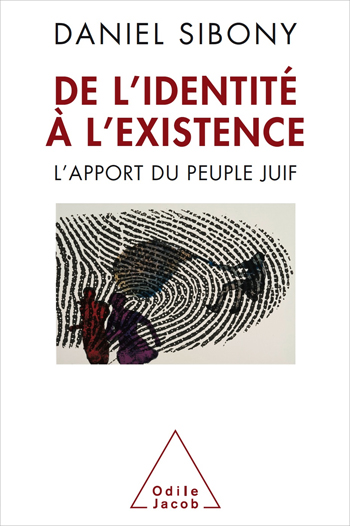
Daniel Sibony
From Identity to Existence The Jewish People’s Contribution
How the uniqueness of the Jewish people can help us all —Jews and non-Jews
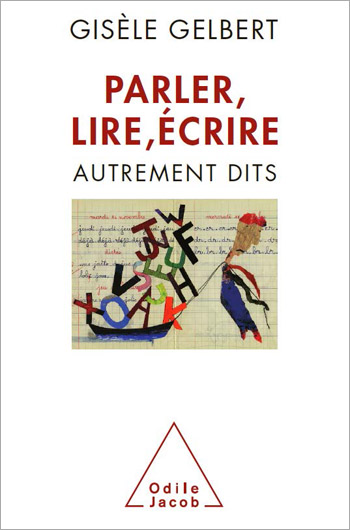
Gisèle Gelbert
Speaking, Reading, Writing In Other Words
A completely original approach to aphasic language disorders...
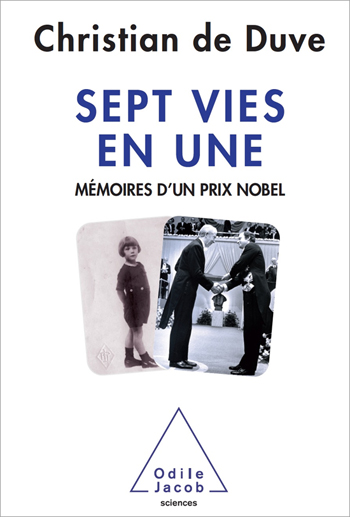
Christian de Duve
Seven Lives in One Nobel Prize winner's Memoirs
The life of an exceptional Nobel Prize winner, from childhood to scientific recognition and acclaim
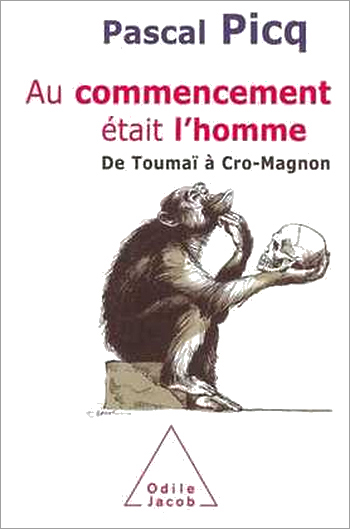
Pascal Picq
And at the Beginning there was Man...
In forty years, the genealogical tree of human evolution has grown so extensively that it now spans six million years. But fossils, the tree of evolution and the story they tell openly challenge all prevailing ideas about evolution; and though they have been shaken, these ideas have barely begun to change. In this book, Pascal Picq examines concrete, existing proof of our origins and then goes on to offer a new view of the human position in the evolutionary process. Pascal Picq is a senior lecturer in paleo-anthropology and prehistory at the Collège de France.

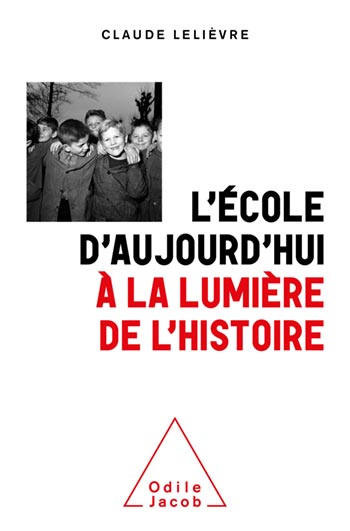
Claude Lelièvre
School Today in the Light of History
A light-hearted and fascinating review of all that we thought we knew about School
Patrick Guyomard
The Tendency for Polymorphe Perverse Behaviour
It is the child that Freud predominantly identifies as polymorphe perverse in his Three Essays on Sexual Theory, but he recognised that it is in fact a universally human and original trait. Certainly, clinical experience suggests that this characteristic is not solely reserved for children. It is evident in each psychoanalytical treatment as common to all mankind. It is also found in science and in politics. If the tendency for polymorphe perverse behaviour is a universally human trait, everyone who has human thought patterns is affected. It is for this reason that this book gathers together reflections from psychoanalysts, clinicians specialising in both adults and children, scientists, anthropologists, and historians in order to revaluate the perversion and give a new perspective on the controversies it can trigger. Organised by the Freudian Psychoanalyst Society.
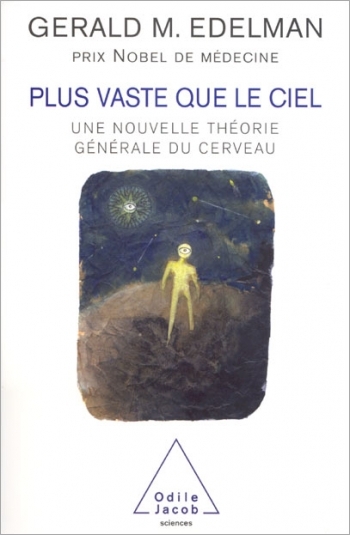
Gerald M. Edelman
Wider than the Sky
The brain is wider than the sky, For, put them side by side, The one the other will include With ease and you beside, wrote the American poet Emily Dickinson in the mid-nineteenth century. The fundamental mechanisms governing mental life are now the subject of scientific study. In this book, Gerald Edelman examines a major aspect of the mind - consciousness. How can the firing of neurons give rise to subjective sensations, thoughts and emotions? How can the disparate domains of mind and body be reconciled? A scientific explanation of consciousness must take into account the causal connections between these two domains. Such a theory must show how the neural bases of consciousness appeared during the evolutionary process and how certain animals developed consciousness. These are some of the key issues that Gerald Edelman examines here. He shows that consciousness cannot be located in a specific area of the brain, because it is a process linked to how the brain functions as a whole, to its wealth of connections and to its great complexity. The brain, he argues, is not a kind of computer. Edelman is regarded as one of the greatest theoreticians of the brain, and his notion of consciousness dominates all discussions on the subject among the international scientific community. This book offers the most accessible version of his theories that is available today. The winner of the 1972 Nobel Prize in Medicine, Gerald Edelman heads the Institute for Neurosciences, in La Jolla, California.