
Catalog All books
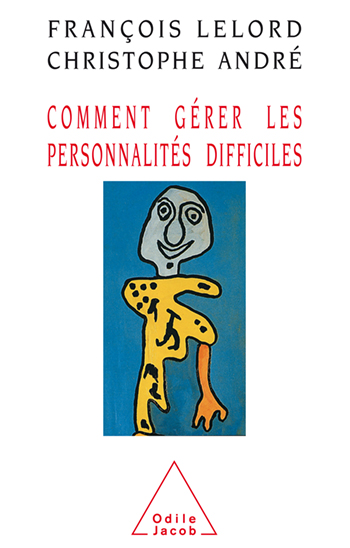
François Lelord, Christophe André
How to Manage Difficult People
In this book, François Lelord and Christophe André provide advice drawn from their own vast experience, on how to better understand and manage these difficult personalities.

Jean-François Mattei
The Rights of Life
Medically assisted procreation, prenatal diagnostic, organ transplants, genetic testing : all are part of the spectacular progress characteristic of scientific and medical research in the last few years. These new techniques confront us with totally new situations and oblige us to take responsabilities and make difficult choices. Should we do these things just because we can ? Who should decide what to do and on what criteria ? The individual or society ? Doctors or politicians ? This book invites us into a stimulating and incisive thought process concerning the future of medicine.
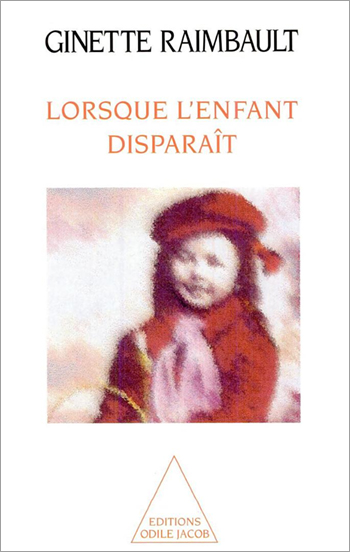
Ginette Raimbault
When a child disappears
When a child disappears, the parents of that child have to first of all relearn how to live their lives. How can they face up to this task ? What routes, both conscious and subconscious do they take in order to do this ? Ginette Raimbault explores the mental processes of these devastated parents using the spontaneous testimonies of those who have relied on writing to get them through their bereavement such as Victor Hugo who mourns Léopoldine, and Isadora Duncan and Geneviève Jurgensen who both lost two children at once. Through the anguish of these famous examples, this book movingly asks the universally relevant question : what does a child mean for the parent ?
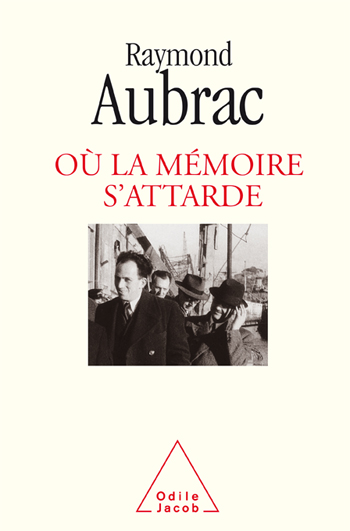
Raymond Aubrac
Where the memory lingers
Discreet by nature and secretive by necessity, Raymond Aubrac has been closely involved in more than half a century of history, in France and abroad. Within France, he is one of the great figures of the Resistance, and is one of the last survivors of the meeting at Caluire, on June 21st 1943, in the course of which Jean Moulin was arrested. A confidant of Ho Chi Minh, Raymond Aubrac also played a central role in the secret negotiations which accompanied the Vietnam war. In this book he gives a new, personal account of these events and others, including his meeting with de Gaulle, his role in the reconstruction of France, and his work at the heart of the UN.

Harlan Lane
When the Mind Hears (Coll. Opus) A History of the Deaf
This historical work recounts the struggle of deaf-mutes against prejudice, so that their rights and their language, sign language, were recognised. The people figuring in this book run from the abbey de l'Épée to Laurent Clerc, the spokesman for this community in the United States. A linguist, psychologist, and specialist in sign language, Harlan Lane teaches in Boston. He is the author of The Wild Child of Aveyron, which inspired the famous film by François Truffaut.
Françoise Héritier
On Violence A Seminar
How can violence can be put in the service of religion ? What political gains can be made from cruelty ? How does a belief system encompassing hatred end in the massacre of entire populations ? Through reflections on, amongst other things, the Bible, Muslim law, the situation in Colombia, the ethnic cleansing in the former Yugoslavia and the genocide of the Rwandan Tutsi, this book, the product of a seminar organised at the Collège de France by Françoise Héritier in 1995, benefits from a multi-disciplined approach in order to identify and understand a phenomenon which has occasionally plunged societies into a destructive frenzy. Françoise Héritier is a professor at the Collège de France where she heads the Laboratory of Social Anthropology.