Catalog All books

Alain Minc
France in the Year 2000
What are the biggest challenges of the year 2000? What great economic and social actions will France have to take in the years to come? The answer: assuring growth without inflation capable of favoring employment; making the state-providence more efficient, and adapting its productive system to the internationalization of trade. Edouard Balladur asked Alain Minc to address these key problems of French society and this work, an instant classic, will provoke reflection from a wide array of different personalities. A co-publication with La Documentation Francaise.









Pascal Lamy, Nicole Gnesotto
where is the world going? Trump with Us
Fascinating and accessible analyses to better understand today’s world and its upheavals...

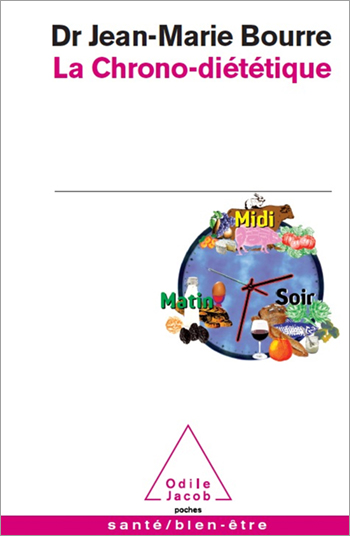
Jean-Marie Bourre
Chrono-dietetics
For an optimum absorption of the nutrients our bodies require we must pay close attention to our biorhythms
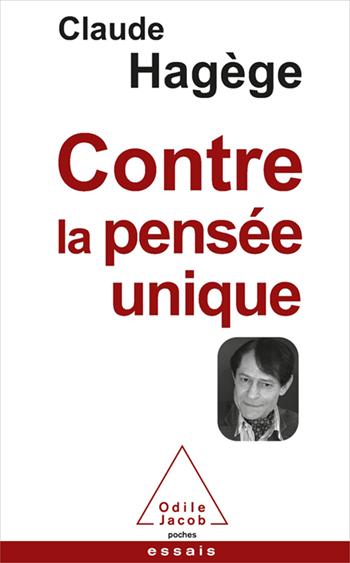
Claude Hagège
Against Uniform Thinking
An eminent linguist and popular media personality who has mastered more than 50 languages, Claude Hagège is the sole figure with the authority to defend linguistic diversity and to make his voice heard.





Robert Darnton
Mesmerism and the End of the Enlightenment in France
At the beginning of 1778, Franz-Anton Mesmer arrived in Paris where he set about expounding his rather exotic theory - that the universe was swimming in a fluid which was responsible for occurences such heat, light, electricity and magnetism, but it was this fluid's relevance to medicine which he wished to highlight. In order to restablish health and man's harmony with nature he undertook strange healing sessions which became the origins of an extraordinary craze. Quickly, mesmerism became a disguised political theory. In demonstrating the links of mesmerism to politics, and the scientific notions of the age, Robert Darnton provides in this work a decisive contribution to the study of the diffusion of ideas in French society at the end of the 18th century. Robert Darnton is a professor at the University of Princeton

Robert Axelrod
How to Succeed in a Selfish World A Theory of Cooperative Behaviour
How can one succeed in a world of selfish people ? This is the question at the heart of the work of Robert Axelrod because if cooperation is the social cement of life, it is also one of its greatest mysteries. Basing his analysis on Game theory, in addition to the trench warfare of 1914-1918, the behaviour of legislative bodies, or international negotiations, Robert Axelrod explores the reasons, in turn simple and surprising, which allows cooperation to take hold even in the worst situations. Strategists, negotiators, decision makers, managers, social reformers, people motivated by common sense, honesty or equally dishonesty everyone will find food for thought in the pages of this book, which is already considered as a classic. An expert in Game theory, Robert Axelrod teaches Political Sciences at the University of Michigan, in the United States.