Catalog All books
Collectif
The Judicial System as a Public Service
Should the judicial system be reformed ? This question is at the centre of lively debates. It is to institutions such as the chancellery, courts of law and magistrates, that it falls to forge the judicial system, the deliverer of order, equilibrium and social cohesion. However, these institutions seem today to be weak, both in terms of organisation, and in methods of recruitment. It is thus necessary that changes are made. This is especially so as the duty of the judicial system is to operate in such a way that all individuals remain citizens, by delivering them judgements in a reasonable timescale which are certain to be respected. In this respect, it is a public service. The objective of this book is to assess the forms and the effects of a decisive reform in order to benefit our society.
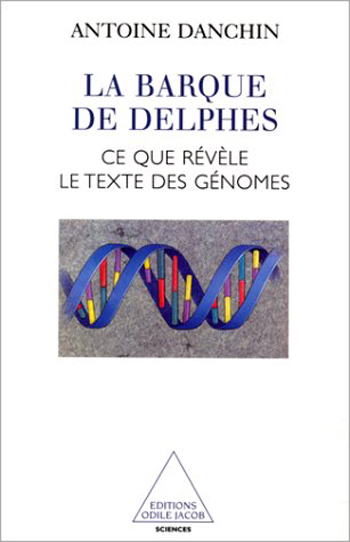
Antoine Danchin
The Delphic Boat What Genomes Tell Us
What is it that constitutes the unity and identity of a living creature ? This is the fundmental question of biology. The recent sequencing techniques provide a completely new response to this question, notably thanks to the knowledge of whole genomes. Antoine Danchin establishes a clear picture of this important biological discovery. He shows in particular that, just like the boat of Delphi, life is beyond prediction, and at the same time has an infinite capacity to create the unexpected. Antoine Danchin is the director of the Department of Biochemistry and Molecular Genetics at the Institut Pasteur.

Aldo Naouri
Girls and their Mothers
According to the author, a powerful current of violence flows between daughters and their mothers.

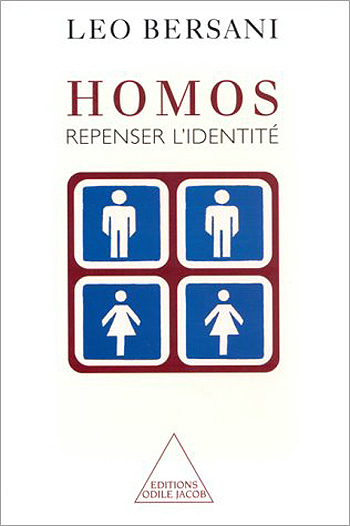
Léo Bersani
Homos Reassessing the Identity
What does it mean to be homosexual today ? Is it necessary to form communities and if so, why ? Is the primary aim equality in society such as it is, or the challenging of society itself ? Up to what point do homosexuals distinguish themselves ? Must there be a link between sexual claims and political dispute ? The gay and lesbian communities necessarily ask themselves these questions. On a wider scale, they also encourage a redefinition of the human being in contemporary societies. Already considered a classic in the United States, Homos presents an innovative, critical reflection on identity and the dangers in the withdrawal of a community from society. An expert in French literature, Leo Bersani is a professor at the University of California. He has notably published Baudelaire and Freud, and Theory and Violence.
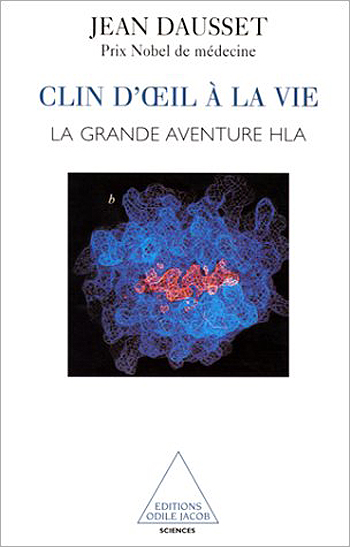
Jean Dausset
A Nod in the Direction of Life The Great HLA Adventure
Jean Daussets finding that white blood cells play an active role in immunization won him the Nobel Prize for Medicine and opened a new area of biological investigation, both in pure and in applied research. The HLA system harbours a unique peptide which may be regarded as the essence of the self in opposition to everything else much as the pineal gland was regarded as the seat of the soul by Descartes. The distinction between the self and the non-self is an essential one in immunology where an individuals defensive system must fight off foreign bodies while at the same time defending his or her own system. In his book, Jean Dausset recounts the story of his discovery and introduces the reader to other fascinating aspects of his life and work.