
Catalog All books
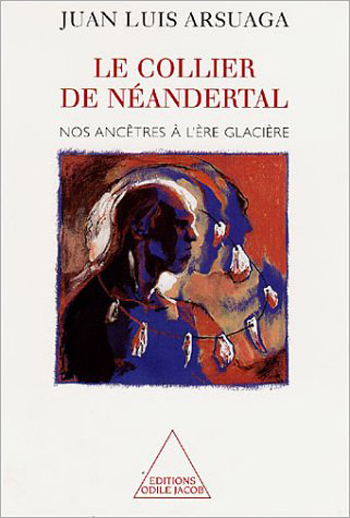
Juan Luis Arsuaga
The Neanderthal Necklace Our Ancestors of the Ice Age
The conflict between Neanderthal man and Homo Sapiens during the European Ice Age is told here by Juan Luis Arsuaga, one of Europes most eminent pre-historians. Why did the stronger, better adapted Neanderthal become extinct, while our ancestors flourished? How can this critical phase in human development be explained? The tragic story of the extinction of this species so like and yet unlike our own can help us to understand our human strengths and assets. It would seem that we are here because Neanderthal man is dead... Juan Luis Arsuaga is a professor of palaeontology at the University of Madrid and a lecturer at University College London.
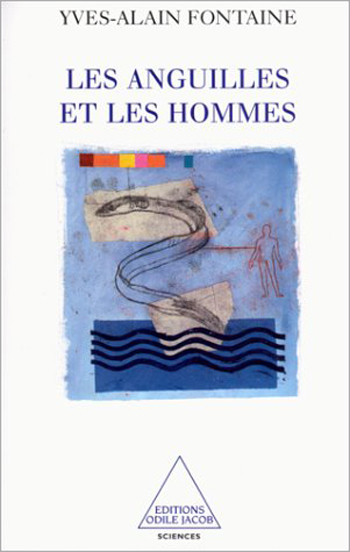
Yves-Alain Fontaine
Eels and Man
In this book, the author, an expert in his field, describes the most fascinating stages in the eels biological cycle, its migrations and the modifications it undergoes during its life. Eels interest us not only because of their life and breeding cycles, but also because of the questions they raise concerning our ideas about evolution. Does the notion of adaptation suffice to explain everything the eel has become? Doesnt a living creature maintain a certain amount of independence in relation to the world that surrounds it? Or is the relationship between a living creature and the environment which surrounds it more complex that we have generally realised ?
Anne Marcovich
What do societies dream of ?
Why do societies change? How, through countless transformations, do they manage to maintain their own identity? With the help of the many resources provided by the social sciences, history, sociology, social psychology, anthropology and economics, Anne Marcovich has tried to identify the principle of change within a framework of continuity that characterises the evolution of societies. Anne Marcovich is a researcher in the social sciences.

Willy Pasini, Donata Francescato
The Courage to Change
What would happen if, instead of stifling our dreams, we took the desire to change seriously? What would happen if we really gave ourselves the means with which to transform our lives and ourselves? Willy Pasini, a psychotherapist, and Donata Francescato, a social psychologist, have brought together their respective skills in order to show us how to succeed in making both our inner and outer transformations. Willy Pasini, a psychotherapist, teaches psychiatry and psychology at the University of Geneva. Donata Francescato is a psychologist and teaches at La Sapienza University, in Rome.
Flora Leroy-Forgeot, Caroline Mécary
The Homosexual Couple and the Law
"Should homosexual unions be recognised? Can foreign models of homosexual unions serve as a point of reference? What was the process of recognition? What could be the consequences? These are but some of the questions raised in this book, which provides all the necessary historical references concerning the social recognition of same-sex couples through the ages. Above all, it provides information on the various legal forms that such social recognition has taken in France as well as in other countries in Europe and North America. Flora Leroy-Forgeot and Caroline Mécary Flora Leroy-Forgeot is a researcher at the Institut Michel-Villey of Legal Studies and Philosophy of Law, at the University of Paris II. Caroline Mécary is a lawyer on the Paris bar and teaches at the University of Paris XII.
Pierre Mélandri, Justin Vaïsse
The Middle Kingdom The United States and the World Since the End of the Cold War
"No one would deny the central role played by the U.S. More than any other nation, it has shaped the world we live in and will continue to do so for several years to come. For this reason, it is essential to judge its actions abroad in a manner that is as free of clichés as it can. Our goal was to present the reader with as complete a picture as possible of U.S. presence in the world, without neglecting any episode or omitting any angle that could be insightful." Pierre Mélandri and Justin Vaïsse Justin Vaïse is a historian. Pierre Mélandri teaches at the University of Paris III-Sorbonne Nouvelle.

Paul Garde
The End of the Century in the Balkans
Fortunately, the situation is less tragic in 2000 than it was in 1992. There is no more fighting. And yet, none of the problems have been resolved and several conflicts remain pending. In two regions, Bosnia and Kosovo, peace is maintained thanks to a powerful international presence; hundreds of thousands of refugees have no hope of returning to their homes; most of the main criminals of war are still at large; and intolerance and poverty are widespread. It is thus necessary to make a correct diagnosis of the problems of the region, where surprises are always possible. I would be happy if this book could help contribute toward this. Paul Garde Paul Garde is a former professor of Slavic languages and literature at the University of Provence, France.
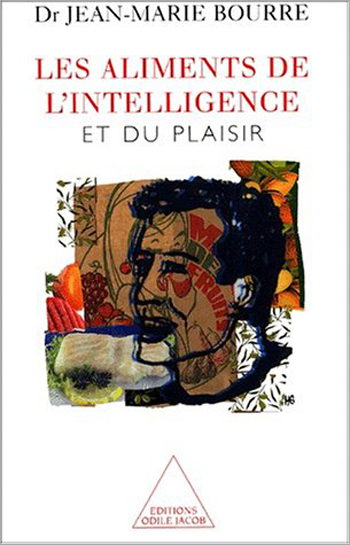
Jean-Marie Bourre
Food for Thought And Pleasure
"Why do we eat? For our intelligence capacity, aswell as the harmonious functioning of the body. Yes, for the brain you must eat eggs, charcuterie, red meat, as oily fish as possible, accompanied by fruit and vegetables, and complemented by wine and beer. Yes, you must derive pleasure from eating. And no, you don't need to become a herbivore, which would only serve to hinder the development and operation of your brain!" Jean-Marie Bourre