Catalog All books

Christian Boitard
Overcoming Diabetes insulin
A clear and passionate account to better understand diabetes and the history of this illness.

Olivier Fréget
The Competition: An Idea that Is (Still) a Novelty in Europe and in France…
European competition law, in support of pluralism

Marie-Frédérique Bacqué
Living through Bereavement
All civilizations have therapeutic methods to deal with death and the period of mourning. Not ours. By hiding away the experience of death, aren't we becoming more helpless, more disoriented than ever?
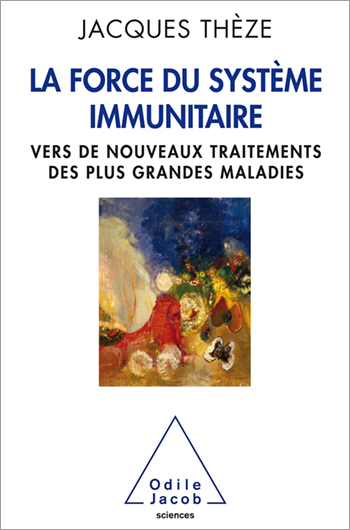
Jacques Thèze
The Immune System’s Strategies Developing New Treatments for Major Diseases
Ground-breaking approaches to the treatment of major diseases
Philippe Desan
Montaigne The Self, the Other and Time
A reference book by one of the best Montaigne specialists in the world.
Alberto Eiguer
From Sexual Perversions to Moral Perversions Pleasure and Domination
What is perversion really about? What does a pervert seek? The world of perversions is not only a mirror world of physical pleasure, it also serves as a mechanism of power in a relationship which the pervert uses to impose his/her rule on another, by denying his/her existence. Does the pervert seek pleasure or power? Alberto Eiguer is a psychoanalyst specialising in family therapy.

John Cleese, Robin Skynner
Life and How to Survive It
In Life and How to Survive It, the authors have given us more than 400 pages of lively, tonic humour. Their subject is the joy of living and the conditions required to enjoy life to the full. Proceeding by ever-larger concentric circles, the authors successively discuss happy families (brilliant!), companies that allow their employees to fulfil themselves, and finally countries where life is pleasurable. This is British humour at its best, brilliantlyand hilariouslyillustrated. British comic actor John Cleese is famous for the cult television series Fawlty Towers, which he co-authored and starred in. Robin Skynner is a psychotherapist specialising in group therapies.



Christian Stoffaës
Ends of Worlds
An economic pulse sustains life in the modern world. C. Stoffaës investigates the highs of economic boom and the lows of paralyzing depression. He presents an historical survey of our dominant technological and mental structures from Keynes to Schumpeter, from the steam engine to the microchip, from the American golden age to the new Pacific prosperity.

Tobie Nathan, Alain Blanchet, Serban Ionescu, Nathalie Zajde
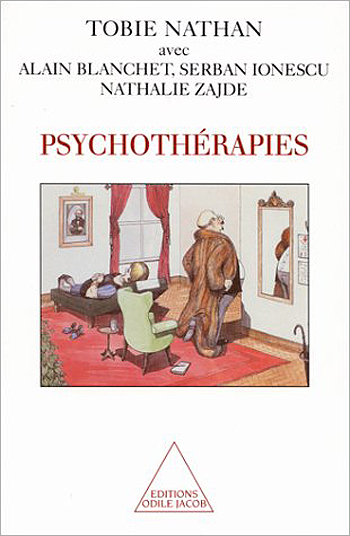
Psychotherapies
This book is a rigorous presentation of what is now called the Nathan method, that is to say the therapeutic methods (using objects or discussion) which result in a cure through that influence. Using the differences between Western and African techniques as a starting point, he explains how following a psychotherapeutic treatment, or consulting an African healer constitutes an affiliation to a certain group. That is not to say, however, that all therapeutic methods are the same. On the contrary, this book tries to define some kind of criteria of evaluation which is conducive to an informed choice. The two main elements of psychotherapy, the therapy and the trauma, in other words the object and the motivation of the sick person for taking the step of getting treatment, are re-examined in this new context.


Alain Dupas
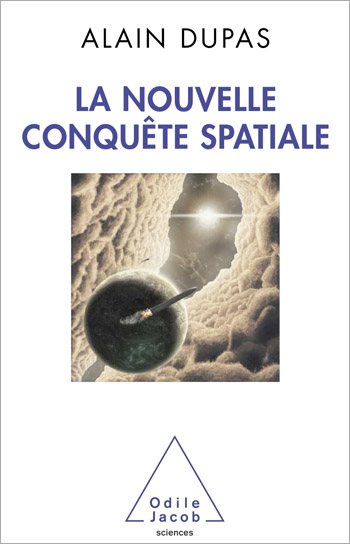
The New Spatial Conquest
The desire to explore our solar system, with robots and especially with men and women, has become a global one. A new page in the lengthy history of relations between humans and the cosmos is already being written.
Denis Knoepfler
Narcissus and the Greek City
In this remarkable, erudite and beautifully written investigation, a renowned expert in Ancient Greek history sets out to uncover the true historic origins of a familiar figure from Greek mythology — Narcissus.

Jacques Ninio
The Print of the Senses
What is perception? What is the world around us really like? These are the questions that Jacques Ninio examines here, in this completely revised new edition of his highly successful work.
Élisabeth Dufourcq
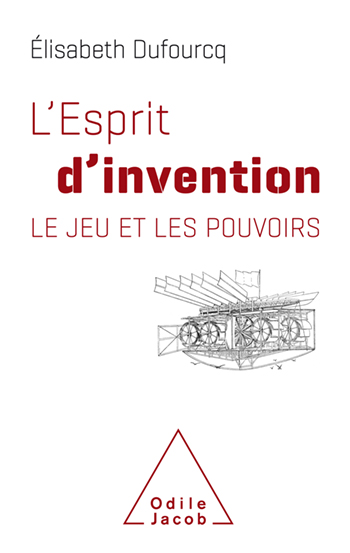
The Spirit of Invention Power Play
A masterful panorama of the great scientific inventions. Much more than a history of science, an inquiry into the scientific mind, the logic of discoveries, the innovative strength of science.
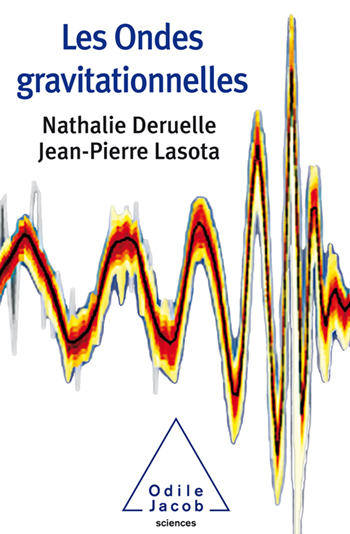
Nathalie Deruelle, Jean-Pierre Lasota
Gravitational Waves
An extraordinary, theoretical, and experimental saga told by two of the protagonists, or how a purely theoretical notion became a physical reality. A revolution: telescopes now observe in gravitational waves also! Astronomy of the future will be gravitational.

Alain Bécoulet
Nuclear Fusion
The great hope in the realm of energy transition: fusion produces almost no radioactive waste, and doesn’t emit CO2. . .

Uta Frith
Autism: Explaining the Enigma
Why do certain children live walled in by silence, cut off from the world and others? For the first time, this book offers a general theory on autism, a profound disorder in cognitive development rather than one resulting from family conflict or an attention deficit. Uta Frith is a psychologist and member of a cognitive development study group at the Medical Research Council of Cambridge.