
Catalog All books
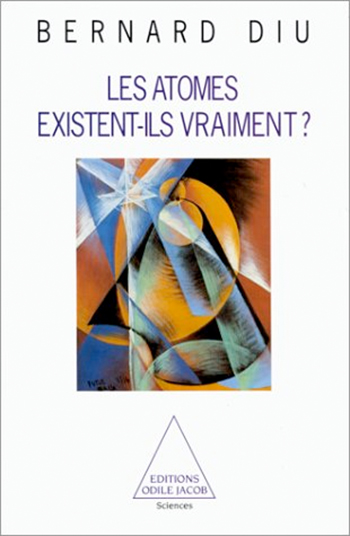
Bernard Diu
Do atoms really exist ?
Few scientific notions have aroused the speculative imagination like the thermodynamic entropy. All organised systems - societies, living creatures - are destined without exception to decline and eventual death. This book clearly exposes the historical and conceptual development of thermodynamics. Born from a desire to understand and master steam powered machines - the symbol of our industrialised societies - it became the science of the human body. However, it was suddenly passed over in favour of the theory of atoms. It was thus demolished by statistical mechanics which ceded to the imperatives dictated by the atomical structure of the body. After an epic struggle, sometimes quite ferocious, thermodynamics and statistical mechanics have been reconciled by adopting the base of the second with the techniques of the first. This book reads like a novel about contemporary physics. Bernard Diu, a graduate of the Ecole Normale Supérieur, is a professor at the University of Paris VII.

Jean-François Sirinelli
France in an Age of Major Upheaval 1962-2017
A look at France’s recent history by an historian attempting to define a consistent theme and perhaps also paint a picture of what the future may have in store.

Christophe André, François Lelord
Self Esteem Liking Yourself in Order to Live Better With Others
Self-belief, self-love, self-confidence... These are all facets of self-esteem, a basic aspect of the human personality, which results from our self-image and how we judge ourselves...

Michel Zink
Books from the Past, Readings for Today
When you read an ancient text — which is what you do whenever you read anything besides today’s paper or the latest bestseller...


Jeanne Siaud-Facchin
How Meditation Changed My Life and Could Also Change Yours!
The book contains a wealth of information on mindfulness meditation, juxtaposing recent findings in the neurosciences with actual experiences.

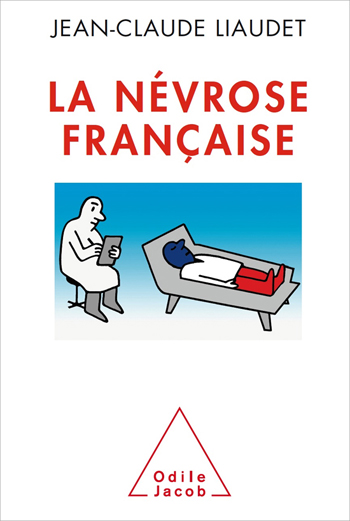
Jean-Claude Liaudet
The French Neurosis
A psychoanalyst examines France’s collective neurosis and asks: Can the patient be cured?