Catalog All books
Régis Debray
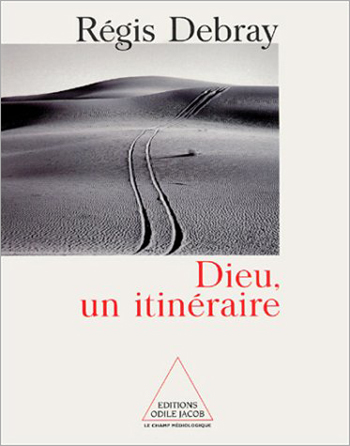
God, An Itinerary
"If we can be said to have a goal, it is to reply as precisely and soberly as possible to a childish question, which has been frequently set aside as trivial: Why are these beliefs, which came to light in the desert three thousand years ago, still among us? And why is it that hundreds of millions of men and women still follow them? The study of God's minor aspects does not, in our opinion, lessen its significance. Instead, it gives new life to spiritual issues." Régis Debray Régis Debray teaches at the University of Lyon-III.

Régis Debray
Learning About Religion in Secular State Schools
Learning about different religions: the best way of overcoming prejudice
Régis Debray
The Teaching of Religion in State Schools
French public opinion largely approves the idea of reinforcing the study of religion from a cultural perspective in state schools. The intention is not to put God back into the school system. Religious traditions and the future of the humanities now share a common fate, and strengthening religious education will depend on strengthening education as such. The spirit of secularism should have nothing to fear." Régis Debray Régis Debray teaches philosophy.
Jérôme Deauviau, Janine Reichstadt, Jean-Pierre Terrail
Teaching Reading Skills Effectively An Enquiry and Its Implications
A clear and precise presentation of the controversy around methods used to teach reading skills in French primary schools

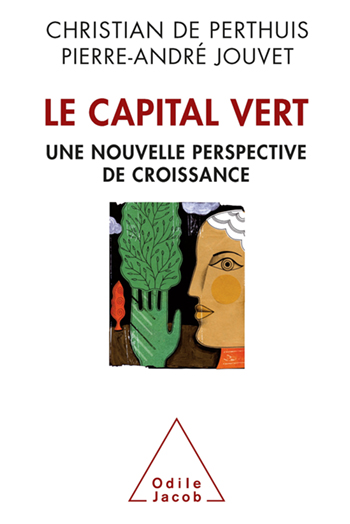
Christian de Perthuis, Pierre-André Jouvet
Green Capital
The indispensable book to understand the green economy and boost economic growth
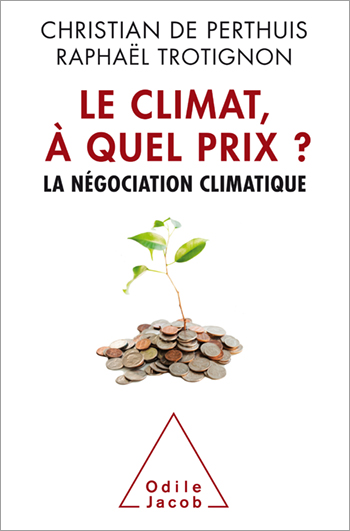
Christian de Perthuis, Raphaël Trotignon
Climat, how much ? Climate Negotiations
Global warming: understanding, anticipating, taking action
Christophe De Jaeger
The Muscle, Sport and Longevity
Christophe De Jaeger is a geriatrician and gerontologist...

Richard Dawkins
The Selfish Gene
The Selfish Gene has been described as the most important book about evolutionary theory since Darwin. According to Dawkins theory of the selfish gene, natural selection does not take place on the level of the species or of the individual but rather among genes. Dawkins argues that human beings are programmed to preserve their selfish molecules, which are known as genes. Dawkins brilliant style shows that complex scientific ideas can be explained and made accessible to the general public, and that biology can be as exciting as an adventure story. Richard Dawkins is a renowned evolutionary biologist.
Cécile David-Weill
Parents Under the Influence Are we condemned to repeat our parents' education?
Tools to help parents in everyday life, with recommendations and questionnaires. A helpful reflection that liberates us from guilt. A frank, far-sighted and practical guide that understands parents' needs


Malinka Dauverné
Early Bonding Advice for Parents
A book for parents to help them bond and establish a good relationship with their child, from the start.
Robert Dautray
Quelles énergies pour demain ?
If there is such a thing as a French exception, it is in matters of energy. Lacking natural energy resources, France has developed a vast electro-nuclear programme which not only guarantees the country's political independence but also produces budget surpluses. Since the existing electro-nuclear equipment is not everlasting, and must thus be renewed, the question of the total dependence on nuclear energy has arisen once again. This book, by one of the most influential French scientists of the post-war period, is an in-depth analysis of the country's energy system and its problems, and the prospects for future development. The author begins by an examination of production methods by major categories (oil and natural gas, coal, hydraulic energy, solar energy, biomass, nuclear energy, geothermal energy, wind, renewable energy, bioenergy, thermonuclear energy). He then describes the role that energy plays in our society, and how society reacts to energy problems. He concludes that present and future citizen-consumers should be placed at the centre of all discussions about energy methods, that consumers should be satisfied and respected and that their opinions should be considered. But this, he says, is exactly the opposite of what has happened up to now. The last part of the book, which deals with scientific and technical research, tries to answer the questions: What should be done? What actions should be undertaken? Time is running out and irreparable harm is being done to the environment. How much time is left to discover and develop the new procedures that will enable us to save what may still be salvaged? As was amply illustrated by the heatwave of 2003, the environment remains a crucial issue. In this important book, the author has had the courage to urge scientists and experts to step out of their ivory tower, to meet with citizens, and to provide for their needs. And he takes the risk of outlining some highly specific measures to be undertaken in the next ten years. Robert Dautray is an engineer and physicist at the French Atomic Energy Commission and a member of the Academy of Sciences.
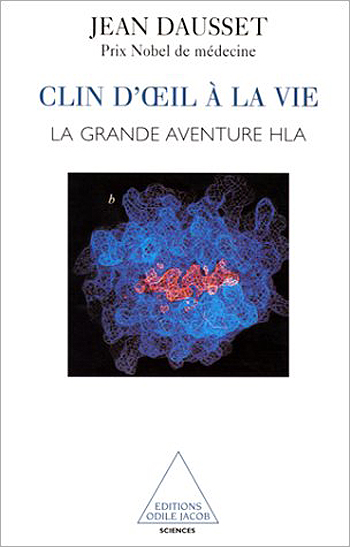
Jean Dausset
A Nod in the Direction of Life The Great HLA Adventure
Jean Daussets finding that white blood cells play an active role in immunization won him the Nobel Prize for Medicine and opened a new area of biological investigation, both in pure and in applied research. The HLA system harbours a unique peptide which may be regarded as the essence of the self in opposition to everything else much as the pineal gland was regarded as the seat of the soul by Descartes. The distinction between the self and the non-self is an essential one in immunology where an individuals defensive system must fight off foreign bodies while at the same time defending his or her own system. In his book, Jean Dausset recounts the story of his discovery and introduces the reader to other fascinating aspects of his life and work.
Robert Darnton
Berlin Journal, 1989-90
Robert Darnton was in Germany at the moment when the boundaries of post-war Europe came toppling down. Suddenly, the university professor discovered that History was in the making, and the masses were in motion. This is his personal account of the combined drama and celebration that accompanies every revolution. A professor at Princeton University in the United States, Robert Darnton is a specialist in the history of European culture. He is the author of L'Aventure de l'Encyclopédie, Le Grand Massacre des chats and Edition et Sédition.
Robert Darnton
Mesmerism and the End of the Enlightenment in France
At the beginning of 1778, Franz-Anton Mesmer arrived in Paris where he set about expounding his rather exotic theory - that the universe was swimming in a fluid which was responsible for occurences such heat, light, electricity and magnetism, but it was this fluid's relevance to medicine which he wished to highlight. In order to restablish health and man's harmony with nature he undertook strange healing sessions which became the origins of an extraordinary craze. Quickly, mesmerism became a disguised political theory. In demonstrating the links of mesmerism to politics, and the scientific notions of the age, Robert Darnton provides in this work a decisive contribution to the study of the diffusion of ideas in French society at the end of the 18th century. Robert Darnton is a professor at the University of Princeton

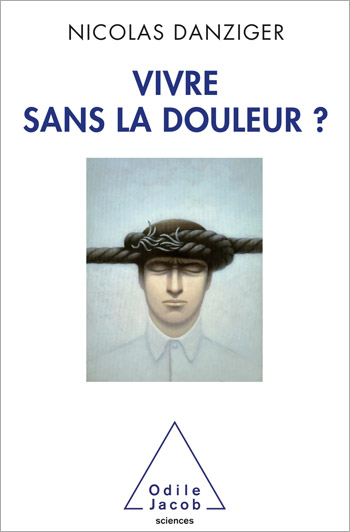
Nicolas Danziger
Life Without Pain?
An intellectual and affective journey, paved with unique stories and experiences, and their often amazing outcomes