
Catalog All books

Jean-Paul Betbèze
French people's economic fear
France has economic possibilities, but it remains blocked in several areas. Although the country's leaders are aware of this, they seem unable to make the necessary reforms to move forward. France seems to be the prey of fears that paralyse it, but which have benefited a new class of economic as well as social rentiers who constitute a powerful economic, ideological and political group. These new rentiers are fully cognisant that the defence of their acquired privileges is not a practical long-term solution - as has been shown by rising deficits, decreased competitiveness and job losses. The author argues that it is necessary to make changes and implement reforms - and to do so it is essential to understand and overcome existing fears. It cannot be expected that everything will be changed at once, but some initial efforts must be made. The single reform that will fix everything does not exist, he says, but this is hardly an excuse for refusing to make a start. In other countries, programmes for economic reform are being implemented. Yet France is only beginning to consider such reforms. The object of this book is to provide a greater understanding of the present situation, in the form of a how-to manual. A ruthless analysis of some of France's psychological blocks, apprehensions and economic fears, this book can be regarded as a sort of economic psychotherapy. In addition, the author provides a critique of the false solutions that hinder modernisation and proposes his own solutions for change and reform. Jean-Paul Betbèze is a professor of economics at the University of Paris Panthéon-Assas and a member of the French prime minister's Council for Economic Analysis. He is a consultant to the president and the C.E.O. of a major bank and the author of Les Dix Commandements de la finance, which was awarded the Risques-Les Echos Prize in 2004.
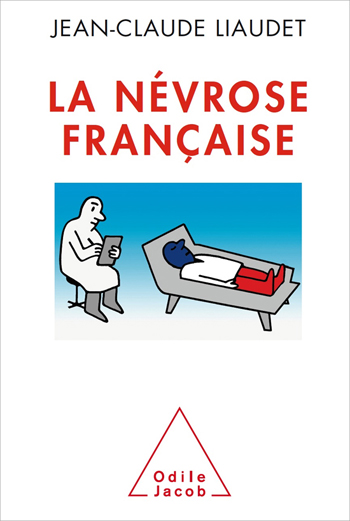
Jean-Claude Liaudet
The French Neurosis
A psychoanalyst examines France’s collective neurosis and asks: Can the patient be cured?


Claude Hagège
The French Language and the Centuries
Claude Hagege illustrates how the internal purity of the French language, less endangered than one might think, has been pushed aside in favor of its external promotion, less real than one might imagine. He increases our awareness of a major reality of the times. The French language is no longer the exclusive property of France; it has become an international affair. Claude Hagege is a professor at the Collège de France.

Jacques Andréani
The French Exception
An expert on foreign affairs, Jacques Andréani draws on his extensive international experience to enhance his examination of what it means to be French.
Jean-Philippe Feldman
The French Exception From the Ancien Régime to Emmanuel Macron, the story of a blocked society
Abundant historical documentation used to address a current issue and a very heated polemical debate.

Paul Rabinow
French DNA: Trouble in Purgatory
This book offers some surprising viewpoints: an anthropologist tells the story of the human genome sequencing project; a scholar of the humanities follows the crisis between a French laboratory, the Centre dÉtude du Polymorphisme Humain (CEPH), and a U.S. rival; an American intellectual describes the politics within the French scientific community. This exceptional survey of the most recent research trends and of the state of international competition in the field of genetic research gives us a notion of how our future health care is being prepared. Paul Rabinow teaches anthropology at the University of California at Berkeley.

Maurice Vaïsse
French Diplomacy Tools and Participants Since 1980
A complete and documented view of the Ministry of Foreign Affairs and of French diplomatic policy. A diplomatic history of the Fifth Republic, from the 1970s to the present.