Catalog All books

Joseph Silk
The Big Bang
Silk's story begins with the first moments of the big bang and continues though the formation of the galaxies on to the distant future of our universe. Whether you're looking for an accessible history of the universe, answers to questions about matter and antimatter, quasars, black holes, and others oddities, or simply a fascinating story spanning time and space, you will find The Big Bang hard to put down. Joseph Silk, coauthor of The Left Hand of Creation, teaches astronomy at the University of California at Berkeley.

Joseph Silk
Une brève histoire de l'univers
Joseph Silk is the author of an authoritative book on the Big Bang. In the present work, he covers the history of the universe from that first great explosion and shows how the most recent discoveries in astrophysics i.e. of the cosmic fluctuations from which the great structures of the universe emerged provide the missing link between the Big Bang, which occurred 15 billion years ago, and the present state of the universe. When did time begin? This is the question, already asked by Stephen Hawking, that A Short History of the Universe sets out to answer. It is the subject of current debate among theologians: Did time begin with the Big Bang, in which case God could not have created the universe, or has time existed for all eternity, which would mean that the Big Bang was just one event among others, that God could have existed before it occurred and that He could thus have created the universe? This highly accessible book will be of interest to a wide readership, since the issues examined here concern all of us. Joseph Silk, an astrophysicist and cosmologist, teaches at Oxford University.

Monique Sicard
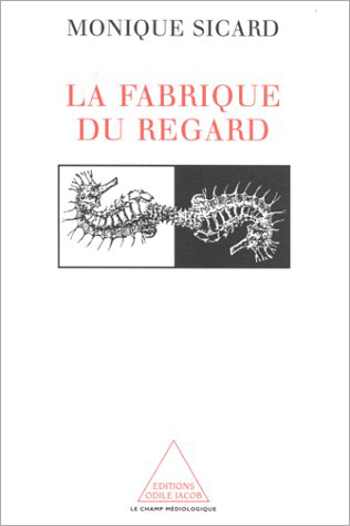
The Making of the Image
It was during the Renaissance that images and pictures were first used by anatomists, microscopists, and astronomers as scientific tools. In that era, scientific images served as a kind of inventory of the known world. In the 19th century, the popularization of scientific ideas gave science a new vigor. Photographic images gave science a new reality, explaining and legitimizing scientific concepts--movement, for example--to a fascinated public. In our days, the scientific image is often a construction--helping us to represent objects and ideas that, like fractals or black holes, cannot be defined through actual observation. Monique Sicard is Projects Director at CNRS Images Média.
Daniel Sibony
Marrakech, Departure Point
During a weekend trip to Marrakech — his hometown — a novelist has a love affair that becomes intertwined with reminiscences of his childhood.

Daniel Sibony
The Issue of Being
What is Being? An Exchange Between the Bible and Philosophy, Heidegger and the God of Moses

Daniel Sibony
A new heart
A new and striking dive into the world of advanced surgery. But above all, it is a moving meditation on life, its backlash and unity.

Daniel Sibony
Giving Yourself or Sharing Yourself ?
How can one be oneself without denying others? How can one consider others without negating oneself? How can one avoid the two extremes of complete selfishness and total self-sacrifice ? What if the ethics of the other, of responsibility for others which can lead us to risk our lives for others resulted not only in a dead-end (inefficient action, lack of action, justification of past actions) but also kept us from knowing ourselves and, consequently, others and the true nature of our relations with them? Daniel Sibony was trained as a philosopher and is a practising psychoanalyst.