
Catalog All books
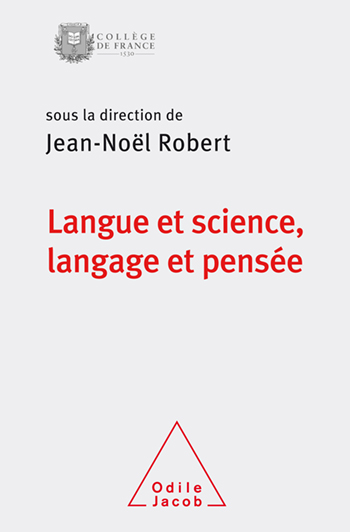
Jean-Noël Robert
Language and Science, Speech and Thought In the beginning, is it language, speech, or thought?
The fruit of the most recent autumn colloquium at the Collège de France, an interdisciplinary reflection on questions concerning the role of language and speech in the age of the internet and new technologies.
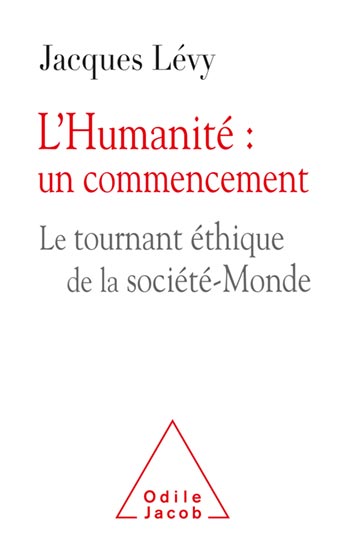
Jacques Lévy
The Ethical Turning Point and the World Society
Serious, provocative, and sardonic all at the same time, this book denounces religions of all persuasions and invites everyone to assume responsibility.

John Haugeland
Artificial Intelligence: The Very Idea
At once philosophical and instructive, this work offers a synthesis of a discipline that marks a revolution, both intellectual and technological, in the approach of the human spirit. John Haugeland teaches philosophy at the University of Pittsburg.
Jerry Fodor
The Mind Doesn't Work That Way The Scope and Limits of Computational Psychology
In this book, one of the most eminent figures in the field of cognition reviews his most recent views on the subject, and questions the validity of recent attempts to combine the computational theory of mind with psychological nativism and with biological principles borrowed from Darwinian evolutionary theory. Fodor goes on to examine the question that has remained unanswered for the past fifty years: is the mind a computer? This is a fascinating lesson of philosophical and scientific modesty. Jerry Fodor is a professor of philosophy at Rutgers University.

Jean-Pierre Rioux
They Taught Me the History of France
After his defence of French history, Jean-Pierre Rioux identifies his influences and his “masters”, thereby shedding light on his intellectual commitments, and painting the portrait of a generation. An ode to the greater and lesser figures of French history.
Norbert Rouland
The Confines of the Law
How did law come about? How do different societies answer to the same need for justice? N. Rouland invites us to explore the many aspects of law. Through various societies, a constant question emerges: can Africans, Asians and Westerners all adhere to the same norms? Norbert Rouland is a professor at the University of Aix-Marseille-III, where he teaches judicial anthropology and the history of law.
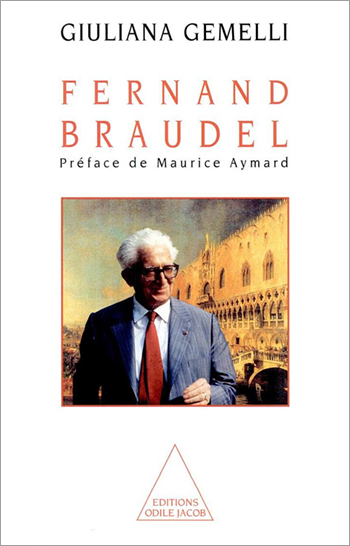
Guiliana Gemelli
Fernand Braudel
Fernand Braudel is considered as one of the major historians of the XXth century. Making his stand against factual history, he was one of the founders of the triumph of new history: the history of human societies rooted in their geographical space and obstinately determined to produce their material civilization there. This biography takes its strength from friendly conversations between Braudel and Giuliana Gemelli, who because she is Italian, had the necessary distance to make a demanding quest.
Guillaume Franck
Towards the Conquest of the American Market
After two centuries of setbacks, could France be ready to face the " American challenge " ? How can we explain that in less than ten years, fifteen large French companies will have installed themselves permanently in America ? And why have they so often chosen external growth in deciding to buy an American company and move to America ? Towards the Conquest of the American Market is a collection of case studies, valuable recommendations and anecdotes to help tomorrow's entrepreneurs succeed in their American adventure. Guillaume Franck is a consultant and professor at the School for Advanced Commercial Studies, France

Laurent Murawiec
The Spirit of Nations Cultures and Geopolitics
What drives the many nations that crowd onto the stage of world politics? The study of geopolitics seeks to find the force that moves them, by examining their geographical position and national interests, but it does not exhaust the subject of motives. How, for example, is their position perceived and understood? How are national interests regarded? The present investigation rests on a number of postulates, without which it would be impossible to proceed: the spirit of a nation must be real, characteristic and recognisable; it must matter; and the nations themselves must continue to matter." Laurent Murawiec

John Emsley
The Guide to Chemical Products for the Individual
Are artificial sweeteners dangerous for the body ? Can plastic packaging cause cancers by contaminating our food ? Could serious stomach complaints be caused by the nitrate contained in chemical fertilizer ? We have all heard the worrying stories about the danger posed by the numerous chemicals needed by industries to make the products which we use everyday. Does this mean there is good and bad chemistry ? The reader will find in this guide a great deal of surprising, and for the most part, reassuring information on the reality of the situation. John Emsley is a scientist at Imperial College, London. In addition to his regular radio slots, he writes for The Independent newspaper, and regularly contributes to New Scientist magazine.
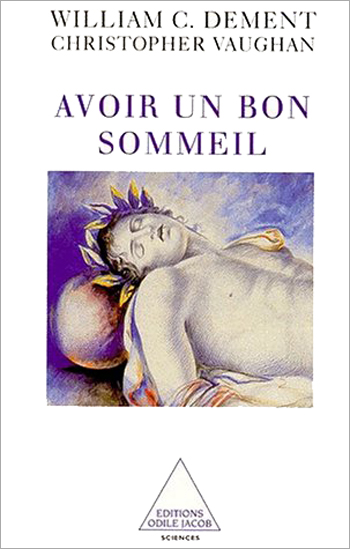
William C. Dement, Christopher Vaughan
How to have a good night's sleep
For more than forty years, William Dement has been researching the subject of sleep and of sleep-related problems. According to Dement, if we dont sleep well, we cannot be healthy; but its impossible to sleep well if we dont know what disturbs our sleep patterns, or what we stand to gain from an adequate nights rest. We are careful about our diets and we make sure we get enough exercise. Yet we often forget that it is equally important to sleep well. Sleep is often sacrificed to the demands of our daily lives. Doctors still tend to minimise the physical, emotional and psychological risks that result from a failure to give sleep its due. This fundamental work by a world-renowned specialist enables us to find out how we should sleep, in order to feel better and keep healthy. William C. Dement is a world authority in the field of sleep and in the treatment of sleep disturbances. In the 1970s, he founded one of the earliest centres specialising in the study of sleep at Stanford University, in California. He continues to teach at Stanford. Christopher Vaughan is the author of How Life Begins : The Science of Life in the Womb.
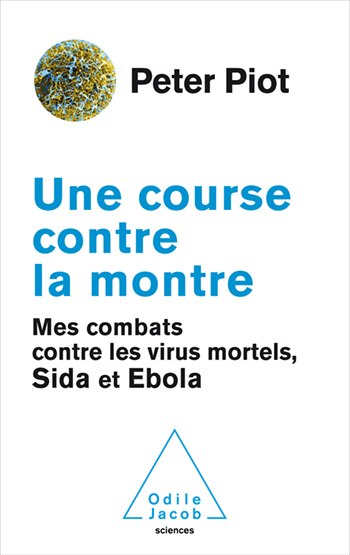
Peter Piot
No Time to Lose A Life in Pursuit of Deadly Viruses
A fascinating account of the fight against viruses, by one of the discoverers of the Ebola virus
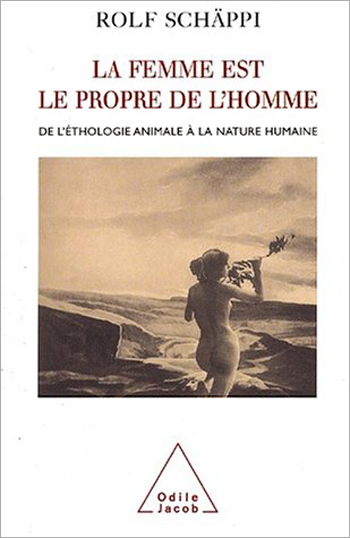
Rolf Schäppi
Woman is the Characteristic of Man From Animal Ethology to Human Nature
In this book, the author points out that although human beings are both mammals and primates, they differ in many significant ways from the other mammals and primates. Besides speech, laughter and the ability to use tools, the species Homo sapiens differs from its closest zoological cousins by three additional characteristics, which are less frequently cited because they are found only in the female. These are the female silhouette, hidden strus and the menopause. Rolf Schäppi is a psychiatrist and ethologist.
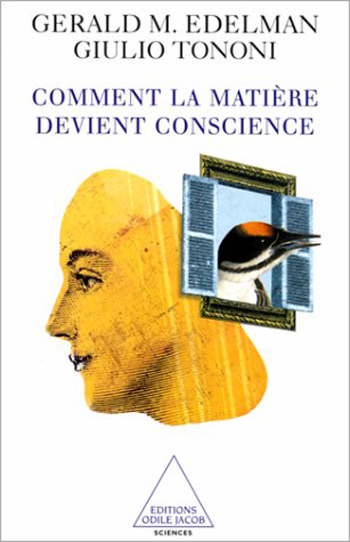
Gerald M. Edelman, Giulio Tononi
Consciousness : How Matter Becomes Imagination
How do the physical occurrences which take place in our brains create the world of conscious experience ? Philosophers have long disputed this question but today, it is science which is in a position to formulate real answers. Gerald M.Edelman and Giulio Tononi demonstrate that the processes which lead to consciousness are not confined to the brain, but are actually dependant on the functioning of numerous areas. They also show that these interactions are not fixed processes, but are constantly adjusted and modified. This research represents one step further towards understanding our identity and our complexity. Gerald M.Edelman, who has received the Nobel Prize for medicine, heads the Institute of Neurosciences at La Jolla in California. Giulio Tononi is a researcher at the Institute of Neurosciences.
Nicolas Véron, Matthieu Autret, Alfred Galichon
Crise in Financial Information Accounting and Capitalism
Enron, Andersen, Worldcom: although these companies have stopped dominating the headlines, the shock waves they sent through the business community in 2002 have not yet subsided. The belief that accounting is an exact science has been shattered, while economic relations are upset by the knowledge that financial information may be untrustworthy. Yet the market economy profoundly requires relevant and reliable information about the activity and financial situation of businesses. Taking into account the increasing strength of capital markets and international investors, the authors outline the basic elements that could constitute a new, balanced system of accounting that would accompany the necessary changes in capitalism, particularly in France and the rest of Europe. Nicolas Véron, an engineer and high-ranking civil servant, is the founder of Etudes et Conseil pour l'Information Financière (ECIF). Matthieu Autret is an expert currently working for the European Commission. Alfred Galichon is a doctoral candidate in economics at Harvard University.