
Catalog All books

Éric Boulanger
I’ve Decided to Age Well
An eminent professor of geriatrics helps us understand the signs of aging and the positive and innovative idea of “active aging.”


Raymond Boudon
Why intellectual peoples don't like liberalism
Given the intellectual force of liberalism, its political appeal, its economic effectiveness and its historical significance, why is it so unpopular among French intellectuals? Why does it elicit so little serious discussion? And why is it the object of so much confusion, so many clichés and misunderstandings? Is it simply out of resentment, because intellectuals feel that the market does not afford them the material and symbolic rewards that they believe they deserve? Is it just because they prefer to play a critical role in a society where capitalism is triumphant? Perhaps, but these reasons do not explain everything and they certainly dont explain the systematic rejection of liberal thought in France. A sociologist of knowledge rather than of social determinism, and a specialist in belief systems, Raymond Boudon ruthlessly analyses the cognitive mechanisms that make liberalism so hateful in the eyes of French intellectuals. The result is a keen, detailed review of the clichés that have encumbered discussions for more than thirty years. Raymond Boudon, a professor at the University of Paris-IV, is a member of the Académie des Sciences Morales et Politiques. He us the author of numerous works, most notably LInégalité des chances, La logique du social, LIdéologie ou lorigine des idées reçues, LArt de se persuader, Le Sens des valeurs and Déclin de la morale? Déclin des valeurs. He is the co-author, with R. Leroux, of Y a-t-il encore une sociologie?



Pierre Bordage, Jean-Paul Demoule, Roland Lehoucq , Jean-Sébastien Steyer
Exquisite Planet
Adapting the form of an ‘Exquisite Corpse’ (a Surrealist technique in which collaborators draw in turn on a sheet of paper, fold it so that only a fragment remains visible, then pass it on to the next collaborator who improvises a new drawing), the four authors of this book have each described a possible planet and imagined the life forms that could have developed there, according to the laws of evolution.

Marie-Jo Bonnet
What Does a Woman Desire when She Desires a Woman?
The desire of women for their own sex is a subject that has been concealed and heavily censored since Antiquity. Yet it has constantly resurfaced throughout history - despite repression, denial and today's feigned indifference - and its existence is a historical and anthropological fact, whatever the dominant opinion may say. Marie-Jo Bonnet argues that lesbianism transgresses social norms and female stereotypes, and breaks with the phallic model and the restricted social role that is assigned to women even today. She sees lesbian desire as a radical instrument of emancipation and offers an original analysis of the women's liberation movement, of recent discussions about homosexuality and, finally, of the persistence of lesbophobia. Desire, regardless of its subject, is always a unique and complex experience, and Bonnet does not ignore this fact. In an original, wide-ranging study of lesbian love through literature, she delves into the work of such major writers of the past as Marguerite Yourcenar, Violette Leduc, Simone de Beauvoir, Djuna Barnes and, surprisingly, Madame de Sévigné, as well as of more recent writers such as Monique Wittig, Anne Garreta and Christine Angot. The author's thesis is that women's desire for their own sex can serve as a tool to empower them to conquer their own space of creativity and liberation. Marie-Jo Bonnet, a writer and historian, is the author of Les Relations Amoureuses Entre Femmes (XVIe-XXe siècle).

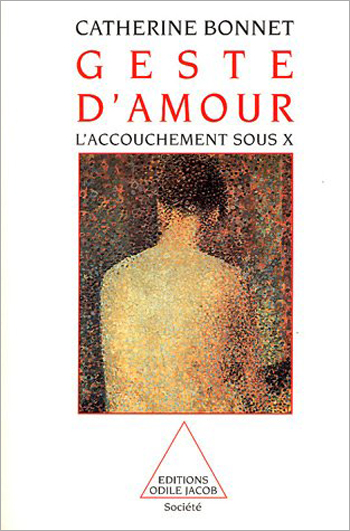
Catherine Bonnet
A Gesture of Love Giving birth anonymously
Why do some women give birth anonymously so that their child is instantly adopted? A pedopsychoanalyst, Catherine Bonnet recounts the heart-breaking testimonies of these suffering women whose single gesture of love is to protect their child from the violence within themselves. A fresh look at the foundations of maternity and of filiation. Catherine Bonnet is a pedopsychoanalyst.


Marie-Jo Bonnet
What Does a Woman Desire When she Desires a Woman?
From Madame de Sévigné to Pauline Delabroy-Allard, George Sand to Djuna Barnes, Simone de Beauvoir to Monique Wittig, not to forget Céline Sciamma or the 10% et Nina series… An analysis of the different faces of lesbian love over time.



Raymonde Bonnefille
Following Lucy Expeditions in Ethiopia
A unique account by one of the few women to have actively participated in the great archeological expeditions in the Omo Valley in the 1970s.

Jérôme Bonnafont
Diplomats: What We Do
A remarkable analysis of the various aspects of diplomatic service and decision-making, and of the levers of national and international power.



Christian Boitard
Overcoming Diabetes insulin
A clear and passionate account to better understand diabetes and the history of this illness.


Sophie Boisseau du Rocher, Emmanuel Dubois de Prisque
China Is/and the World A Look at Sino-globalization
By stressing the gap between today’s international system and what it would be in the event of Chinese hegemony, we will understand better what is at play, and what is lost, with the “de-Westernization” of the world.



Jean-Joseph Boillot, Stanislas Dembinski
Chindiafrique The Three Giants That Will Make Tomorrow’s World
An indispensable essay on future economic trends for anyone wishing to understand tomorrow’s world


Sébastien Bohler
Mind Wars
What if the goal of research on the brain is mind manipulation on a global scale?

Julien Bohdanowicz
Energy in Daily Life
In this book about science in daily life, Julien Bohdanowicz explains that physics can help us understand how waste products have poisoned our environment, but also that it can show us how to treat waste. He makes readers discover the laws of the conservation of energy, which can be summarised in the well-known adage: Nothing is lost, nothing is created, everything is transformed. Julien Bohdanowicz is an engineering student at the École Nationale Supérieure des Techniques Avancées.