
Catalog All books

Pierre Fédida
The Benefits of Depression An Appreciation of Psychotherapy
When we attempt to cure human suffering with a chemical pill, arent we denying the real issues that have given rise to depression? Must we resort to denying the psyche in order to come out of a depressive state? Isnt there another way? Pierre Fédida shows that the emergence of a depressive state can always be explained by the disappearance of the capacity to fight off depression : the goal of the psychotherapy of depressive states should be the recovery of this capacity in order to regain ones vital inner balance without the reliance on chemical solutions. Pierre Fédida is a psychoanalyst.

Bernard Chouvier
The Fanatics
For more than twenty years, Bernard Chouvier has studied various forms of political and religious commitment and activism and their sectarian excesses.

Claude Debru, Frédéric-Pierre Isoz
Why Do We Believe?
This book is a dialogue between a philosopher and a psychoanalyst.
Georges Chapouthier
Saving Humans through Animals
An original thesis that connects in a paradoxical, but reasoned way, the development of morality in humans to their animal nature.
Pascale Cossart, Fabrice Hyber
The Great Voyage among Microbes
A wonderful introduction to microbiology by an eminent scientist. A richly illustrated work by Fabrice Hybert, very instructive.

Alain Trannoy, Étienne Wasmer
The Great Return of Land in Wealth
The French property and land wealth has reached an unheard-of volume of 7000 billion euros, more than three times the national GDP. How can it be taxed to release the burden that weighs on production?

Véronique Cortier, Pierrick Gaudry
Electronic Voting
Electronic voting cannot be left to experts alone; this book provides clear and precise answers to any questions citizens may have.

François Tavoillot, Pierre-Henri Tavoillot
The Bee (and the) Philosopher An Amazing Journey into the Hive of Wisdom
The history of Western philosophy and culture, seen from the bee’s perspective
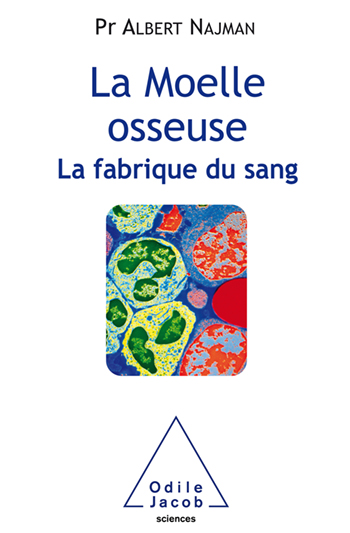
Albert Najman
Creating Blood, Bone Marrow
The most recent discoveries in the functioning of bone marrow represent a great hope for treating diseases such as thalassemia, leukemia, lymphoma, and others.
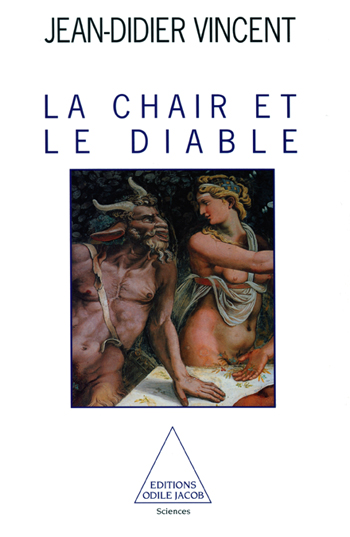
Jean-Didier Vincent
The Flesh and the Devil
"If I did not exist, nothing would exist, because there would be nothing to which oppose oneself", writes Fernando Pessoa in the devil's name. Is this the invention of a poet? Nothing is less sure. The scientist confirms the notion that life is born from the confrontation between molecules. J.D. Vincent invites us here to explore with him all the aspects, the ramifications, from animal life to the human brain, which are nurtured by this principle of opposition. The devil is constantly at work in the heart of the living, and neurobiologist Jean-Didier Vincent demonstrates this evidence with humor in his book, a continuation of the spirit present in his Biology of Passions.
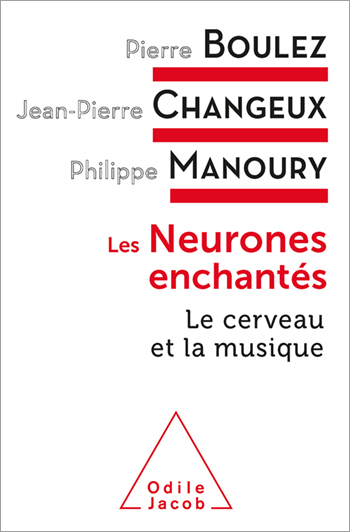
Pierre Boulez, Jean-Pierre Changeux, Philippe Manoury
The Enchanted Neurons The Brain and the Music
A unique event: two major intellectuals of our time discuss the links between the neurosciences and music
Patrick Légeron
Stress in the Workplace
A new, completely revised edition of an outstanding reference work on stress in the workplace
Alain Dupas, Charles Chatelin
Humanity’s Cosmic Destiny
An inspiring, sometimes disconcerting book. A new history of space exploration. A future-oriented look at the evolution of humanity in the light of the evolution of technology, both biological and that regarding space.