Catalog All books
Serge Stoléru
The Portable Psychoanalyst A New Approach for Self-Knowledge
A both philosophical and psychoanalytical justification of a desire for self-knowledge. A concrete and lively text due to the presentation of real cases.
Antonio R. Damasio
Feeling & Knowing Making Minds Conscious
This book brings together the most recent discoveries in the cognitive sciences, neurobiology, psychology, and other fields, while adding the philosophical dimension dear to Antonio Damasio.
James Teboul, Philippe Damier
The Mirage of Leadership Challenged by Neuroscience
To assume their role effectively, managers must know how to take into account the predispositions and biases that make them act, and thus understand them, and work resolutely against the grain of their natural inclinations.
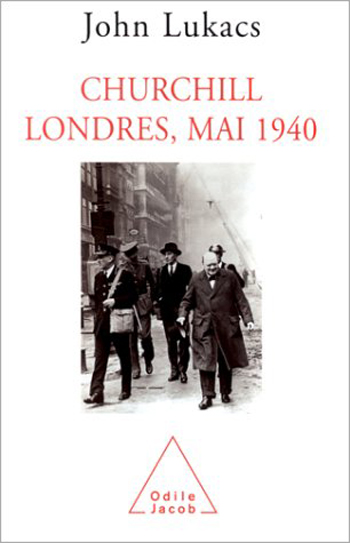
John Lukacs
Five Days in London: May 1940
The days from 24 to 28 May 1940 significantly altered the course of the history of the past century. When German troops reached the Atlantic coast, the British counterattack resulted in the disaster of Dunkirk. Europe was on its knees. Britain seemed powerless. For several critical days, at 10 Downing Street, the British cabinet debated whether to negotiate or to continue the war against Hitler. And if the war was to be continued, how would it be fought? What hope was left? Lukacs takes us into the crucial unfolding of these five days that changed history. The events described here provide a lesson in courage as much as in politics. John Lukacs is a former professor of history at Chestnut College in Philadelphia.
Yves Michaud
Changes in Violence An Essay on Universal Goodwill and Fear
For better or for worse, violence has accompanied humanity throughout its history. It is consubstantial with history, technical knowledge and even culture, and it is unlikely that it will disappear. Human beings are inhabited by darkness great darkness and they must have the courage to confront it. Then why are we so frightened and shocked by each flare-up of violence on the international stage and in our own streets? We feel that there is both more and less violence; that life on our planet has become easier and yet more ruthless; that although benevolence is the universal law, hate is equally strong, if not stronger; that feeling safe may be a right but that fear reigns. Yves Michaud, a philosopher, teaches at the University of Paris-I.
Sophie Boisseau du Rocher, Emmanuel Dubois de Prisque
China Is/and the World A Look at Sino-globalization
By stressing the gap between today’s international system and what it would be in the event of Chinese hegemony, we will understand better what is at play, and what is lost, with the “de-Westernization” of the world.
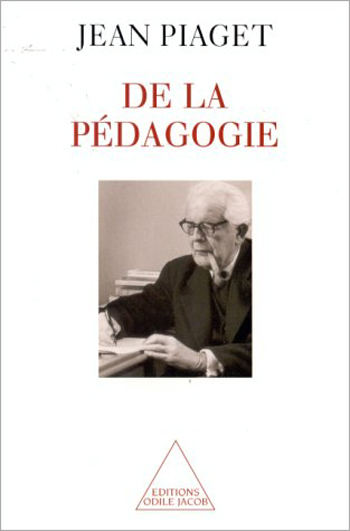
Jean Piaget
Of Education
What is the teacher's role and how important is it in a child's education? Should this role include the shaping in the child's mind of the tools with which to grasp and comprehend the world? How should activities be presented so as to be easily understood by children? What are the difficulties that children encounter when resolving mathematical problems? Pedagogical methodology, the role of the educator, and the child's autonomy : these are some of the subjects that Piaget reflected on throughout his life and which remain central to educational concerns today.
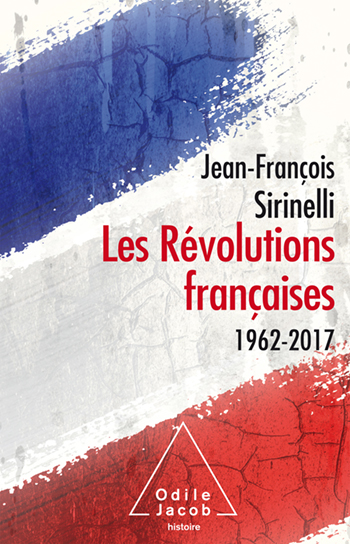
Jean-François Sirinelli
France in an Age of Major Upheaval 1962-2017
A look at France’s recent history by an historian attempting to define a consistent theme and perhaps also paint a picture of what the future may have in store.
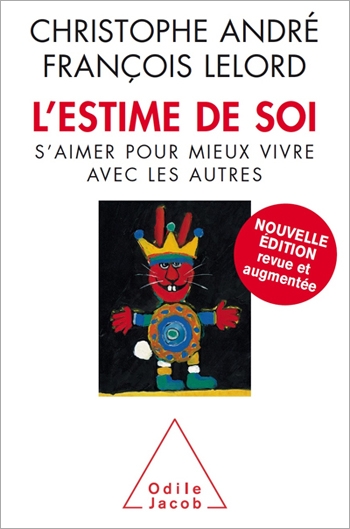
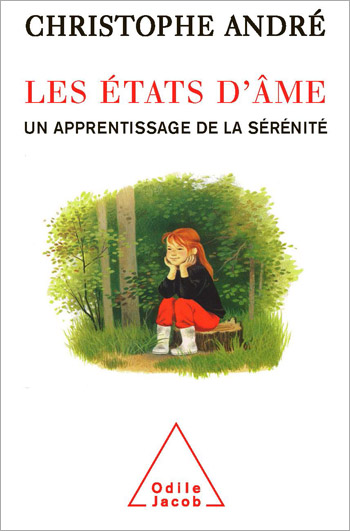
Christophe André, François Lelord
Self Esteem Liking Yourself in Order to Live Better With Others
Self-belief, self-love, self-confidence... These are all facets of self-esteem, a basic aspect of the human personality, which results from our self-image and how we judge ourselves...
Michel Zink
Books from the Past, Readings for Today
When you read an ancient text — which is what you do whenever you read anything besides today’s paper or the latest bestseller...
Jean-Claude Liaudet
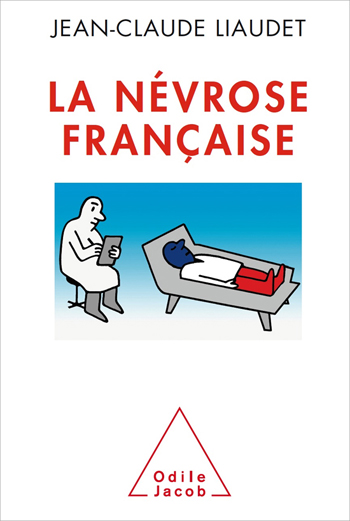
The French Neurosis
A psychoanalyst examines France’s collective neurosis and asks: Can the patient be cured?
Jeanne Siaud-Facchin
How Meditation Changed My Life and Could Also Change Yours!
The book contains a wealth of information on mindfulness meditation, juxtaposing recent findings in the neurosciences with actual experiences.