Catalog All books


Maxime Schwartz
How the Cows Became Mad
Fear of the condition popularly known as mad cow disease has created a state of collective hysteria: some consumers are so afraid of contracting the disease that they have stopped eating beef; others havent stopped eating beef simply because they believe it is too late to do anything to prevent catching the illness. This book examines the outbreak of this disease and concludes with the reply to the question that is on everyones lips: Should we be afraid? Maxime Schwartz teaches at the Institut Pasteur, in Paris.

Mustapha Chérif
Abd el-Kader, Apostle of Reconciliation
An important historical figure whose works help us understand contemporary relations between Algeria and France, between East and West
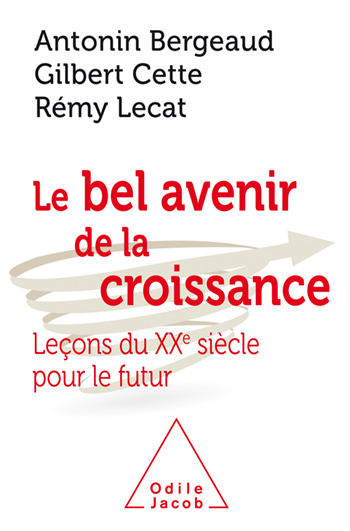
Antonin Bergeaud, Gilbert Cette, Rémy Lecat
The True Impacts of Growth Toward an Awakening?
A condensed look at what you should know to understand what is at stake in the current debate on growth

Marie Rose Moro, Jean-Louis Brison
For the Well-Being and Health of Young People
A new approach to well-being as a condition for the academic success of our children: one learns better when one feels good!

Claudine Attias-Donfut, Martine Segalen
Twenty-Somethings Today: The New Generation Gap
By two specialists in the sociology of the family and of generations, themselves grandmothers of twenty-somethings
Colette Chiland
Changing Sex
Some human beings refuse to take the path that leads from being male to becoming a man or from being female and becoming a woman and want to belong to the sex for which their bodies were not designed -and this at any price. In our culture, these transsexuals want to both occupy the other place in the network of symbolic exchanges and have a mark of this change in their bodies. Their sadness is irremediable, for although they can change their social sex, they cannot change their bodily sex. "It's better " states one transsexual, "to change what's in the mind". Will we succeed in doing so ? A university professor, Colette Chiland taught psychology and psychopathology of children and adolescents, then clinical psychology at the Sorbonne University in Paris.

Jacques Rupnik
The Other Europe The Crisis and End of Communism
The crumbling of the Berlin Wall marked the end of the divided Europe that was inherited from Yalta, and the renaissance of Central Europe, so neglected and forgotten that it is often simply referred to as the East. Originally from Prague, Jacques Rupnik is one of the top specialists in France of this "Other Europe". In this work, he delivers the results of a long investigation of both the terrain and the historical thought leading from the nationalisms of the last century to the Gorbachev factor.

Philippe Moreau Desfarges
The Temptation to Withdraw: Globalization, Deglobalization
Accounts of globalization abound. This original synthesis reveals its dark side and provides a different perspective, that of a rejection of globalization. Philippe Moreau-Defarges is a born popularizer, and works expertly with his subject.
Vincent deGaulejac, Isabelle Seret
Preventing Radicalization: Jihadism, Terrorism
Undertaken first in Belgium shortly after the attacks that occurred in that country, this approach has received a great deal of attention from public authorities, and is seeing increasing interest in France, given the failure of de-radicalization policies.

Hélène Romano
Helping the Child in Trouble Separation, Aggression, Traumatism
A response adapted to the growing violence occurring in our societies, from school bullying to terrorist attacks. Contains many practical examples and explanations, clear and concrete guidance to help parents help their children and make them feel secure.
Stéphany Orain-Pélissolo
Embrace Your Pain, Eliminate Your Suffering Mindfulness Therapy
A method for everyone, regardless of the type of suffering: somatic illnesses, chronic pain, emotional disturbances… An eight-week program of audio exercises, focused on attention and emotions, which enables one to escape the vicious cycle of suffering in which one becomes trapped.

Gérard Apfeldorfer
Slimming is simple and in your head
A visionary approach that very early on stressed the importance of the relationship between the body and the psyche in problems relating to weight-loss.


Roger-Pol Droit
Living Today With Socrates, Epicurus, Seneca and All the Others
What have we lost by forgetting the teachings of Antiquity? And what can we find out for our own time by rediscovering the Classics?
Etty Buzyn
When the Child Frees Up of Our Past
All families unconsciously transmit their history. A new baby is both the bearer and divulger of that history...



Rachel Mazuy
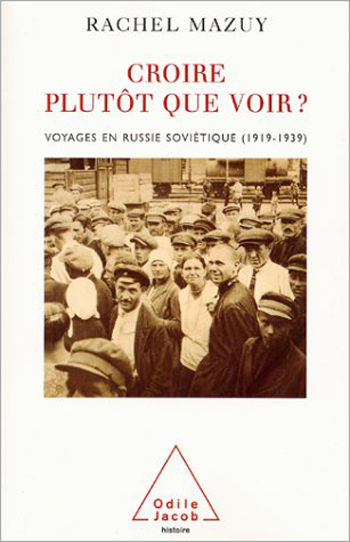
Believing Rather Than Seeing ? Travels in Soviet Russia (1919-1939)
The Russian Revolution provided the working-class movement with a concrete model of socialism. For French militants, as well as for many members of the cultural and political elite, the Soviet Union became the goal of a secular pilgrimage (or an anti-pilgrimage). This book tells the story of those travellers. Who went on such trips? How and why? To what extent did the trip influence their political and social development? Rachel Mazuy is a lecturer at the Institut dEtudes Politiques, in Paris, and teaches at the Lycée Honoré Balzac, Paris.
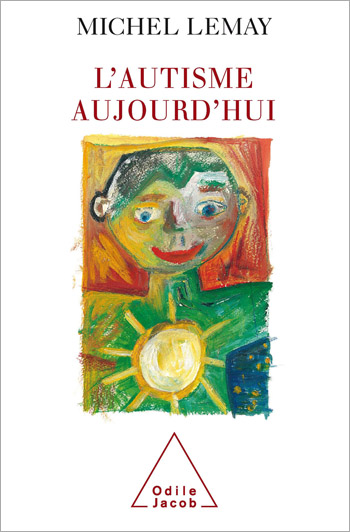
Michel Lemay
Autism Today
What do we know about autism today ? How can it be treated ? What is the cause ? In this book, the author offers a clear appraisal of the contributions and failures of various disciplines (psychoanalysis, neurobiology, genetics, chemical and drug treatment, and behavioural and cognitive therapies), and makes a case for a multidisciplary type of medicine. It offers both parents and professionals a great source of strength with which to fight against autism. Michel Lemay is a psychiatrist and professor of child and adolescent psychiatry. A world-renowned specialist in autism, he is the director of the clinic on autism and invasive development disorders at the Hôpital Sainte-Justine in Montreal.