
Catalog All books
Antonio R. Damasio
Descartes' Error Emotion, Reason, and the Human Brain
Being rational is not denying oneself emotions. The brain which thinks, calculates, and makes decisions is not a different entity to the one which laughs, cries, loves, and experiences pleasure and annoyance. The heart has reasons that reason itself is far from being ignorant of. In opposition to the old Cartesian dualism and to all those who wish to reduce the functioning of the human mind to detached calculations worthy of a supercomputer stands the results of the latest neurological research : the absence of emotions and sentiments prevents us from being really rational. Antonio R. Damasio heads the department of neurology at the University of Iowa, in the United States, and teaches at the Institute of Biological Studies of La Jolla.
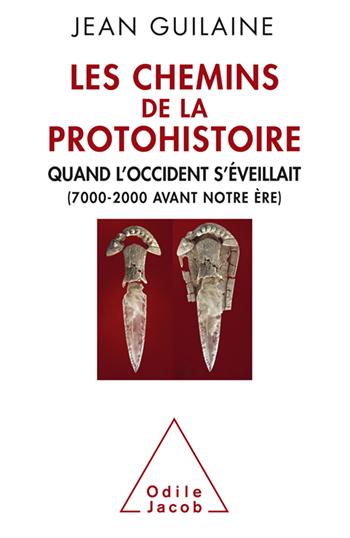
Jean Guilaine
Protohistory The Awakening of the West (7000-2000 BCE)
An original, in-depth, richly-documented study of menhirs and dolmens, of the “religion” of the people of the Neolithic, of the origins of political power, and of the organization of social hierarchy
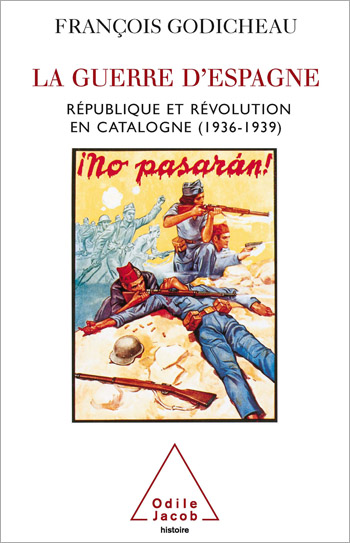
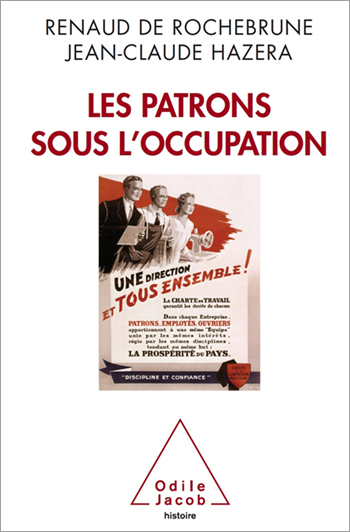
Renaud de Rochebrune, Jean-Claude Hazera
Business Leaders During the Occupation
How were Jewish companies altered to become Aryan ones and what was the role of French administration? Who did illegal profits and how?A fascinating document written by two journalists.

Jean-Joseph Boillot, Stanislas Dembinski
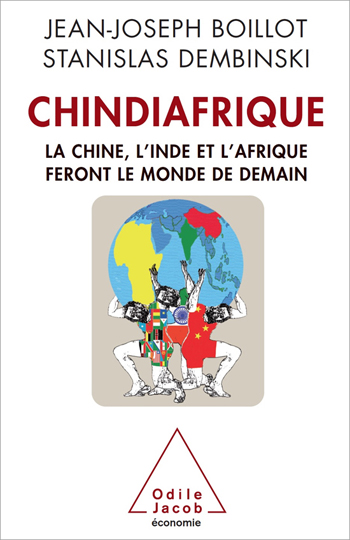
Chindiafrique The Three Giants That Will Make Tomorrow’s World
An indispensable essay on future economic trends for anyone wishing to understand tomorrow’s world
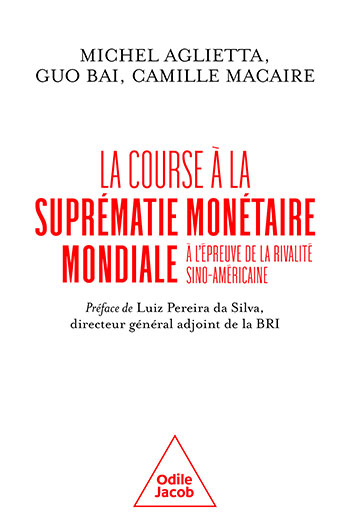
Michel Aglietta, Guo Bai, Camille Macaire
The End of the Hegemony of the Dollar
Fascinating developments on the most innovative elements of Chinese finance and its digital economy.
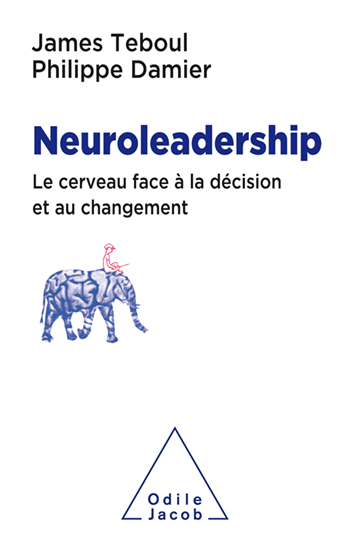
James Teboul, Philippe Damier
NeuroLeadership Challenges to the brain in the face of decision and change
An analysis of the brain with a focus on corporate action aimed at helping executives and managers to make better decisions, to remain calm under pressure, to work better with others and to acquire the necessary flexibility
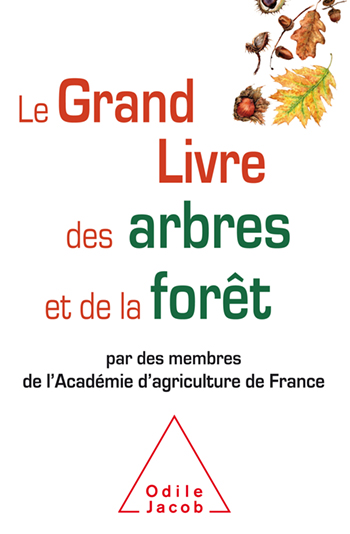
Académie d'agriculture de France
The Big Book of Trees and Forests Draw a forest for me
In the same vein as the Grand livre de notre alimentation [The Big Book of Food], this book responds to all our questions on forests.
Armin Schnider
The Injured Brain How to Help Recovery
A book that shows that brain recovery is possible, regardless of age.
Raymond Bruyer
The Brain that "Sees"
Based on numerous examples, this book describes and explains the phenomenon of perceptive recognition: how with minimal information the human brain can identify not only general forms (a man, a woman, a cat, a dog, a house, and so forth), but also specific individuals who might seem scarcely distinguishable from one another, unless a large amount of information is provided. This study of the brain that sees is also an exploration of the perceived world. Raymond Bruyer teaches experimental psychology at the University of Louvain La Neuve, Belgium.
David Khayat, Cécile Khayat , Nathalie Hutter-Lardeau
Anti-Cancer Cooking
A healthy, tasty and convivial style of cooking that is easy to prepare and fits with the tastes and constraints of modern living. Information on familiar and some less familiar foods with recognized anti-cancer properties.
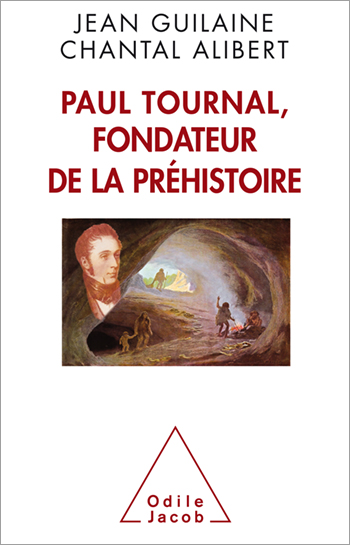
Jean Guilaine, Chantal Alibert
Paul Tournal, The Inventor Of Prehistory
A clear and accessible account of the obstacles endured by the inventor of prehistory, in particular in overcoming disbelief in the existence of fossilised human remains.
Joëlle Proust
Thinking Fast or Thinking Well
By revealing the individual and social implications of cognitive functioning, an overview of up-to-date knowledge enabling us to understanding our thinking and to control it more in practice.

Antoine Garapon, Sylvie Perdriolle, Boris Bernabé
Prudence and Authority The Judge’s Role in the 21st Century
The new role of French judges, according to a report that will be submitted to the government in January 2014
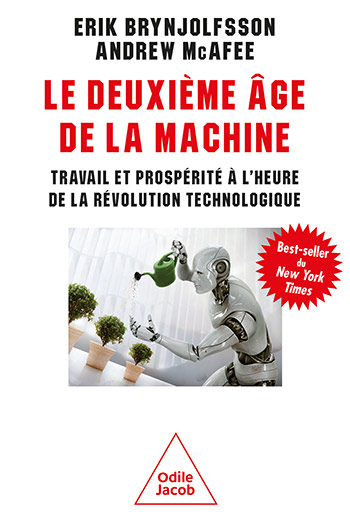
Erik Brynjolfsson, Andrew McAfee
The Second Machine Age Work, Progress, and Prosperity in a Time of Brilliant Technologies
A fundamentally optimistic book, The Second Machine Age will alter how we think about issues of technological, societal, and economic progress.
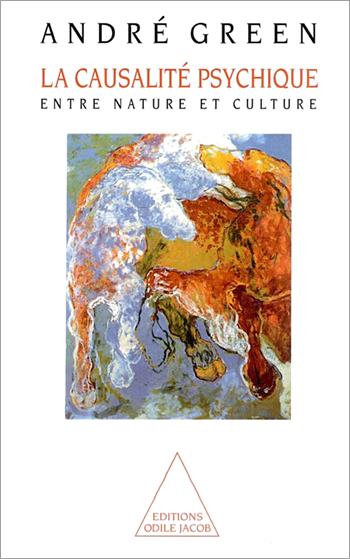
André Green
The Psychic Causality Between Nature and Culture
Without reprieve, we hear of the agony of psychoanalysis. On one hand, neuroscience and the cognitive sciences reduce the psyche to a sum of 'natural' phenomenon. On the other hand, the social sciences see it as an ensemble of 'cultural' process. In this point-by-point discussion of the issues in this debate, and drawing upon his extensive clinical experience as his main resource, André Green shows that the human psyche is the result of a double determinism, both natural and cultural. It emerges as an original and autonomous creation, and that is exactly what forms the specificity of psychoanalysis. Andre Green is a psychoanalyst and the President of the Psychoanalytic Society of Paris.
Fondation pour la Recherche Stratégique, François Heisbourg
French Strategic and Military Yearbook 2002-2003
The advent of hyperterrorism on "9/11" and subsequent military operations have marked the return of strategic affairs as a core concern of the citizens of our countries. This French Strategic and Military Yearbook analyses from a European vantage point the major themes of our time: American military operations, Russsia's new geopolitics, the struggle against mass destruction terrorism. The Yearbook is complemented by on-line data provided by the Paris-based Fondation pour la Recherche Stratégique (FRS).
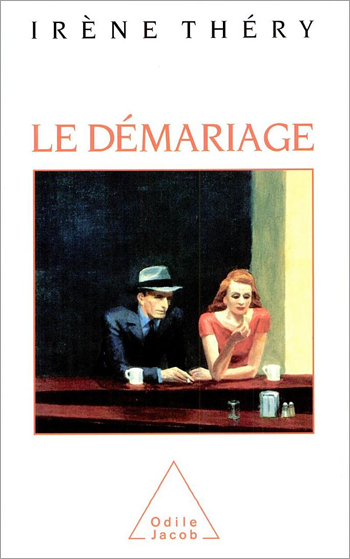
Irène Théry
From Marriage to Divorce Justice and Private Life
Can dual parental responsibility outside marriage be recognized as a principle by law? I. Théry believes that all controversies on divorce are basically debates on marriage. Our representations of the relationships between the individual and society, the private and public realms, are destabilized in this insecure period of unmarriage . The psycho-social drift of justice increases further when we consider the true sufferers of divorce court battles: the children.