Catalog All books
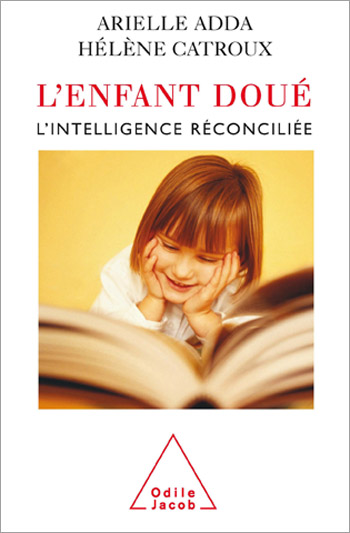
Arielle Adda, Hélène Catroux
The Gifted Child Reconciling Intelligence
Exceptionally gifted, gifted and intellectually precocious children make up as much as 5 % of any given age group. Yet they often seek failure, both at school and in their personal lives, because they suffer from being different from other children. This book is addressed to the parents and teachers of gifted children. Besides reviewing the current state of knowledge on the subject, it explains how such children can be taught to manage their potential and to overcome their excessive sensitivity and weaknesses. Arielle Adda is a psychologist. Hélène Catroux is an educational psychologist.
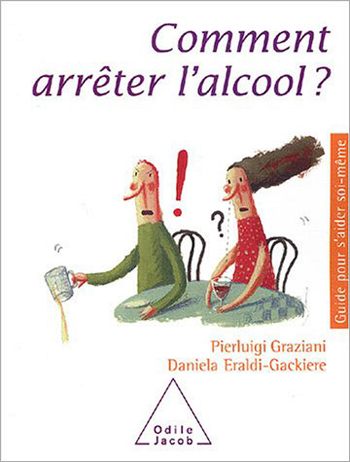
Pierluigi Graziani, Daniela Eraldi-Gackiere
How to Stop Abusing Alcohol
Not only does alcohol abuse have serious consequences for physical and psychic health, it is also destructive of personal and social relationships. But putting an end to this form of drug abuse is particularly complex, because alcohol creates a dependence that is both physical and psychological, and because it is, in many cultures, closely linked to sociability. In trying to help alcohol abusers who wish to stop drinking, one is often confronted with resistance and denial. The authors, specialists in cognitive and behavioural therapies, describe methods that have been successfully used for many years in the treatment of alcohol abuse in a hospital setting. Pierluigi Graziani is a psychologist and lecturer on clinical psychology and psychopathologies at the University of Aix-Marseille-Ain, in Aix-en-Provence. Daniela Eraldi-Gackière is a psychologist.
David Khayat
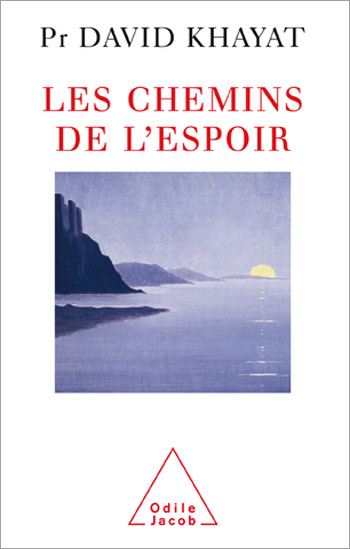
The Paths of Hope
The progress made in cancer research and the advances in therapeutics have become such that they open before us, without any doubt, marvellous paths towards hope. It is these paths that I suggest we discover together. David Khayat David Khayat is a professor at the Pierre-et-Marie-Curie University and the head of the cancer team at the La Pitié-Salpêtrière Hospital.
Jean Rosa
From one Medicine to Another From a Craft Industry to High Techology
Jean Rosa belongs to the post-war generation that transformed French medicine from a state of powerless humanism all the more "humane" because it was so often helpless to one of scientific and technical efficiency. Unfortunately, in the process, medicine seems to have lost its human face. In this book, Rosa shows how he contributed to this medical revolution: on the one hand, through the "Debré Reform", which instituted teaching hospitals, thus firmly linking medical research with therapeutic and surgical treatment, and, on the other hand, by associating medicine with molecular biology. Jean Rosa is Emeritus Professor in the medical school of the University of Paris-XII and a member of the French Academy of Science

Marie-Frédérique Bacqué
Coping with Death
Marie-Frédérique Bacqué, a psychologist, is a lecturer at the University of Lille and the vice president of the Society of Thanatology.
Ann Premack, David Premack
The Baby, the Ape and Man
The issue of the differences and similarities between humans and their cousins the chimpanzees governs the definition of human identity. How can this difference be explained? By studying the learning process of chimpanzees and comparing it to that of children, Ann and David Premack were gradually able to discover a series of differences, none of which were radical but when put together showed a yawning gap between the two species. The results they obtained enabled them to reconstruct little by little the sum of the differences that make up human identity. Ann and David Premack are specialists in the study of primates.
Roger-Pol Droit
Recent News of Ordinary Objects
"Can you learn anything from ordinary objects the things you use in your daily life? The answer is: yes, more than you can imagine. During the course of one year, I assigned myself a sort of adventure: I kept a diary of my encounter with objects, and I suggest you do the same. Briefly, my goal was to try to find the words that are hidden inside objects, to discover the questions that lie at the heart of things. My journey took place in four stages: surprise, groping, panicking, feeling soothed. This experience, touched with humour and a hint of folly, also follows the itinerary of an unexpected spiritual journey," Roger-Pol Droit is a research fellow at the Centre National de la Recherche Scientifique
Robert Ladouceur, Lynda Bélanger, Éliane Léger
How to stop worrying about everything and nothing
Take the time to breathe deeply. Control your stress. Stop worrying about everything. Thats what youd like to do, but you believe that, for someone with an anxious temperament like your own, this is impossible. However, this 220-page book shows how you can overcome chronic anxiety. Included here are quizzes, questionnaires, examples and exercises - everything that you need to help you make the change and live a better life. A psychiatrist and psychotherapist, Robert Ladouceur is a professor of psychology at Laval University in Quebec City.
Jean-Pierre Petit
The Stock Exchange Renewal and Rupture
The current stock market crisis followed the period of fastest growth in world markets in history. How can this be explained? And what does it indicate for the future? While the bullish market that preceded the crisis was hyper-inflationist, we are now experiencing a period of deflation, a drop following on the heels of a vertiginous rise. In this respect, Petits interpretation is that of the regulationists: the crisis is one of confidence. He also describes how the crisis has revealed structural weaknesses in various countries. Jean-Pierre Petit is head of economic research for the investment company Exane.
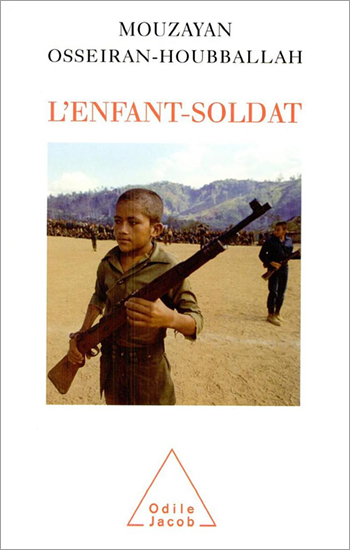
Mouzayan Osseiran-Houbballah
The Child Soldier
The existence of thousands of child-soldiers is one of the scandals of our time. UNICEF has estimated their number in the world today at 300,000 a figure that has grown in recent years due to the increase in the number of civil wars. What happens to them when the fighting ceases? Why are they no longer visible in Beirut, or elsewhere? Why do so many of them end up in drug-detoxification centres? What does the future hold for these children who know nothing besides how to handle weapons? Mouzayan Osseiran-Houbballah is a psychologist.
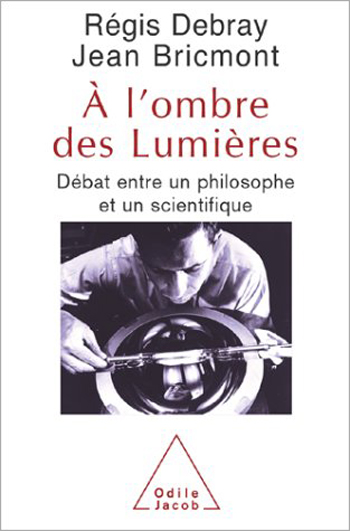
Régis Debray, Jean Bricmont
In the Shadow of Lights A Debate between a Philisopher and a Scientist
What is the meaning for us today of the Enlightenment? Of positivism and of the social sciences? How should we envision the revolutions in physics, biology and the neorosciences? What are the future roles of ideology and politics, faced with the challenge of the present religious come-back? Is the notion of progress still relevant? Can a fundamental, universal anthropology be established? In their discussions, the authors Debray from a literary point of view, and Bricmont from a scientific one meet, confront and defy each other. In the course of their talks, they summon theory and practice, past and present, history and current events, facts and their own personal convictions, to give the reader a brilliant lesson against the dominant mood of nihilism. Régis Debray heads the European Institute of the History and Science of Religion. He is the author of numerous works, including God, An Itinerary. Jean Bricmont teaches theoretical physics at the University of Louvain. He is the co-author with Alan Sokal of Intellectual Impostures.
Yves Michaud
China Today Volume 8
China is a nation at the crossroads of tradition and modernity. In this previously unpublished volume in the series "lUniversité de tous les savoirs", the authors review the present-day situation and ask the following questions: How should Chinas current political system be defined? What is Chinas position in the world today? What are the different aspects of cultural and intellectual life in China? This is a novel approach to a history of contemporary China. Contributions by Marie-Claire Bergère, Michel Bonnin, Charles Chauderlot, Anne Cheng, Yves Chevrier, Jean-Luc Domenach, Françoise Ged, François Godement, Wang Shaoqi, Joël Thoraval, Léon Vandermeersch, Chu Xiao-Quan.
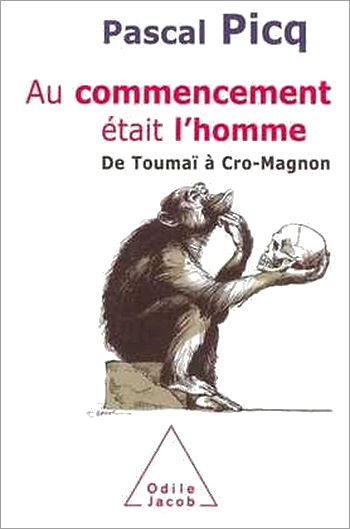
Pascal Picq
And at the Beginning there was Man...
In forty years, the genealogical tree of human evolution has grown so extensively that it now spans six million years. But fossils, the tree of evolution and the story they tell openly challenge all prevailing ideas about evolution; and though they have been shaken, these ideas have barely begun to change. In this book, Pascal Picq examines concrete, existing proof of our origins and then goes on to offer a new view of the human position in the evolutionary process. Pascal Picq is a senior lecturer in paleo-anthropology and prehistory at the Collège de France.