
Catalog All books

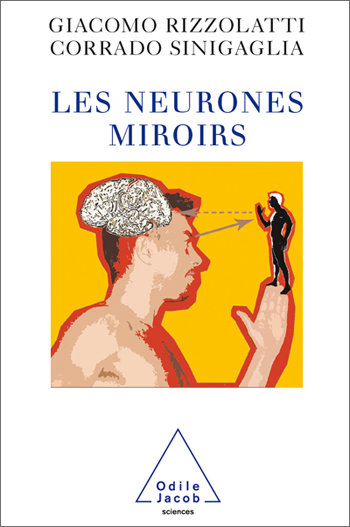
Giacomo Rizzolatti, Corrado Sinigaglia
Mirror Neurons
The discovery of mirror neurons is the most spectacular finding of recent years in the cognitive sciences
James Teboul, Philippe Damier
The Mirage of Leadership Challenged by Neuroscience
To assume their role effectively, managers must know how to take into account the predispositions and biases that make them act, and thus understand them, and work resolutely against the grain of their natural inclinations.

Danièle Voldman
The Mine Clearance of France after 1945
At the liberation of France, the country was covered in mines, planted by the Germans, the Allies and the Resistance during the conflict. The population were fearful of resuming normal life in the face of this danger: France had to remove the mines. Thus in 1945, mine clearance was invented, as before then no-one had any idea how to defuse these weapons of death! Who would be given the heavy responsibility of leading this task ? What did it involve ? What role did the German prisonners of war play ? Danièle Voldman, a historian, is the research director of the CNRS (Institute of Contemporary History).

Mark Williams, Danny Penman
Mindfulness: An Eight-Week Plan for Finding Peace in a Frantic World
Following The Mindful Way through Depression, the latest success by Oxford professor Mark Williams


Christopher K. Germer
The Mindful Path to Self-Compassion Freeing Yourself from Destructive Thoughts and Emotions
An introduction to self-compassion by an eminent clinical psychologist and bestselling author


Sébastien Bohler
Mind Wars
What if the goal of research on the brain is mind manipulation on a global scale?

Jerry Fodor
The Mind Doesn't Work That Way The Scope and Limits of Computational Psychology
In this book, one of the most eminent figures in the field of cognition reviews his most recent views on the subject, and questions the validity of recent attempts to combine the computational theory of mind with psychological nativism and with biological principles borrowed from Darwinian evolutionary theory. Fodor goes on to examine the question that has remained unanswered for the past fifty years: is the mind a computer? This is a fascinating lesson of philosophical and scientific modesty. Jerry Fodor is a professor of philosophy at Rutgers University.


Patrick Boucheron, Alain Prochiantz
Migrants, Refugees, and Exile Colloquium at the Collège de France
The timeliness of the issue of migratory movement and the displacement of populations. The multi-disciplinary nature of the studies, which bring together history and geography, geopolitics, psychology, as well as law and economics.


Pierre Mélandri, Justin Vaïsse
The Middle Kingdom The United States and the World Since the End of the Cold War
"No one would deny the central role played by the U.S. More than any other nation, it has shaped the world we live in and will continue to do so for several years to come. For this reason, it is essential to judge its actions abroad in a manner that is as free of clichés as it can. Our goal was to present the reader with as complete a picture as possible of U.S. presence in the world, without neglecting any episode or omitting any angle that could be insightful." Pierre Mélandri and Justin Vaïsse Justin Vaïse is a historian. Pierre Mélandri teaches at the University of Paris III-Sorbonne Nouvelle.


Françoise Millet-Bartoli
Mid-Life Crisis A Second Chance
In France, the notion of a mid-life crisis remains relatively little known. And yet, just like childhood and adolescence, mid-life is a specific age characterised by a distinctive psychology and, sometimes, psycho-pathology. This often-feared time of life, governed by major personal changes, can also be a period of true rebirth if the mid-lifer learns how to deal with the changes, by being informed and knowing how to react. This book focuses on what mid-lifers can do to live in greater harmony with themselves. Françoise Millet-Bartoli is a psychiatrist and psychotherapist and teaches at the medical faculty of Toulouse.