
Catalog All books
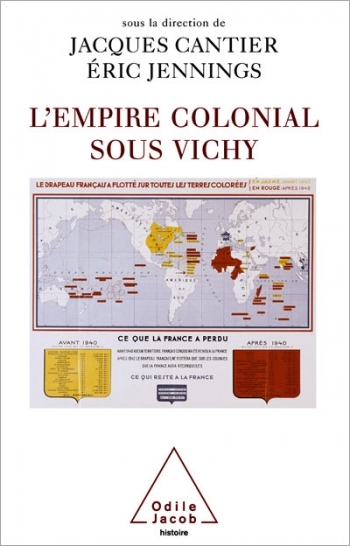
Jacques Cantier, Éric Jennings
The French Colonial Empire under Vichy
In the 1990s, historians began studying the Vichy government in the French colonial empire. The articles gathered here by Jacques Cantier and Eric Jennings are the outcome of recent exchanges among historians on the subject. The book reflects the writers' various research interests and includes: an examination of the political decision-making process, the composition of governing bodies, the development of institutions to strengthen government control of society, and the reaction of the local population to the new political measures. The editors' purpose is dual. First of all, the colonial mirror serves to elucidate the underlying logic and the workings of the regime that resulted from the French defeat. Secondly, the editors have sought to place the Vichy period into the wider context and more extended time frame of colonial history and decolonisation. They have done this by structuring their analysis of Vichy in the empire into several sections. The first part of the book examines the conditions under which the Vichy government tried to unite the colonial bloc to mainland France. The second part analyses Vichy's authoritarian policies, particularly those that aimed at controlling youth. The large demonstrations that took place in Vichy Algeria in 1941 illustrate the efforts undertaken to showcase the National Revolution in Algeria. The third part studies the different forms of repression exercised by the regime, particularly the conditions governing the application of anti-Semitic legislation in the empire, the stifling of the Masons, and the existence of internment camps in North Africa. The fourth part reveals the tactics used by the European and colonial elites in French West Africa (Afrique Occidentale Française) to preserve their influence. The Vichy legacy is examined in a final section, which provides both an overview of the situation in the empire as a whole and a detailed analysis of the telling example of Madagascar. This is a unique and highly innovative study by eminent historians of a little-known aspect of French colonial history during the Vichy period. Jacques Cantier is a lecturer at the University of Toulouse-Le-Mirail, France. He is the author of L'Algérie sous le régime de Vichy and Jules Roy: l'Honneur d'un rebelle. Eric Jennings is an assistant professor at the University of Toronto, Canada. He is the author of Vichy in the Tropics.

Philippe Jurgensen
The Error of the West In the face of globalization
Philippe Jurgensen shows how the growing economic gap between North and South is responsible for four major threats that, in the short or long term, will endanger the small group of rich nations that possess three-quarters of the worlds wealth. These four threats demographics, health, the environment, strategy are each analysed in turn in a way that is accessible to non-specialists. Jurgensen shows that the current selfish attitude of the West is not only reprehensible but, above all, dangerous and therefore politically untenable. Philippe Jurgensen is a senior official of the French Treasury.
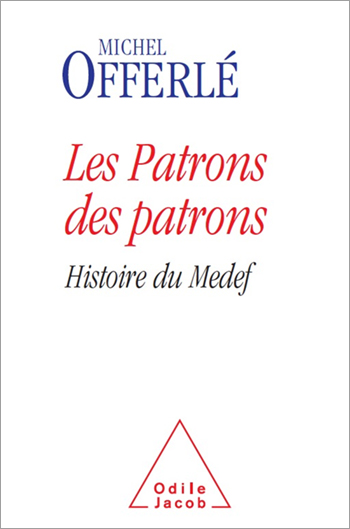
Michel Offerlé
A History of France’s MEDEF Employers’ Association
Organisation, power structure, lobbies, secrets: a history of the Movement of French Enterprises (MEDEF)
Mario Bettati
The International Struggle Against Terrorism
Terrorism and the anti-terrorist struggle appraised by an eminent European expert

Howard Gardner
Truth, Beauty, and Goodness Reframed Educating for the Virtues in the Twenty-First Century
Truth, Beauty, and Goodness Reframed is an approachable primer on the foundations of ethics in the modern age.
Pierre Buser
The Brain : Yours and Others
This book is both a careful review of the numerous debates that have stirred--and continue to stir--the cognitive sciences, and a personal essay. The author has tried to elaborate an original theory of psychic activity, based, on the one hand, on the cognitive conscious and the cognitive unconscious, and, on the other, on the cognitive unconscious and the affective unconscious. Pierre Buser, a former director of the Institut des neurosciences at the Centre national de la recherche scientifique, is Professor Emeritus at the Université Pierre et Marie Curie, and a member of the Académie des Sciences.



Jacques Lesourne, Denis Randet
The Research and Innovation in France FutuRIS 2013
The latest on research and innovation in France, described in the 2013 edition of FutuRIS’s annual opus

Jean-Pierre Changeux
The Life of Forms and the Forms of Life
Under the editorship of Jean-Pierre Changeux, a brilliant group of scientists and academics tackle the question of form

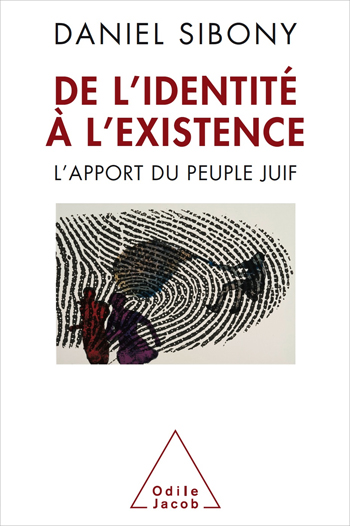
Daniel Sibony
From Identity to Existence The Jewish People’s Contribution
How the uniqueness of the Jewish people can help us all —Jews and non-Jews
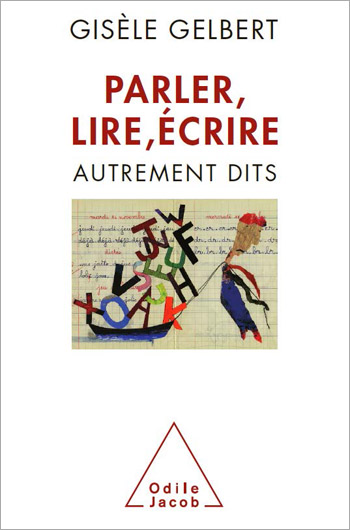
Gisèle Gelbert
Speaking, Reading, Writing In Other Words
A completely original approach to aphasic language disorders...
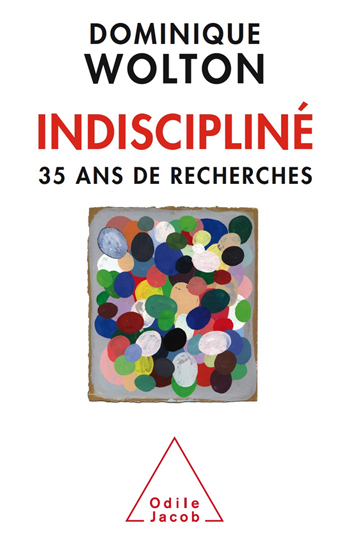
Dominique Wolton
Forms of Indiscipline
A brilliant, authoritative synthesis of Dominique Wolton’s thought and work

Christian de Duve
Seven Lives in One Nobel Prize winner's Memoirs
The life of an exceptional Nobel Prize winner, from childhood to scientific recognition and acclaim
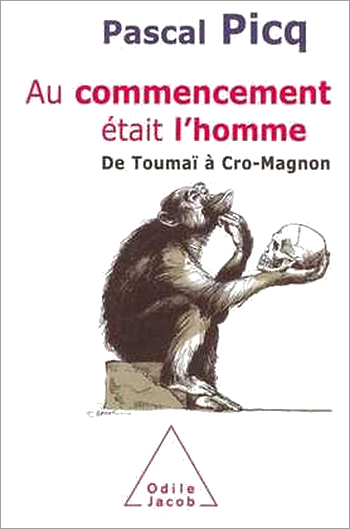
Pascal Picq
And at the Beginning there was Man...
In forty years, the genealogical tree of human evolution has grown so extensively that it now spans six million years. But fossils, the tree of evolution and the story they tell openly challenge all prevailing ideas about evolution; and though they have been shaken, these ideas have barely begun to change. In this book, Pascal Picq examines concrete, existing proof of our origins and then goes on to offer a new view of the human position in the evolutionary process. Pascal Picq is a senior lecturer in paleo-anthropology and prehistory at the Collège de France.
André Lévy-Lang
The Revolution of Finance: Act II
Precise, concrete, this book will enthrall anyone who is interested in economics and finance and in new technologies.
François Heisbourg
The Age of Predators: China, America, Russia, and Us
A book that explains our present and clarifies our future.
Pascal Picq
And Evolution Created Woman Sexual Coercion and Violence in Men
An accessible, compelling assessment of what has been learned concerning the relationships between the sexes/genders from an evolutionary point of view.

Barbara Donville
New Paths for Navigating Autism in Children
Autistic children are misunderstood because they think and act in ways that are unfamiliar to the rest of us. A therapist brings her personal experience to the subject in this profound yet practical book.

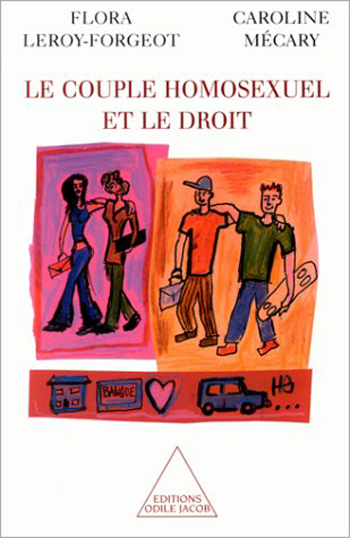
Flora Leroy-Forgeot, Caroline Mécary
The Homosexual Couple and the Law
"Should homosexual unions be recognised? Can foreign models of homosexual unions serve as a point of reference? What was the process of recognition? What could be the consequences? These are but some of the questions raised in this book, which provides all the necessary historical references concerning the social recognition of same-sex couples through the ages. Above all, it provides information on the various legal forms that such social recognition has taken in France as well as in other countries in Europe and North America. Flora Leroy-Forgeot and Caroline Mécary Flora Leroy-Forgeot is a researcher at the Institut Michel-Villey of Legal Studies and Philosophy of Law, at the University of Paris II. Caroline Mécary is a lawyer on the Paris bar and teaches at the University of Paris XII.

Jean-Marc Daniel
The State of Connivance Abolishing Rentier Capitalism
How to make the transition from rentier capitalism to competitive capitalism?
Anasthasia Blanché
The Odyssey of Retirement: A Private and Collective Adventure
A sociologist’s point of view on a new phase of life that will concern ever-more people.

Jeanne Siaud-Facchin
What Keeps Children from Doing Well at School? Recovering the Joy of Learning
Understanding children, stimulating them and putting them on the path to success