
Catalog All books
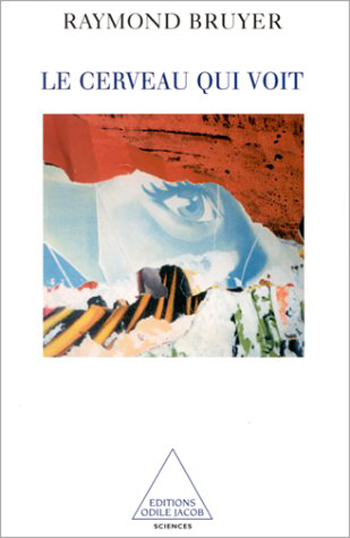
Raymond Bruyer
The Brain that "Sees"
Based on numerous examples, this book describes and explains the phenomenon of perceptive recognition: how with minimal information the human brain can identify not only general forms (a man, a woman, a cat, a dog, a house, and so forth), but also specific individuals who might seem scarcely distinguishable from one another, unless a large amount of information is provided. This study of the brain that sees is also an exploration of the perceived world. Raymond Bruyer teaches experimental psychology at the University of Louvain La Neuve, Belgium.
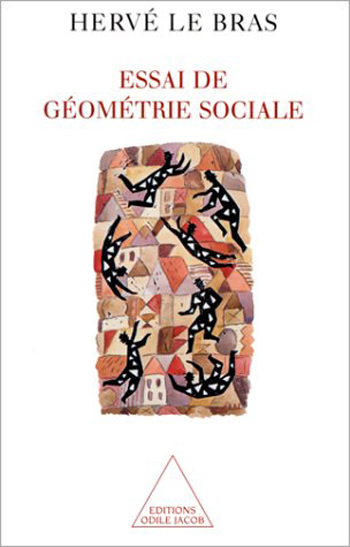
Hervé Le Bras
Essay on Social Geometry
Hervé Le Bras examines here how post-modern mathematics, targeting concrete issues, can help us to address a fundamental concern of all human societies, i.e., how space is occupied. Among many topics he examines pastoral nomadism, agricultural sedentariness, territorial conquest, migrations, ancient and modern urban planning, national and regional development, and road traffic. Hervé Le Bras is a demographer and course director at the Ecole des Hautes Etudes en Sciences Sociales.
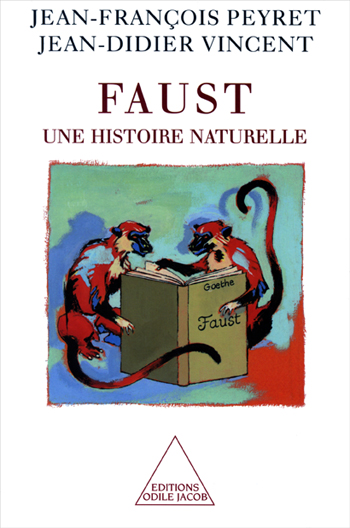
Jean-François Peyret, Jean-Didier Vincent
Faust A Natural History
It all began in July 1995, when theatre director Jean-François Peyret met with biologist Jean-Didier Vincent, in the latters lab. The intellectual exchange and friendship that developed from that meeting resulted, several years later, in a theatrical production based on a free adaptation of Goethes Faust, until then deemed unperformable. In this book, they look back on their production of Faust, and take stock of their experience. Their book can be regarded as a novel, a dialogue, a confession, a reinterpretation of Faust, or simply a mind game. Quietly and without ostentation, Peyret offers the reader a brilliant examination of the theatre today, and Vincent upholds his views more freely and strongly than ever before.