
Catalog All books
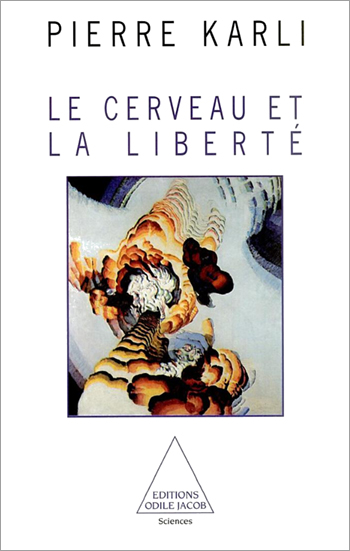
Pierre Karli
The Brain and Freedom
What is the relationship of man with the world, the others, with himself? To this perpetual question, many answers have been given by the various, religious or philosophical systems of thought. Pierre Karli, a neurophysiologist, proposes to look in the direction of science. He shows, by synthesizing the most advanced scientific works, how individual freedom finds its roots at the very heart of the brain.
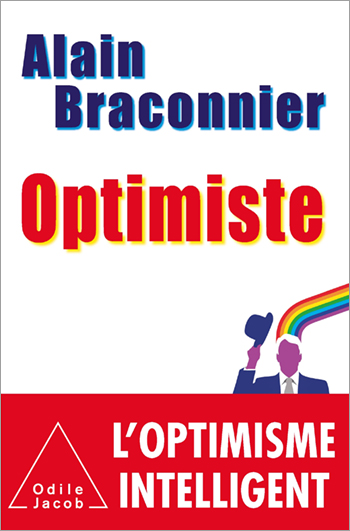
Alain Braconnier
Optimist
How to develop and cultivate optimism, to contribute to our happiness and well-being
Paul Jorion
Understanding Our Times
A brilliant, iconoclastic work by the anthropologist and sociologist Paul Jorion
Olivier Houdé
Human Intelligence is Not an Algorithm
An original theory that proposes a new model of intelligence centered on intuition, logic, but also inhibition, indispensable for correcting our cognitive biases.
Antoine Guédeney
A Baby Doesn’t Wait Identifying, Treating, and Preventing Distress in the Very Young Child
The adventure of The Alarm Distress Baby Scale, which has become a formidable tool for prevention in perinatal and early childhood care.

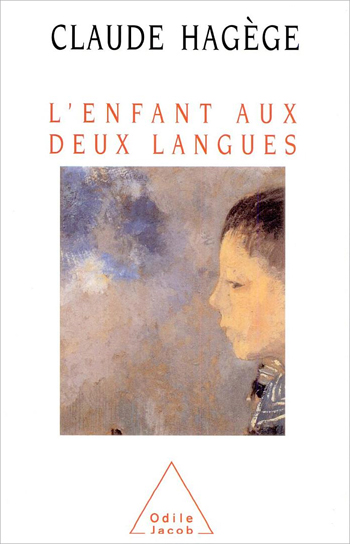
Claude Hagège
The Child who speaks two languages
At what age should we learn a second language? Which are the intellectual faculties which bilinguism helps to develop? What is the compared efficiency of language learning in childhood and in adulthood? In which case does a person forget a language, particularly a mother tongue? Claude Hagège tells us here that anybody can become perfectly bilingual and how Europe, which is not the continent where the most bilingual people are found, can multiply their number. Indeed, the challenge of bilingualism is at the heart of European union. C. Hagège, professor at the Collège de France, has published in particular L'Homme de paroles and Le Souffle de la Langue.
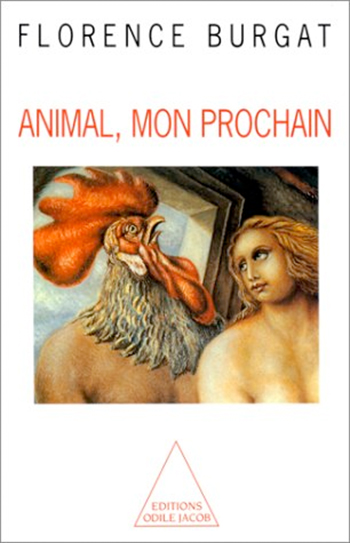
Florence Burgat
The Animal, My Relation
On one hand, men exploit, manipulate and slaughter animals. On the other hand, they let animals interfere with their lives, pollute them, and sometimes dominate them. Since the classical Age, Man has sought to define himself in his opposition to animals. Claiming for himself the most noble faculties - consciousness, thought, esthetic sense, morality - he represses his own animal side, notably his sexuality. But Florence Burgat goes beyond this negative statement. She walks in Jean-Jacques Rousseau's steps, claiming that men, like animals are sensitive beings, liable to suffer. On this basis, she proposes a new morality. Florence Burgat is a philosopher, and works at the Laboratory of Social Anthropology of the College of France.
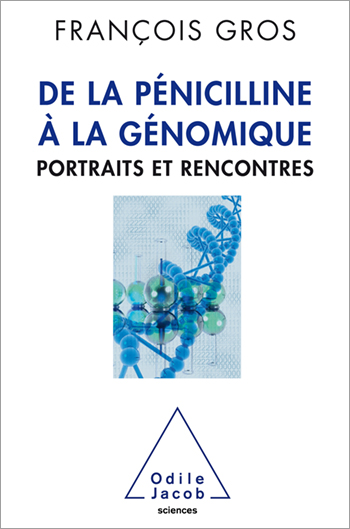
François Gros
From Penicillin to genomics
The life of a scientist, one of the discoverers of how genes function, and an explorer of the future of biology

Philippe Trouchaud
Cybersecurity
All specialists agree that hacking incidents are only increasing. This book proposes ways to learn how to protect oneself while acknowledging that zero risk no longer exists.
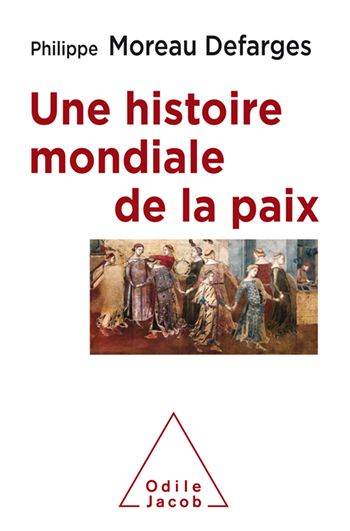
Philippe Moreau Desfarges
A History of Peace Ideas for the Future
An original thesis: peace is inescapable (in spite of all the resurgence of wars); it will be contractual and democratic (in spite of the reforming of empires).
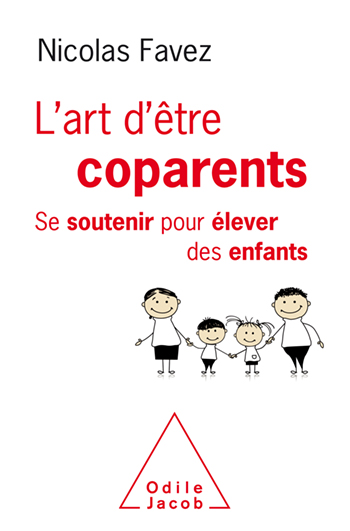
Nicolas Favez
The Art of Being Co-Parents How can parents best handle co-parenting?
From parenting to co-parenting: the new challenge that parents today must face and for which they must be prepared.