
Catalog All books
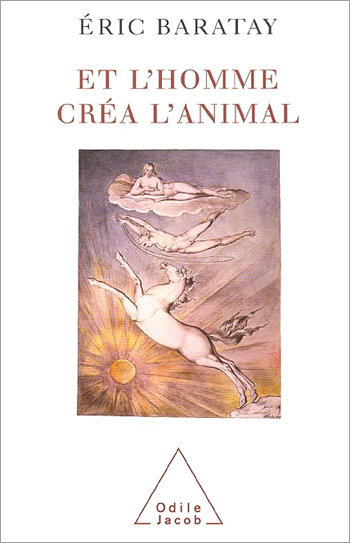
Éric Baratay
And Man Created the Animal History of a Condition
In this book, Baratay holds a mirror up to humanity. He reviews the changing status of animals throughout human history: from ancient myths about animal domestication to the invention of bullfighting, from the great pastoral epics to modern slaughterhouses, from the ancient role played by animals in the human imagination to modern laboratory testing. Eric Baratay is a historian specialising in the contemporary world and in the status of animals.

Dominique Reynié
Europeans in 2003
What do people really think and what do they expect in the countries that have promoted the enlargement of the Union? What do we know about 15-to-24-year-olds, the first generation of European citizens? What ethnic biases are revealed by the failure of many voters to go to the polls in south-eastern Europe?What significance should be given to the euro-dollar parity? How permanent is it likely to be? This book is an essential work for all decision-makers, researchers, journalists, as well as for anyone who wishes to know more about the reality of a living, active Europe. Dominique Reynié teaches at the Institut dEtudes Politiques.

Jerry Fodor
The Mind Doesn't Work That Way The Scope and Limits of Computational Psychology
In this book, one of the most eminent figures in the field of cognition reviews his most recent views on the subject, and questions the validity of recent attempts to combine the computational theory of mind with psychological nativism and with biological principles borrowed from Darwinian evolutionary theory. Fodor goes on to examine the question that has remained unanswered for the past fifty years: is the mind a computer? This is a fascinating lesson of philosophical and scientific modesty. Jerry Fodor is a professor of philosophy at Rutgers University.
Yves Pouliquen
The Action and the Mind
What does it signify for a surgeon to run the numerous risks, present in every slightest move, in accepting to operate on an eye ? What does it mean for the patient undergoing the operation to place themselves in the hands of strangers, inevitably with a degree of mistrust, in order to be able to see again ? The surgeon and the patient are in fact the protagonists of a human adventure, a scientific conquest and a forgotten medical revolution, which deserve to be related. This is especially since the surgery of the 21st century will also demand creativity, ingenuity, faith and discipline all the forms of engagement that one calls human intelligence Yves Pouliquen An internationally known specialist in ocular surgery, Professor Yves Pouliquen is the author of several books published with Odile Jacob, such as The Transparency of the Eye.
Dominique Schnapper
As Time Goes By A Chronical of 2001-2002
From a mythical meeting in the year 2000, to From our almost mythical appointment with the year 2000, to the presidential upheavals in 2003, this book presents the first expansive record of our entry into a new century. Through insightfully chronicling the passage of time, with both emotion and analysis, the author is able to present us with a picture of our contemporary world. Dominique Schnapper is a director of studies at the École des Hautes Études en Sciences Sociales.

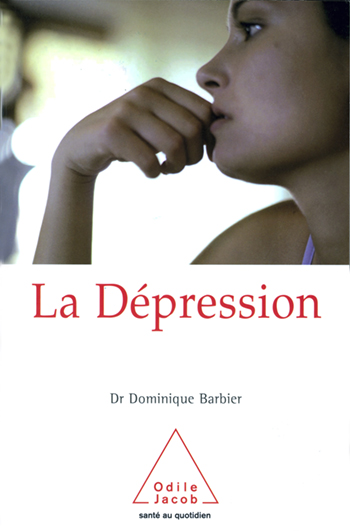
Dominique Barbier
Depression
This is a practical book, aimed at those suffering from depression, as well as their families and friends. It reviews such basic questions as: What is known today about depression? How can depression be recognised? What are its different forms? What are the complications? How can it be treated? Dominique Barbier is a hospital psychiatrist, in Montfavet, southern France.