Catalog All books
Jacques Lesourne
Europe at Its Twilight? A prospective Essay
What are the strategies that can halt Europe’s decline?

Fabrice Jollant
The Suicide Understanding and Helping Those at Risk
Understanding the causes of fragility, in order to identify vulnerability to suicidal behaivours

Éric Crubézy, Dariya Nikolaeva
Archeology of the Vanquished or History of the Victor?
An analysis of natural selection, the evolution of societies, and adaptation to climate and the environment. A different way of looking at history, by questioning what ensures the survival of certain societies facing extreme natural conditions as well as invasions and colonization.
Philippe Aghion, Céline Antonin, Simon Bunel
The Power of Creative Destruction A publishing event in Economics!
This book brings together five years of courses at the Collège de France and more than thirty years of research and instruction on “the economy of creative destruction.” It is Philippe Aghion’s seminal work.
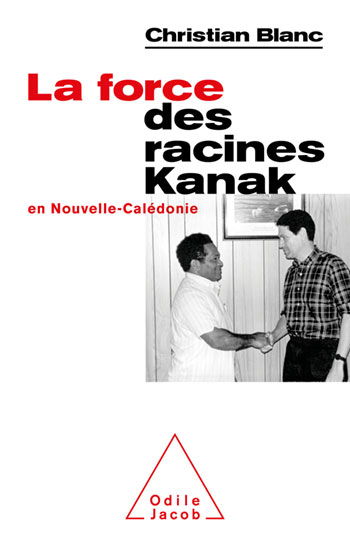
Christian Blanc
The Strength of Kanak Roots in New Caledonia
An exceptional account of a significant episode in the recent history of France, by one of its principal participants.

Patrice Debré
Research in Times of Epidemics From AIDS to Covid
The views of a doctor, who analyzes the AIDS crisis as the catalyst for a new health democracy, in relation to the recent debates on the management of public health policies.
André Grimaldi, Yvanie Caillé, Frédéric Pierru, Didier Tabuteau
The Truth About Chronic Diseases
A team of authors that brings together the greatest specialists in French medicine in the most important fields: diabetes, cardiovascular disease, neurology, infectious disease and allergies. A real encyclopedia, which leaves no point in the shadows: from difficulties in following treatment to patient-physician relations, from families and carers to the public health system. A book that anticipates future problems faced by medicine, by doctors and by patients.
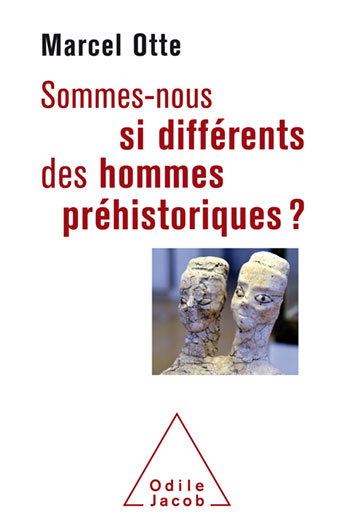
Marcel Otte
The Metamorphoses of Humans
A light shed by prehistory on the profound nature of humans, their relationship to the natural world, their appetite for conquest, but also their passion for challenges and their inventiveness.
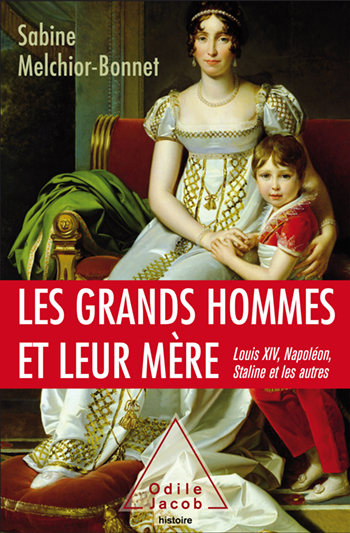
Sabine Melchior-Bonnet
Great Men and Their Mothers Napoleon, Louis XIV, Francis I, Kennedy and others
Another way to write the biography of a number of great men. An unusual historical perspective, intertwining serious research and a talent for writing. A history of representations of the maternal figure and a study of the evolution of the filial bond. A historical standpoint that offers readers a fresh look at the lives of men they thought they knew well, from Louis XIV to Stalin, via Napoleon and Kennedy

Olivier Artus, Sophie Ramond
Contemporary Challenges and the Hebrew Bible An Ethics of Good and Evil
A text that combines history, biblical science, philosophy and ethics, for an original reflection on society’s current challenges in terms of justice, ecology and human dignity.

Christophe André
Come Meditate with Us Meditation with the Experts
Assembled for the first time in a single volume, twenty-one leading figures in the world of meditation, who share their meditation secrets, including their doubts and the difficulties they, themselves, have encountered.

David Edwards
The Laboratoire’s Manifesto
The present work is about a very special kind of laboratory, which he founded and where creators and society can use the language of culture to communicate and to discover a new springboard for innovation.
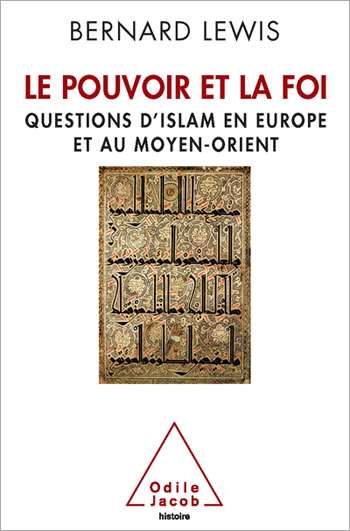
Bernard Lewis
Faith and Power Religion and Politics in the Middle East
One of the greatest experts on the Middle East revisits the great question of Islam and its clash with the West
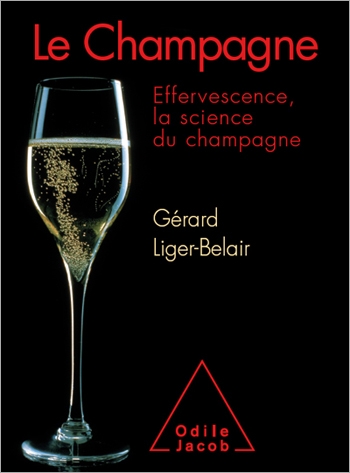
Gérard Liger-Belair
The Science of Champagne
In this fascinating book, Gérard Liger-Belair delves into the inner workings of champagne and pierces its mysteries...
Paule Nathan
Giving Meaning to Your Food to Give Meaning to Your Life
A spiritual journey starting with your relationship with food and being aware of what it means to eat.
François Lévêque
Imperfect Competition
A very wide diversity of examples taken from all sectors. Very educational, well written, and easy to understand, this book is also an economics lesson for Dummies.
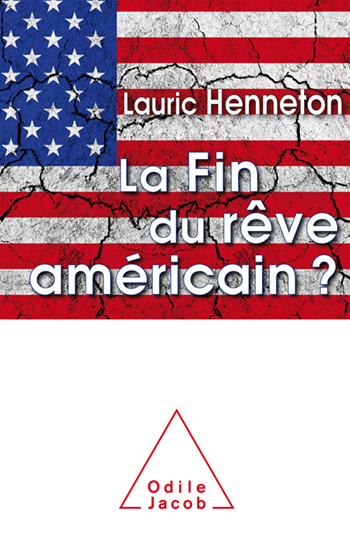
Lauric Henneton
The End of the American Dream?
A book that helps understand the history of the United States and American society today.
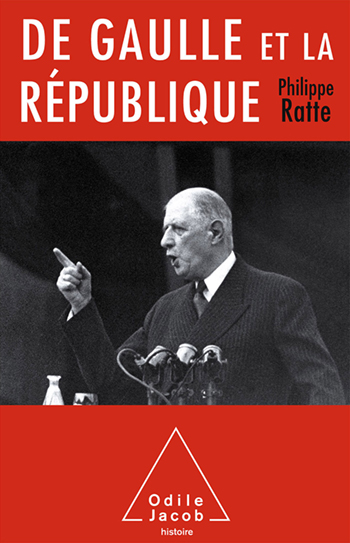
Philippe Ratte
De Gaulle and the Republic
A decisive speech for the history of France. A history lesson from an exceptional moment of founding and reform. An analysis of the founding of the Fifth Republic. A close look at what Gaullism was.

Jean-François Muracciole , Lucie Muracciole
The True Novel of the Free French People Another way of reading and understanding history
A gallery of portraits of the men who decided to join the Resistance and follow de Gaulle, who at the time was completely unknown. Fictional history and Great History come together to weave a surprising tale of the Resistance.

Barbara Demeneix
Toxic Cocktails How Endocrine Disrupters Are Poisoning Our Brains
Written for the general reader, the book is startling as it reveals the scandalous damage to our brains being caused by chemical pollution. Concrete measures, scientifically proven, to put an end to the tragic mistakes that have been committed in Western countries for over fifty years.
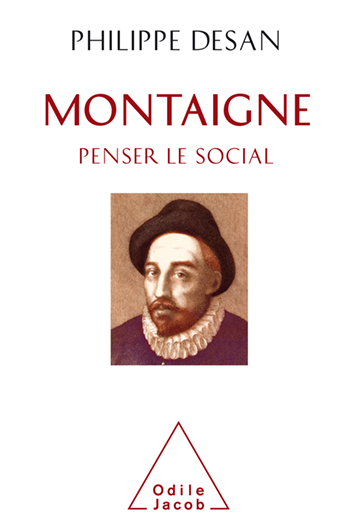
Philippe Desan
Montaigne Thinking about the Social
A study destined to become a work of reference, one that will be required for all courses on Montaigne.



Philippe Moati
The Future of Large-Scale Distribution
Few phenomena have changed our urban centres as much as the birth of large-scale distribution: our towns ans cities have been transformed, as have our methods of purchasing, and even our places of social interaction have moved. This is perhaps only the beginning. In this book, Philippe Moati reviews the development of large-scale distribution during the three decades of prosperity that followed World War II and the economic crisis that succeeded them. He analyses the problems encountered by large-scale distribution today and examines the development strategies that are currently being put into practice and the revolutions which are perhaps to come. Philippe Moati teaches economics at the University of Paris-VII and is a director of research at CREDOC.
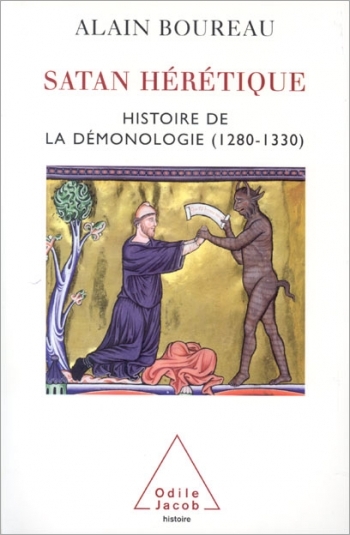
Alain Boureau
Satan, the Heretic History of demonology in Medieval Europe, 1260-1350
Alain Boureau is one of the most original French medievalists. In his earlier, best-selling book on the droit du seigneur, he showed that such a custom had never actually existed. The present work is not about Satan and Satanism, but about the birth of demonology, i.e. about the demons that inhabit Satan's Court - a fascinating topic for a medievalist. Before the end of the thirteenth century, theology had shown little interest in demons, according to Boureau. But Saint Thomas Aquinas' Treatise on Evil, written in 1272, changed all this. Boureau tries to find an explanation. He is not concerned with why people believe in demons - he has not written a social history of demonology. Instead, he sets out to understand why theologians became interested in the subject - for this is a history of theological ideas about demons. The author summarises his explanation as follows: I propose that the date of the invention of demonology be moved forward by more than a century, not because a new doctrine was established and enforced then, as was the case in the fifteenth century, but because of the considerable procedural changes that assimilated witchcraft and invocations of the devil with the crime of heresy, which in turn led to new legal developments and more revelations. In addition, the injection of doctrinal content into the ancient theme of the devil's pact explained demoniac activity in the world. The issue that lies at the heart of these discussions about a pact with the devil, evil and evidence is obviously the emergence of our legal system. Alain Boureau is a director of studies at the Ecole des Hautes Etudes en Sciences Sociales.