Catalog All books

Denis Jeambar
A State Secret
From a resounding victory, full of promises, to a surprise, humiliating defeat, the presidency of Jacques Chirac didnt manage to astonish the French nation or the world. This book lifts the lid on the plotting and secrets of the presidency. Denis Jeambar is the editor of the Express.
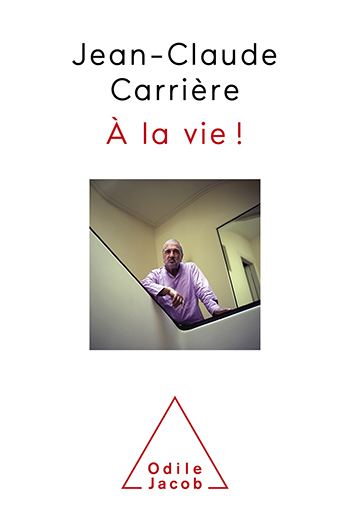
Jean-Claude Carrière
To Life!
A short, intimate, and heartfelt book, the latest conversation to which Jean-Claude Carrière invites us

Martin Collet
Is Taxation Confiscation?
Who should decide on the legitimacy of taxation? The Law’s reply to a social issue

Rita Levi Montalcini
Praise of Imperfection New Edition
Rita Levi Montalcini's life has been entirely dedicated to scientific research. She grew up in a tightly knit Jewish family and studied medicine in Turin. Forced into inactivity by the racist laws of Fascist Italy, she set up a makeshift laboratory in her bedroom and began studying the development of the nervous system. Her research, which she completed in the United States after the war, led to the discovery of the nerve growth factor whose role is to stimulate the growth of nerve fibres. Her autobiography, written with warmth and simplicity, traces the progress of her life, including being awarded the Nobel Prize for Medicine.

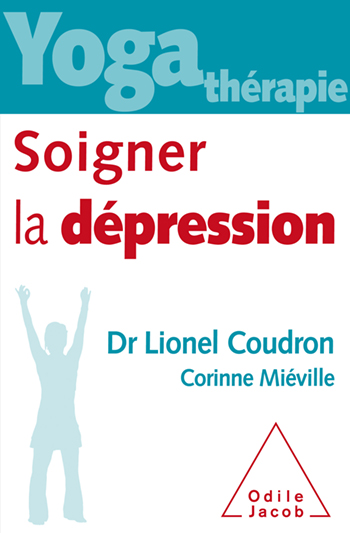
Lionel Coudron, Corinne Miéville
Yoga Therapy:Treating Depression
Yoga, through its physical and psychic activity, can help to break the vicious cycle of depression. Contains medical expertise and step-by-step exercises, and advice for healthy living. Written by one of the best known physicians and yoga instructors.

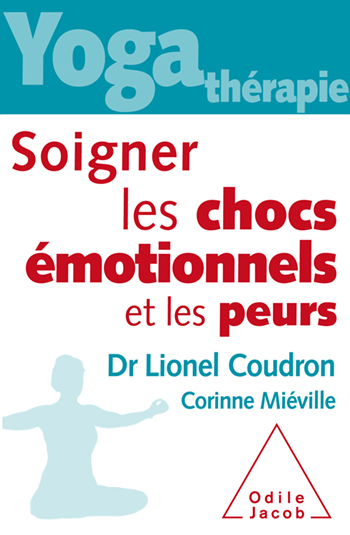
Lionel Coudron, Corinne Miéville
Yoga Therapy:Treating Emotional Shocks and Fears
Fear of flying, verification phobias (OCD), fear of taking transportation following a violent trauma: all these forms of anxiety handicap daily life. They do not randomly take root, but yoga can have an influence on their uncontrollable mechanisms.

Jean-Philippe Lachaux
Concentrate, And Your Brain Will Work For You
How can we help young children learn to concentrate? An enjoyable comic book to learn how the brain works. Practical, step-by-step tools to help children learn to concentrate and focus their attention. An approach based on cognitive neurosciences and tested in primary-school classes. A reader-friendly book for a unique concept.
Libby Purves
How Not to be a Perfect Mother
Are you one of those perfect mothers or are you a real mother? Perfect mothers always smile, always have immaculate homes, never raise their voices....


Claude Béata
Dog Psychology Stress, anxiety and depression
Many dogs suffer from such psychological problems as phobias, hyperactivity, separation anxiety and depression. This book recounts the stories of seven dogs, whose behaviour had become so erratic that their owners were on the verge of getting rid of them. Their veterinarian (the author) presents their stories as an investigation, taking the reader back to the origin of each disorder and then describing the form of therapy he used to enable each dog and its owner to cohabit in harmony. Written in a lively, often humorous style, this practical book will help readers understand the emotional life and behaviour of dogs. The chapters are presented in the form of accessible stories interspersed with sidebars containing relatively more technical information. Claude Béata is a behaviourist veterinarian and a member of the European College of Behaviourist Veterinarians. A specialist in emotional attachment, he is the co-author, with Boris Cyrulnik, of several interdisciplinary studies in comparative pathology.



Élie Hantouche, Vincent Trybou
Treating Your Cyclothymia Seven Keys of Self-Mastery
This sensible, useful guidebook is illustrated with numerous examples; it includes self-evaluation tests, practical information, and exercises for daily use.


Gérard Macqueron
The Psychology of Solitude
Do you lack friends? Do you fail to establish satisfactory affective relations? Does intimacy perturb you? Are you bored? Do you have a feeling of emptiness, of uselessness? If the answer to these questions is yes, you may be suffering from intolerance to solitude

Alain Ehrenberg
Tired of Yourself Depression and Society
Examining the changes that have occurred since the 19th century in both psychiatry and society at large, this book shows how the internal collapse that is depression is the ultimate symbol of our culture of powerlessness. The depressed person cannot rise above the demands imposed on him or that he imposes on himself. He has no recourse but fatigue, inhibition, and indecision. But what does it mean to learn to be oneself? Is our society merely creating huge numbers of hypochondriacs? Can we any longer draw a line between the small unhappinesses and frustrations of daily life, and pathological suffering? Alain Ehrenberg is a sociologist.


Jean-Marie Bourre
The Good Fats
Are fats the demons of modern times? Are they the bane of too rich diets? Are they the poison of opulent societies? Without fats, which are an absolute necessity for our brain and our health, life would be impossible. Fats are also the vectors of culture, through the many joys of cooking.

Élisa Brune, Yves Ferroul
The Secret of Women Journey through the pleasure and enjoyment
A practical approach that answers questions about how to access sexual pleasure



Michel Godet
The Impact of 2006 Demographics, Growth, Employment
France is undergoing a major recession on all fronts, according to Michel Godet. And it is pointless to blame globalisation, European construction or technological change. The demographic watershed of 2006, when the retirement-pension system will explode, will reveal decades of wasteful mismanagement. For how, he asks, can hope remain if there are no human beings?How can sustainable development be assured within a truly participatory democracy? This iconoclastic, inflamed indictment is above all a voluntarists message of lucidity and hope. Michel Godet holds the chair of futurology at CNAM.


Jean-Marie Bourre
The Performance Diet Intelligence, Memory, Sexuality
How can we stay concentrated all day long? How can we avoid energy drops and sleepiness? How can we keep and develop our memory? How can we stimulate our intellectual alertness? How can we sleep well? How can we improve our sexuality? How can we stay fit and enhance our physical capacities? J.M. Bourre shows that the answers to all these questions and many others can be also found in what we eat.

Édouard Zarifian
The Price of Well-being
Why is France one of the countries which has the highest rate of consumption of psychotropic drugs (tranquillisers, hypnotics, antidepressants, neuroleptics) ? Are the French more ill than other nationalities ? No, says Edouard Zarifian, it is rather that in this country, we offer medication for the least emotional trouble. It is thus a cry of warning that Professor Zarifian voices in this book, directly inspired by his celebrated report to the Ministry of Health which the public have not had access to up until now.