
Catalog All books
Roger-Pol Droit, Dan Sperber
Ideas on the Way
What ideas can we expect to see develop in the coming years? And how will they modify our conceptions of thought? What impact will they have on our personal existence, our daily reality, our rules for life? Will the intellectual models that are now emerging soon be influencing policy decisions? At a moment as symbolic as the beginning of a new millenium, we wanted to bring together the elements of thought which permit us to better respond to these questions." Roger-Pol Droit and Dan Sperber Both authors work at the Centre National de Rècherche Scientifique.

Patrick Bellet
Hypnosis, or How to Make Healthcare More Humane
Using hypnosis to improve personal healthcare
Jacques Rogé
Nietzsche's Syndrome
Nietzsche was a manic-depressive. This is the conclusion that one doctor, Professor Jacques Rogé has come to after reading the works of the great philosopher, in particular his autobiographical texts. In light of this diagnosis, he explains why the author of Joyful Wisdom continuously oscillated between periods of creative exultation and periods of melancholic depression. In particular, he draws out the essential role that this illness played in the explosion of Nietzsches genius.
David Elbaz
The 10,001 Nights of the Universe The Dance of the Cosmos
A modern version of Arabian Nights about the latest discoveries of the universe
Geneviève Delaisi de Parseval, Pierre Verdier
Nobody's Child
Adoption and medically assisted procreations reflect the same suffering and ask the same questions. In both cases, the institution, in the name of a mistaken conception of filiation, weighs upon the children's head with an absolute secrecy as to its biological origins. The authors show in this book the consequences this secrecy has upon the psychology of children and parents.
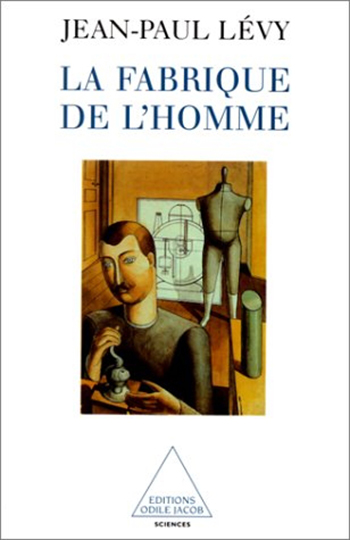
Jean-Paul Lévy
The Making of Man
Jean-Paul Lévy's book is marked by a resolutely materialistic reflexion, characteristic of biologists : the only thing that distinguishes man from all other living things is the capacity to reason. From this prospective, he explains how a human body is constructed, how and why it produces thoughts and why, one day, it finally ceases to function and dies. His thought process leads to a materialistic solution of the problem of the union of the body and soul. Jean-Paul Lévy is a hematologist and immunologist. He heads France's National Agency for AIDS Research

Thierry Vincent
Anorexia
Why are more and more young girls and women becoming anorexic ? Today it is a real social problem. The trend of diets, and the multiplication of magazines about losing weight are no longer enough to explain this phenomenon. Thierry Vincent poses fundamental questions in this book in order to understand how anorexica works. Perhaps the search for new ways of treating anorexia should depart from an examination of these questions. Thierry Vincent, a psychiatrist and psychoanalyst, is the medical director of the university health centre Georges Dumas, in La Tronche, near Grenoble, where high school and university students suffering from eating disorders are treated.

Jean-François Bensahel, Pierre d'Ornellas
Brothers, Apparently A serene and pacifist dialogue, at a time of great religious conflict
In a context of religious antagonism, a calm dialogue between Judaism and Christianity. An analysis of our time by two figures who do not minimize their differences but who seek, in a secular France, to establish common ground.