
Catalog All books
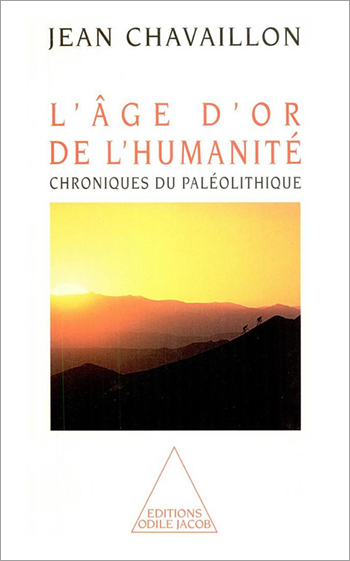
Jean Chavaillon
The Golden Age of Humanity Annals of the Palaeolithic Age
If myths tell the story of civilizations without writing, the myth of the golden age corresponds to a very precise period in the story of mankind: the superior paleololithic (between 35,000 and 9,000 B.C.). Even though different species of hominides coexisted in the same territories of Africa, there were no wars. Human groups were rare, they lived in an environment of abundance. They had time. Without art or religion, their life was carefree. All their knowledge was concentrated on the making of tools and in the mastering of fire. This is the everyday life of men from the Paleolithic which Jean Chavaillon describes in this fascinating book, illustrated by black and white reproductions. Jean Chavaillon, is a research director at the CNRS, a specialist in prehistory and a field worker.
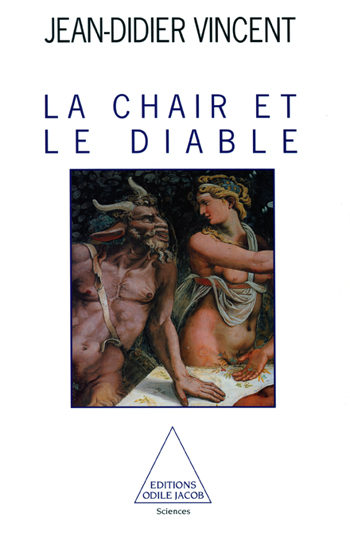
Jean-Didier Vincent
The Flesh and the Devil
"If I did not exist, nothing would exist, because there would be nothing to which oppose oneself", writes Fernando Pessoa in the devil's name. Is this the invention of a poet? Nothing is less sure. The scientist confirms the notion that life is born from the confrontation between molecules. J.D. Vincent invites us here to explore with him all the aspects, the ramifications, from animal life to the human brain, which are nurtured by this principle of opposition. The devil is constantly at work in the heart of the living, and neurobiologist Jean-Didier Vincent demonstrates this evidence with humor in his book, a continuation of the spirit present in his Biology of Passions.
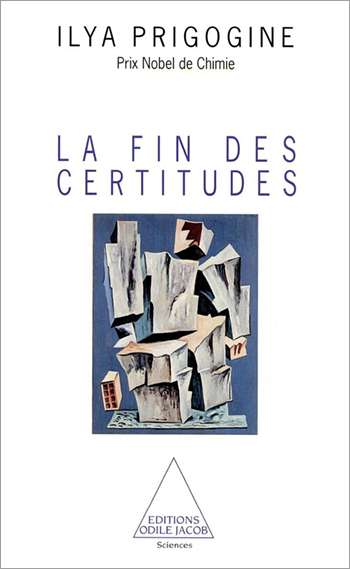
Ilya Prigogine
The End of Certainties
As we come to the end of the century, the question of the future of science is often posed. I believe we are just at the beginning of a new endeavour. We are witnessing the development of a science which is no longer limited to simplified, idealised situations, but makes us face the complexity of the real world. This new science will allow human creativity to be experienced as the unique expression of a fundamental trait common to all aspects of nature. Ive tried to present this conceptual transformation, which implies the beginning of a new chapter in the fruitful relations between physics and mathematics, in a manner that will be comprehensible and accessible to all readers interested in the evolution of our ideas of nature. We are but at the threshold of a new chapter in the history of our dialogue with nature, writes Ilya Prigogine. Ilya Prigogine, winner of the Nobel Prize for Chemistry, teaches at the Free University of Brussels and at the University of Texas, in Austin.
Serge Renaud
A Healthy Diet
It is possible to eat in a manner that reconciles the demands of staying slim, good health, and general well being - although the steady stream of unhealthy and sometimes dangerous slimming diets would tend to make us believe otherwise. The new health diet proposed here draws much from traditional Cretan eating habits - which seem to be responsible for the populations tenaciously long life. Crete has the highest life-expectancy rate, and its people have the lowest incidence in the western world of cardiovascular diseases, that scourge of the industrialised nations. Serge Renaud is the scientist who discovered that wine can play a role in protecting against cardiovascular diseases - a finding that has become known as the French paradox. After spending much of his career in the United States, he directed a research unit of INSERM (France) for twenty years.