
Catalog All books
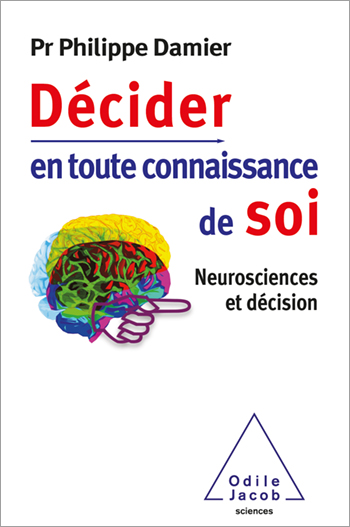
Philippe Damier
Decision Making Based on Self-Knowledge Neuroscience and Decision
Practical tips to avoid some of the common pitfalls of decision-makers. How to optimise the decision-making process.
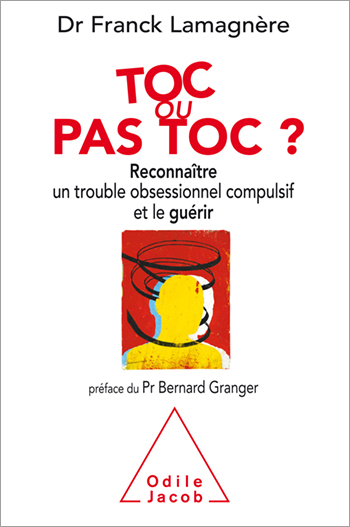
Franck Lamagnère
So, Is It OCD or Not? Recognising the Disorder and Helping Sufferers
An important reference work on obsessive-compulsive disorder, by a major French specialist
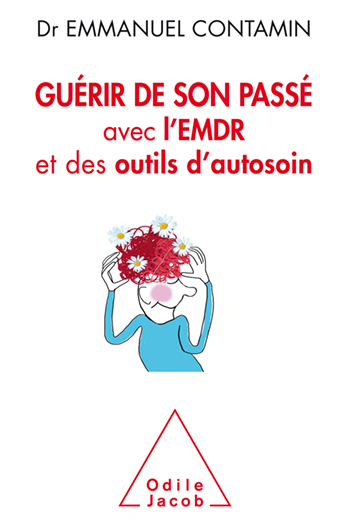
Emmanuel Contamin
Towards an ecology of the brain With EMDR and self-care techniques
Explanations for a general readership on the way in which the brain processes information, according to emotional load, and stocks it in various levels of memory. A pedagogical work that sensitizes us to the work of ecology that every one of us can lead, because it is possible to teach ourselves to better regulate our emotions. Ways, means and self-care tools to improve our mental hygiene.
Claude Debru, Frédéric-Pierre Isoz
Why Do We Believe?
This book is a dialogue between a philosopher and a psychoanalyst.
Georges Chapouthier
Saving Humans through Animals
An original thesis that connects in a paradoxical, but reasoned way, the development of morality in humans to their animal nature.
Pascale Cossart, Fabrice Hyber
The Great Voyage among Microbes
A wonderful introduction to microbiology by an eminent scientist. A richly illustrated work by Fabrice Hybert, very instructive.
Alain Trannoy, Étienne Wasmer
The Great Return of Land in Wealth
The French property and land wealth has reached an unheard-of volume of 7000 billion euros, more than three times the national GDP. How can it be taxed to release the burden that weighs on production?

Véronique Cortier, Pierrick Gaudry
Electronic Voting
Electronic voting cannot be left to experts alone; this book provides clear and precise answers to any questions citizens may have.

Pierre Fédida
The Benefits of Depression An Appreciation of Psychotherapy
When we attempt to cure human suffering with a chemical pill, arent we denying the real issues that have given rise to depression? Must we resort to denying the psyche in order to come out of a depressive state? Isnt there another way? Pierre Fédida shows that the emergence of a depressive state can always be explained by the disappearance of the capacity to fight off depression : the goal of the psychotherapy of depressive states should be the recovery of this capacity in order to regain ones vital inner balance without the reliance on chemical solutions. Pierre Fédida is a psychoanalyst.

Bernard Chouvier
The Fanatics
For more than twenty years, Bernard Chouvier has studied various forms of political and religious commitment and activism and their sectarian excesses.
Albert Najman
Creating Blood, Bone Marrow
The most recent discoveries in the functioning of bone marrow represent a great hope for treating diseases such as thalassemia, leukemia, lymphoma, and others.

François Tavoillot, Pierre-Henri Tavoillot
The Bee (and the) Philosopher An Amazing Journey into the Hive of Wisdom
The history of Western philosophy and culture, seen from the bee’s perspective
Alain Dupas, Charles Chatelin
Humanity’s Cosmic Destiny
An inspiring, sometimes disconcerting book. A new history of space exploration. A future-oriented look at the evolution of humanity in the light of the evolution of technology, both biological and that regarding space.
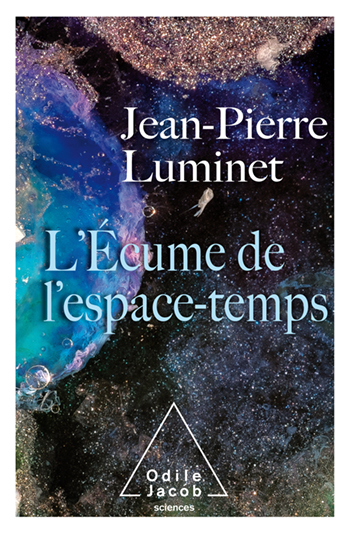
Jean-Pierre Luminet
The Froth of Space-Time The marvels of quantum gravity
The most abstract (and most recent) theories in physics and cosmology explained to all! No equations: only ideas and passion. A must for all science fans.
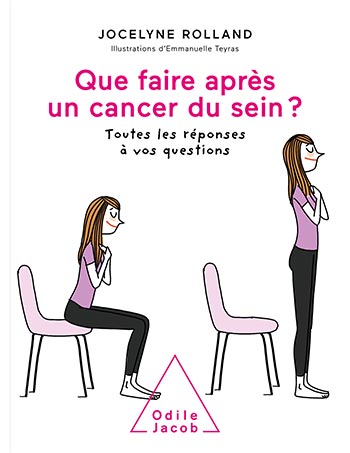
Jocelyne Rolland
What To Do After Breast Cancer?
Concrete answers and adapted exercises, guided by a physiotherapist specialized in working with women who have had breast cancer.
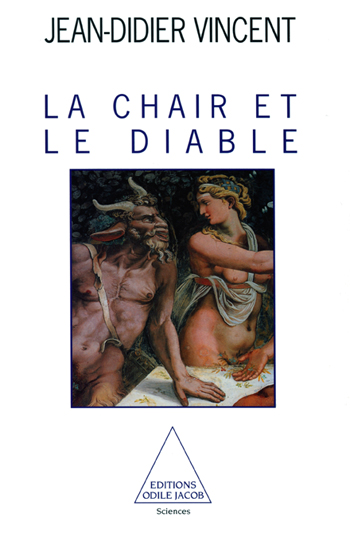
Jean-Didier Vincent
The Flesh and the Devil
"If I did not exist, nothing would exist, because there would be nothing to which oppose oneself", writes Fernando Pessoa in the devil's name. Is this the invention of a poet? Nothing is less sure. The scientist confirms the notion that life is born from the confrontation between molecules. J.D. Vincent invites us here to explore with him all the aspects, the ramifications, from animal life to the human brain, which are nurtured by this principle of opposition. The devil is constantly at work in the heart of the living, and neurobiologist Jean-Didier Vincent demonstrates this evidence with humor in his book, a continuation of the spirit present in his Biology of Passions.
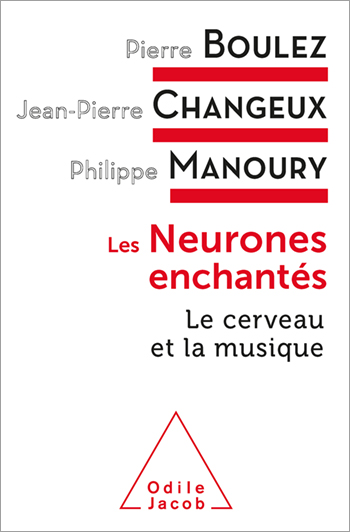
Pierre Boulez, Jean-Pierre Changeux, Philippe Manoury
The Enchanted Neurons The Brain and the Music
A unique event: two major intellectuals of our time discuss the links between the neurosciences and music
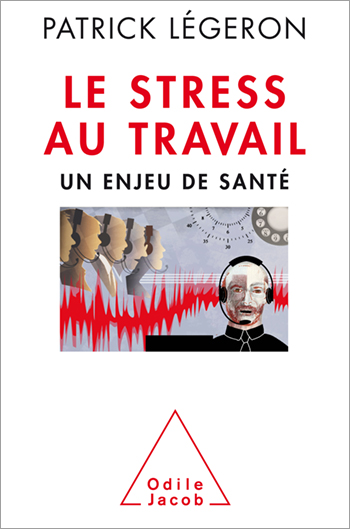
Patrick Légeron
Stress in the Workplace
A new, completely revised edition of an outstanding reference work on stress in the workplace
Philippe Durance, Régine Monti
The Long Term as a Horizon How do companies take the future into account and anticipate what lies ahead?
Interviews with senior executives of major companies: Danone, Michelin, Saint-Gobain, SPIE, Veolia, Caisse des Dépôts, Malakoff Médéric etc. Long-term issues are essential to corporate strategy and management.

Delphine Lhuillery, Erick Petit, Eric Sauvanet
All about endometriosis Relieving pain, curing illness
This is the first scientific and accessible book on endometriosis, this specifically female disease, which is still too little known to patients, but also to the medical profession.
Barbara Demeneix
How Fossil Fuels Are Destroying our Health, the Climate and Biodiversity
Based on the most recent scientific studies, this book shows the interdependence between the climate, biodiversity and our health. It will give food for thought to environmentalists
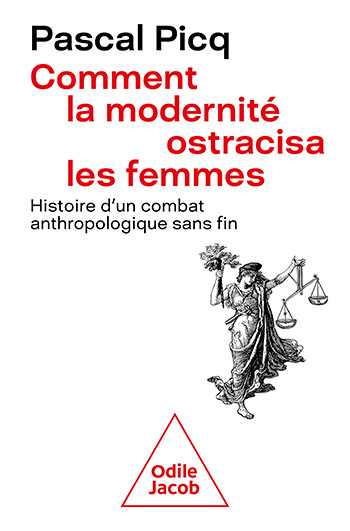
Pascal Picq
Women, Modernity and Progress
A book that looks back at history from an evolutionary perspective, by bringing women to the forefront of history and rejecting gender stereotypes that are often endorsed by historians themselves.
Bernard Diu
Do atoms really exist ?
Few scientific notions have aroused the speculative imagination like the thermodynamic entropy. All organised systems - societies, living creatures - are destined without exception to decline and eventual death. This book clearly exposes the historical and conceptual development of thermodynamics. Born from a desire to understand and master steam powered machines - the symbol of our industrialised societies - it became the science of the human body. However, it was suddenly passed over in favour of the theory of atoms. It was thus demolished by statistical mechanics which ceded to the imperatives dictated by the atomical structure of the body. After an epic struggle, sometimes quite ferocious, thermodynamics and statistical mechanics have been reconciled by adopting the base of the second with the techniques of the first. This book reads like a novel about contemporary physics. Bernard Diu, a graduate of the Ecole Normale Supérieur, is a professor at the University of Paris VII.
Jean-Marie Bourre
Chrono-dietetics of the Brain
How eating the right food at the right time can enhance brain health, efficacy and pleasure
Francis Waldvogel
A Tableau of Life Exchanges, Emergences, Complexity
A strong thesis that is applied to the entire visible and invisible world: the exchange that is the essence of the living being.
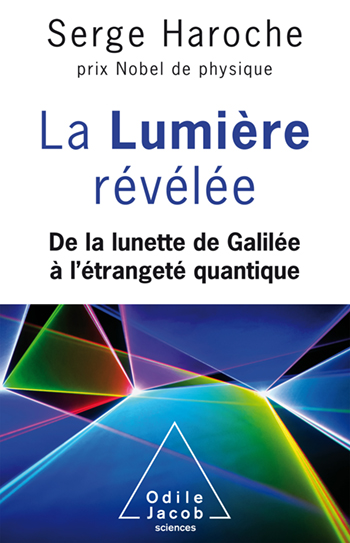
Serge Haroche
The light revealed
The is a scientific biography and history of what we know about light, including current advancements in the field, in which Serge Haroche has played a major role.

Jacques Fricker
The New Guide to Successful Slimming
How is it possible to lose weight safely ? How can you be sure you wont regain it ? How can being slim and healthy be reconciled with the pleasure of food ? What about the numerous methods which claim to help you lose weight : diets, proteins, sport, medications, psychotherapies, courses of treatments, surgery ? As a result of his own experience, and the most recent scientific discoveries, Jacques Fricker gives you the means to successfully slim.
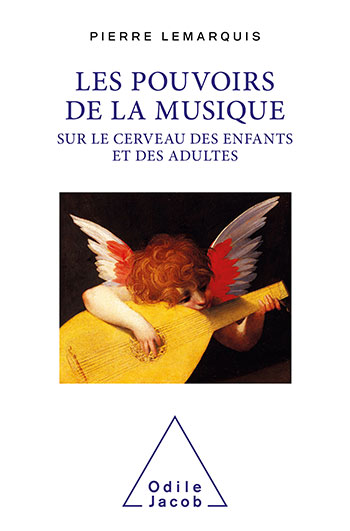
Pierre Lemarquis
The Benefits of Music for the Brains of Children and Adults
Music shapes and caresses our brain, it contributes to the development of individuals, to learning, to care, at every age in life.