
Catalog All books
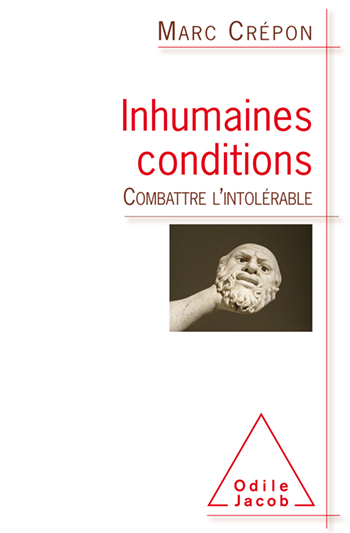
Marc Crépon
Inhuman Conditions Battling the Intolerable
a strong response to the omnipresent violence around us

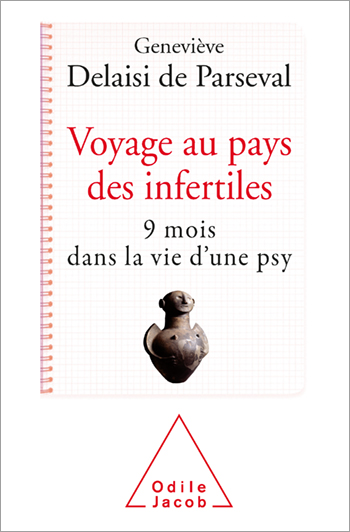
Geneviève Delaisi de Parseval
Infertility and the Pain It Causes Nine Months in a Psychoanalyst’s Life
Reproduction examined from every angle: hopes, ethics, norms, values and a changing society
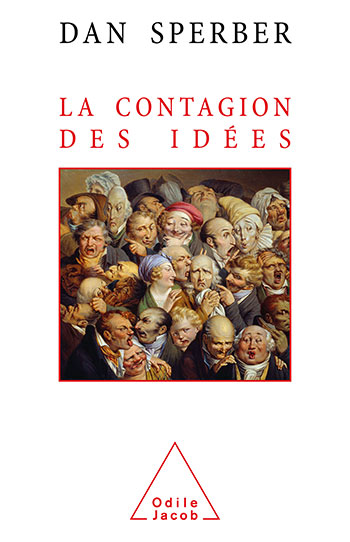
Dan Sperber
The Infectiousness of Ideas
Where do our ideas come from ? Some, just from ourselves, or at least we believe so, but the majority come from others which we then pass on in our turn. The age-old philosophical question on the origins of ideas is analysed here in relation to their mode of dissemination. In his search for the natural element of culture, Dan Sperber presents in this book an epidemiology of ideas which describes how they spread by passing from one person to another, undergoing transformations which are in the same category as mutations. He also investigates how these ideas establish themselves in the long-term by occupying our mental world without our conscious knowledge, which allows us to participate in our culture. Dan Sperber, an anthropologist, is the research director of CNRS.
Élie Cohen
Industrial Sovereignty
How can we escape our economic dependency and regain our industrial sovereignty? What substance should be given to this “strategic autonomy” that the French and the Germans henceforth hope will be achieved?

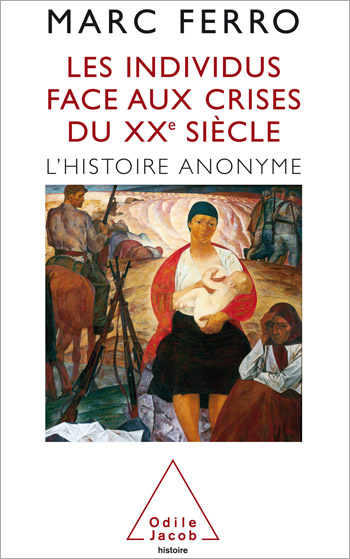

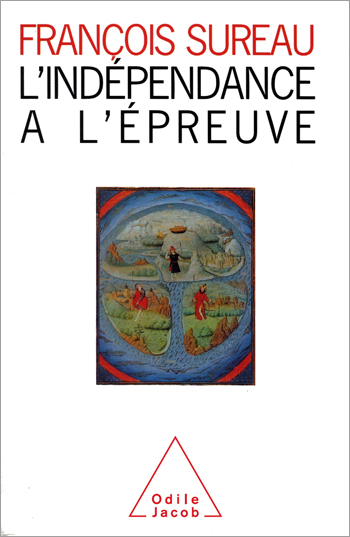

David Ignatius
The Increment
After tackling terrorism in his previous novel, David Ignatius continues to reinvent the contemporary spy thriller.
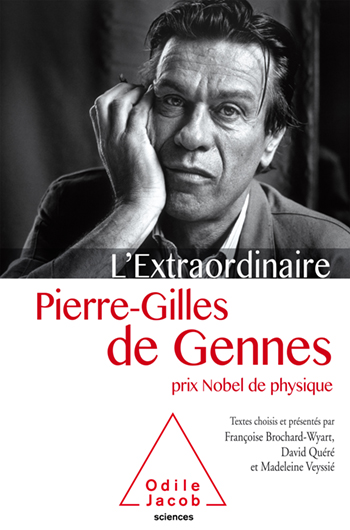
Françoise Brochard-Wyart, David Quéré, Madeleine Veyssié
Incredible Mister Pierre Gilles de Gennes Memories
A revival of "The French Feynman" through selected pieces, most of them previously unpublished. Scientific curiosity knows no borders; sharing it can abolish them.
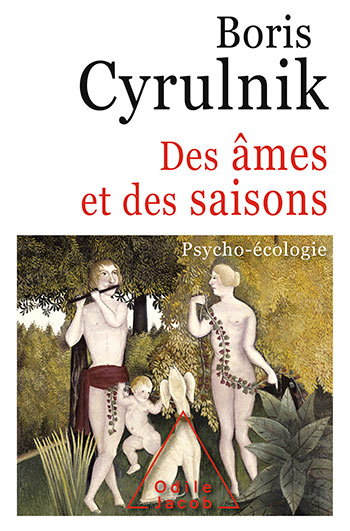
Boris Cyrulnik
In the Time of Souls and Seasons Psychology and Ecology
From the body to language, including the climate, culture, and, of course, the family, an astute description of the way in which our different environments (“ecology” in the broadest sense of the term) determine, from childhood, the person we are to become.
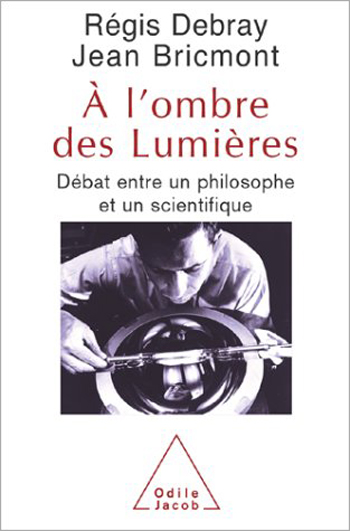
Régis Debray, Jean Bricmont
In the Shadow of Lights A Debate between a Philisopher and a Scientist
What is the meaning for us today of the Enlightenment? Of positivism and of the social sciences? How should we envision the revolutions in physics, biology and the neorosciences? What are the future roles of ideology and politics, faced with the challenge of the present religious come-back? Is the notion of progress still relevant? Can a fundamental, universal anthropology be established? In their discussions, the authors Debray from a literary point of view, and Bricmont from a scientific one meet, confront and defy each other. In the course of their talks, they summon theory and practice, past and present, history and current events, facts and their own personal convictions, to give the reader a brilliant lesson against the dominant mood of nihilism. Régis Debray heads the European Institute of the History and Science of Religion. He is the author of numerous works, including God, An Itinerary. Jean Bricmont teaches theoretical physics at the University of Louvain. He is the co-author with Alan Sokal of Intellectual Impostures.
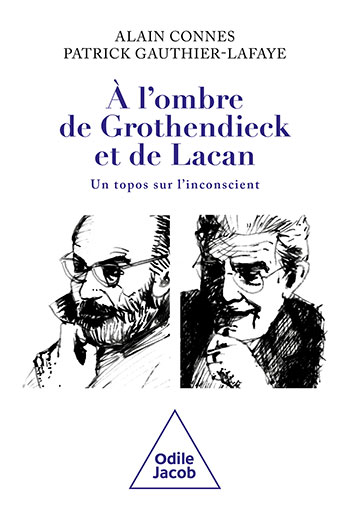
Alain Connes, Patrick Gautier-Lafaye
In the Shadow of Grothendieck and Lacan An overview of the unconscious
An original insight into the links between the work of a psychoanalyst fascinated by mathematics and a mathematical genius fascinated by the mind.
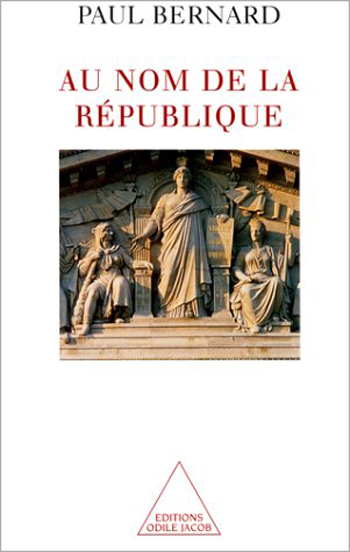
Paul Bernard
In the Name of the Republic
"Being a prefect is to do a job that comes with demands and responsibilities which are often not recognised. It is equally to accept a mission - that of representing the Republic. It is also adapting to the contradictions of the modern world." Paul Bernard Paul Bernard, a legal expert, has had a long prefectoral career which took him to various regions of France, including Aveyron, Sarthe and Corsica, before becoming the prefect of Rhône-Alpes and president of the Association du Corps Préfectoral et des Haut Fonctionnaires du Ministère de lIntérieur.
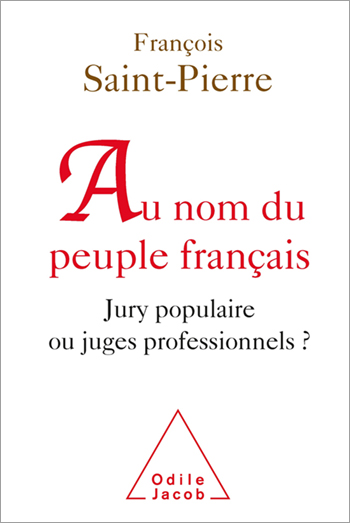
François Saint-Pierre
In the Name of the French People Trial by Jury or by Professional Judges?
Who should judge serious crimes?
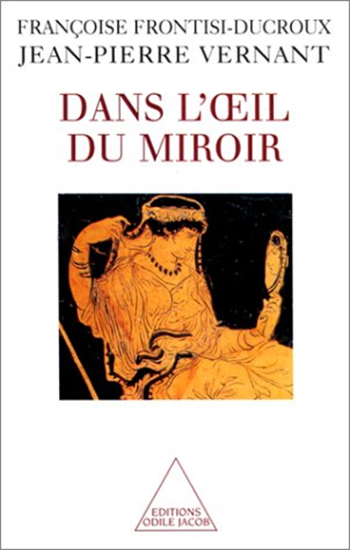
Jean-Pierre Vernant, Françoise Frontisi-Ducroux
In the Eye of the Mirror
How do the Greeks think of themselves ? Why do mirrors rarely reflect the true image of the person that looks into them ? And what image are they trying to project on others ? Formulated from an abundance of literature, iconography, and archeology, this book discusses the beginning foundations of individual representation. It is primarily a study of realities and appearances in an interpersonal society where social and personal status are dependant on how one is viewed and received in society. Secondly, the book analyses sexual identity and what it was in ancient Greece, through the study of a universal symbol, the mirror. Jean-Pierre Vernant and Françoise Frontisi-Ducroux teach at the College of France.
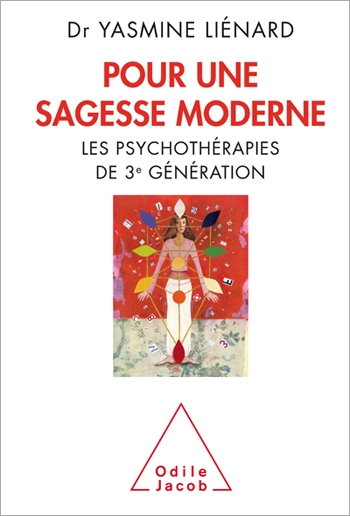
Yasmine Liénard
In Support of a New Wisdom Third Generation Psychotherapies
Using meditation and mindfulness to adapt to our changing society

Daniel Sibony
In Search of Another Time
An original text, brilliant writing and thinking that shed light on both the experienced familiar and the most abstract theories on time.
André Holley
In Praise of our Sense of Smell
Disparaged by the great philosophers and even by Darwin, who considered it useless, yet praised by Proust and Baudelaire for the richness of the emotions it inspires, the human sense of smell is generally considered secondary to the other senses. But is it really? André Holley makes a scientific argument for this powerful yet ambiguous sense. He also examines the tendency on the part of our society to deodorise to refuse accept that smells are sometimes bad, on the other hand inventing entirely new smells with the help of chemistry. Researcher at the CNRS, André Holley is a professor of neuroscience at the university Claude-Bernard in Lyon.
Thierry Lévy
In Praise of Judicial Barbarity
In March 2004, France instituted a special legal procedure, to be applied in infractions judged as serious, as part of an effort to give police more powers to combat new types of crime. If money-laundering and giving assistance to illegal immigrants may be regarded as relatively recent infractions, stealing, murder, procuring and counterfeiting are all ancient violations. The new procedure extends the powers of police to hold prisoners in custody; it will also allow some offenders who plead guilty and accept the public prosecutor's sentence to avoid a public trial. Thierry Lévy, a renowned criminal lawyer, shows that the new law only confirms a tendency that has been at work for a long time, since many trials are no more than empty ceremonies sanctioning decisions that have already been reached. The author examines the way Justice in France today functions and puts some current dysfunctions of the legal system in their historical perspective. He argues that Justice cannot be served if the rights of the defence are ignored. Thierry Lévy is a lawyer and a member of the Paris Bar. He is the author of Justice sans Dieu and the co-author, with Jean-Denis Bredin, of Convaincre.

Bertrand Fragonard
In Defence of Social Protection
Does the French Social Security system overspend? In the context of the economic crisis and the need to master public spending...
Dominique Bourg
In Defence of an Ecological Sixth Republic
Proposals for a reform of the French Constitution in the run-up to the 2012 Presidential elections
Michel Griffon, Florent Griffon
In Defence of a Viable World Global Change for Planetary Viability
Increased awareness and urgent measures needed by 2050 if we are to avoid the worst-case scenario on a planetary scale.