
Catalog All books
Robert Dautray
Quelles énergies pour demain ?
If there is such a thing as a French exception, it is in matters of energy. Lacking natural energy resources, France has developed a vast electro-nuclear programme which not only guarantees the country's political independence but also produces budget surpluses. Since the existing electro-nuclear equipment is not everlasting, and must thus be renewed, the question of the total dependence on nuclear energy has arisen once again. This book, by one of the most influential French scientists of the post-war period, is an in-depth analysis of the country's energy system and its problems, and the prospects for future development. The author begins by an examination of production methods by major categories (oil and natural gas, coal, hydraulic energy, solar energy, biomass, nuclear energy, geothermal energy, wind, renewable energy, bioenergy, thermonuclear energy). He then describes the role that energy plays in our society, and how society reacts to energy problems. He concludes that present and future citizen-consumers should be placed at the centre of all discussions about energy methods, that consumers should be satisfied and respected and that their opinions should be considered. But this, he says, is exactly the opposite of what has happened up to now. The last part of the book, which deals with scientific and technical research, tries to answer the questions: What should be done? What actions should be undertaken? Time is running out and irreparable harm is being done to the environment. How much time is left to discover and develop the new procedures that will enable us to save what may still be salvaged? As was amply illustrated by the heatwave of 2003, the environment remains a crucial issue. In this important book, the author has had the courage to urge scientists and experts to step out of their ivory tower, to meet with citizens, and to provide for their needs. And he takes the risk of outlining some highly specific measures to be undertaken in the next ten years. Robert Dautray is an engineer and physicist at the French Atomic Energy Commission and a member of the Academy of Sciences.
Pierre Roubertoux
Existe-t-il des gènes du comportement ?
Recent advances in genetic research have had widespread and far-reaching influences in fields as varied as animal and plant biology and medicine. They have also upset some ethical rules. Genetics today is in a triumphant, seductive phase, but its limits are yet to be defined. In this book, the eminent French geneticist Pierre Roubertoux argues that genetics has strayed too far from its justifiable areas of application. Soon, genetics may even be applied to the mind and to consciousness, just as it is already being applied to behaviour by scientists who contend that each type of conduct has its corresponding gene (this is tantamount to saying a specific gene is responsible for each virtue and each vice). Scientists who defend this theory say that they have discovered genes linked to various degrees of activity in mice and flies. Thus, intemperance and gluttony would be linked to a genetic partiality to alcohol, sugar or fats. Pride could be explained by a gene for dominance which has allegedly been found in mice. Greed, too, could be explained by a gene. The supposed existence of an infidelity gene was much in the news three years ago. This is a sound scientific synthesis which will enable readers to grasp the contribution of genetics to our comprehension of who and what we are. It should also help them resist the temptation of reducing everything to genetics. Pierre Roubertoux is a professor at the University of Aix-Marseille and a research fellow at the Institute of Physiological and Cognitive Neuroscience at the Centre National de la Recherche Scientifique (CNRS).
Samuel P. Huntington
Who are we ?
Huntington's latest book provides a caustic analysis of some of the fundamental issues under discussion in the U.S. today.

Sebastian Roché
Réformer la police et la sécurité
Demands for increased public safety are prevalent in both Europe and the United States, and they take similar forms. Do policies based on such notions as zero tolerance, local policing, partnership and mediation serve any real purpose or do they simply act as decoys? In New York City, as elsewhere, improved public safety resulted from the decentralisation of resources and power and, therefore, of responsibilities. In the articles included here, the writers, who are all experts in public safety in their respective countries, examine the issues in a dispassionate manner and offer a comparative study of the results obtained in different countries. Finally, they make some concrete suggestions to resolve the problem of petty crime and incivilities. Sébastian Roché is a professor at the Institut d'Etudes Politiques, in Grenoble. He is the author of Tolérance zéro? Incivilitié et insecurité, published by Editions Odile Jacob.
Jacques Bouveresse, Daniel Roche
Freedom Through Knowledge: Pierre Bourdieu, 1930-2002 (Travaux du Collège de France)
Gathered in this volume are the texts of lectures given in memory of Pierre Bourdieu at an international colloquium held on 26-27 June 2003 and jointly organised by the Collège de France and the Ecole Normale Supérieure, with the backing of the Hugot Foundation.
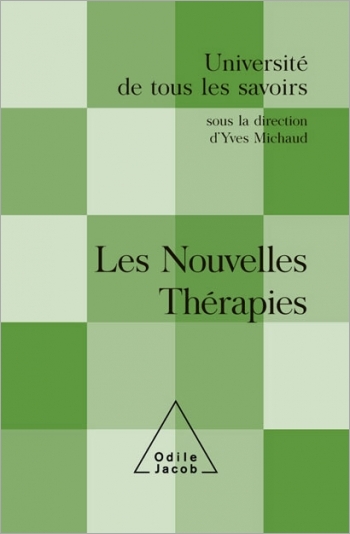
Yves Michaud
New Therapeutics
Advances in medical science are constantly being made, but it is often difficult for patients to realise what these advances entail and to understand their applications. The twelve lectures collected in this new volume in the series L'Université de tous les savoirs aim to inform us about some of these recent advances by addressing the following questions: What is the procedure for putting new medication on the market? How is new medication tested? What are the policies for furthering pharmaceutical innovation? How are health care structures organised? What will the hospital of the future be like? What are biotechnologies? What has been the impact of the neurosciences on therapeutics? What advances have been made in genetic mapping? What benefits can patients hope to gain from it? Gathered here are contributions by a geneticist, a surgeon, a psychiatrist, an emergency doctor, a neurologist and a philosopher. They examine the state of medical research today and address a question that concerns us all: What will medical care be like in the future? Contributions by Yves Agid, Pierre Carli, Alain Carpentier, Patrick Couvreur, Claude Debru, Bernard Golse, Didier Houssin, Gérard Le Fur, Jacques Marescaux, Arnold Munnich, Luis Omnès and Olivier Saint-Jean. Other books in the series include Qu'est-ce que la vie?, Qu'est-ce que l'humain?, Qu'est-ce que la société?, Qu'est-ce que l'Univers?, Qu'est-ce que les technologies?, Qu'est-ce que la culture?, Qu'est-ce que la vie psychique?, Le Renouvellement de l'observation dans les sciences, La Chine aujourd'hui, Egalité et inégalités, Qu'est-ce que la diversité de la vie?, Qu'est-ce que la globalisation?, Paris and La Guerre d'Algérie 1954-1962.

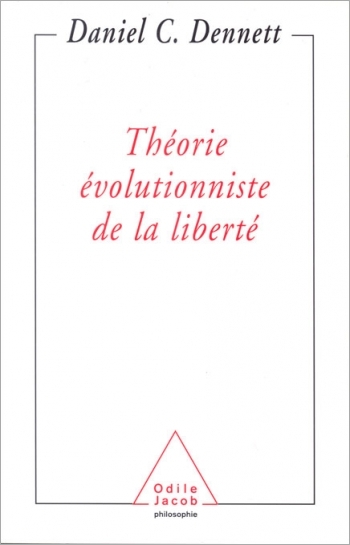
Daniel C. Dennett
Evolutionist theory of freedom
Billions of years ago, there was no freedom on earth, for the simple reason that there was no life. What forms of freedom have evolved since the first stirrings of life? Can freedom and free will exist in a deterministic universe? If we are free, are we responsible for our freedom, or is it governed by chance? Drawing on evolutionary biology and the cognitive sciences, Daniel Dennett provides a series of unorthodox replies to these traditional philosophical questions. It is generally held that what is determined is inevitable and that freedom can only exist in a non-deterministic universe. This is untrue, says Dennett. It is also held that in a pre-determined universe, we have no real choices: all we have is the illusion that we can choose. This too is false, argues Dennett. He then goes on to explain how, some day, we will be able to create robots endowed with free will. In this groundbreaking book, written in a striking, lively style, Dennett interweaves philosophical creativity with the latest scientific developments, and challenges a series of philosophical orthodoxies. Daniel C. Dennett is University Professor and Director of the Center for Cognitive Studies at Tufts University, Mass., U.S.A. He is the author of Consciousness Explained and Darwin's Dangerous Idea.