
Catalog All books
Anne Cadoret
Parents Like the Others Homosexuality and Parenting
There are numerous possible cases of homosexual parenting: How are these new types of family forged? What do homosexual parents seek? And what do they say about their experiences? Eschewing all ideological controversies, the author offers us an ethnological study of family structure which seriously calls into question the place of biology in parenthood and the identification of the parental with the conjugal couple. Anne Cadoret is a sociologist.
Rolf Schäppi
Woman is the Characteristic of Man From Animal Ethology to Human Nature
In this book, the author points out that although human beings are both mammals and primates, they differ in many significant ways from the other mammals and primates. Besides speech, laughter and the ability to use tools, the species Homo sapiens differs from its closest zoological cousins by three additional characteristics, which are less frequently cited because they are found only in the female. These are the female silhouette, hidden strus and the menopause. Rolf Schäppi is a psychiatrist and ethologist.
Claude Bébéar
The Courage to Reform
"We need to reconstruct political thought. Antiquated ways of seeing, archaic thought patterns, and bygone paradigms anaesthetise France and paralyse the nations ability to act. Political action must now provide a global reply to the question: What must be done? Courage depends above all on independent thought freed from all customs and conventional patterns, writes Claude Bébéar.
Stuart J. Edelstein
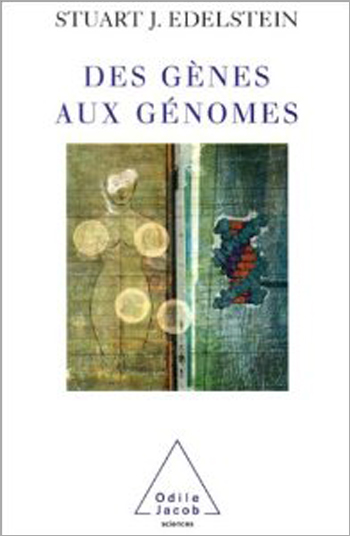
From genes to genomes
Rapid progress in the field of genetics is changing our lives in more ways than one. In order to understand these changes, Stuart Edelstein has approached each facet of the subject from three points of view: contemporary society and politics; technical developments; and basic research. By keeping to some fundamental points, this book will enable the lay reader to understand before judging the social implications of recent discoveries in biology. This is science with a civic sense. Stuart Edelstein teaches biochemistry at the University of Geneva.
Marc Ferro
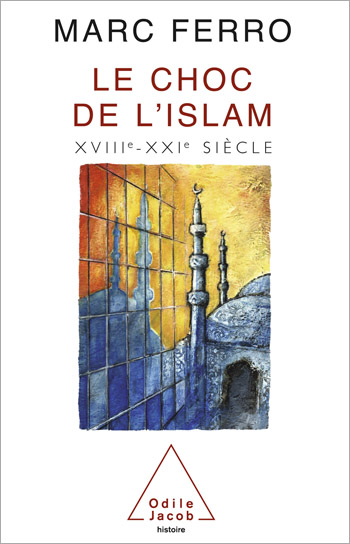
The Clash of Islam 18th to 21st Century
Faced with the expansion of the Western world over the last centuries, the Islamic world has adopted several different attitudes. Some parts of it have chosen to modernise in order to regenerate and better resist the West. Others have chosen instead to de-Islamise their societies, and to succumb to the temptation of the West in order to modernise. More recently, others have taken the opposite tack and islamised modernity, an openly aggressive choice. Marc Ferro's historical study of the great Islamic empires and their collapse examines the present situation of a divided Muslim world and a disoriented West. Marc Ferro is an honorary director of studies at the École des Hautes Études en Sciences Sociales.