
Catalog All books

Norbert Rouland
The French State and Pluralism A Political History of Public Institutions from 476 to 1792
Has France become a multicultural society? Are we heading towards a dislocation of French unity, or a more advanced form of democratic life due to this pluralism? Can we invoke the French tradition which has given us several reference points? These are the serious questions which History must confront, and it is the aim of this history of public institutions to do just that. The author shows that the French State has constructed the Nation through a stronger voluntarist policy than found in most other Western European countries. His clear yet detailed style makes this book accessible to a wide readership, both those wishing to know more about the origins of our current political regime, and also to first year students, to whom this work represents a source of valuable information.
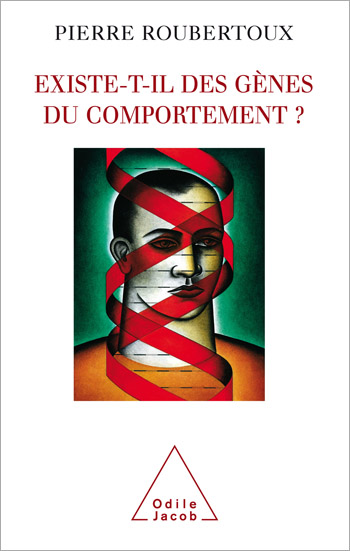
Pierre Roubertoux
Existe-t-il des gènes du comportement ?
Recent advances in genetic research have had widespread and far-reaching influences in fields as varied as animal and plant biology and medicine. They have also upset some ethical rules. Genetics today is in a triumphant, seductive phase, but its limits are yet to be defined. In this book, the eminent French geneticist Pierre Roubertoux argues that genetics has strayed too far from its justifiable areas of application. Soon, genetics may even be applied to the mind and to consciousness, just as it is already being applied to behaviour by scientists who contend that each type of conduct has its corresponding gene (this is tantamount to saying a specific gene is responsible for each virtue and each vice). Scientists who defend this theory say that they have discovered genes linked to various degrees of activity in mice and flies. Thus, intemperance and gluttony would be linked to a genetic partiality to alcohol, sugar or fats. Pride could be explained by a gene for dominance which has allegedly been found in mice. Greed, too, could be explained by a gene. The supposed existence of an infidelity gene was much in the news three years ago. This is a sound scientific synthesis which will enable readers to grasp the contribution of genetics to our comprehension of who and what we are. It should also help them resist the temptation of reducing everything to genetics. Pierre Roubertoux is a professor at the University of Aix-Marseille and a research fellow at the Institute of Physiological and Cognitive Neuroscience at the Centre National de la Recherche Scientifique (CNRS).



Israel Rosenfield, Edward Ziff, Borin Van Loon
DNA for Beginners
The amazing story of DNA is recounted here in an entertaining comic-book form...

Alexis Rosenbaum
Dominant and Dominated Animals
A fascinating journey into the heart of the animal kingdom, in the light of the latest findings in ethology
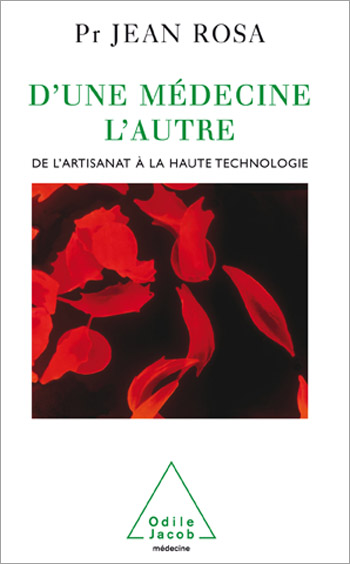
Jean Rosa
From one Medicine to Another From a Craft Industry to High Techology
Jean Rosa belongs to the post-war generation that transformed French medicine from a state of powerless humanism all the more "humane" because it was so often helpless to one of scientific and technical efficiency. Unfortunately, in the process, medicine seems to have lost its human face. In this book, Rosa shows how he contributed to this medical revolution: on the one hand, through the "Debré Reform", which instituted teaching hospitals, thus firmly linking medical research with therapeutic and surgical treatment, and, on the other hand, by associating medicine with molecular biology. Jean Rosa is Emeritus Professor in the medical school of the University of Paris-XII and a member of the French Academy of Science