Catalog All books
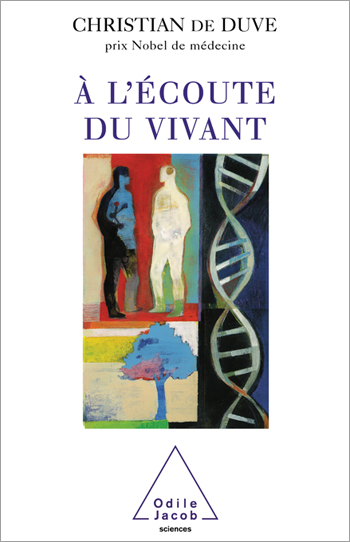
Christian de Duve
Listening to the Living
Everything one should know about biology is explained here by a Nobel Prize winner, including the origin of life, its chemical production and reproduction, the history of life, its earliest forms and also human evolution, the brain, the genius of genetics, and extra-terrestrial life. Finally, the author shows that although biology has undermined arguments in favour of the existence of God, religion and faith are a necessary product of nature selection. Christian de Duve is the director of the Brussels-based International Institute on Cellular Pathology. He was awarded the Nobel Prize in Physiology or Medicine in 1974 for his findings concerning the structural and functional organisation of cells.
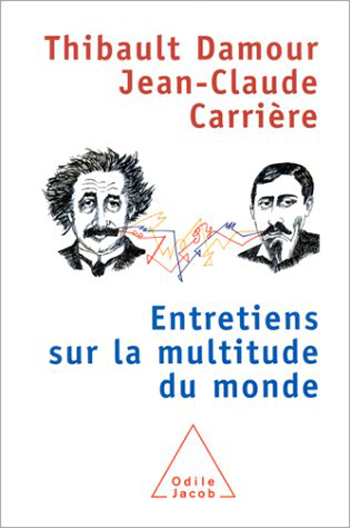
Jean-Claude Carrière, Thibault Damour
Reflections on the Mass of the World
Physicists are now faced with the disturbing certainty that the reality of the world is multiple. We do not exist in a single story, with a middle and an ending. Instead, we live in a multitude of superimposed stories although we see only our own because our perception is limited by the narrow beam of light in which we exist.
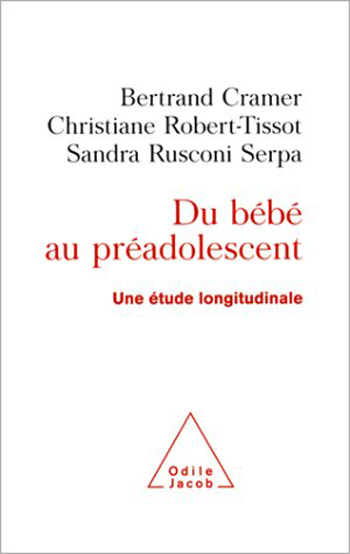
Bertrand Cramer, Christiane Robert-Tissot, Sandra Rusconi Serpa
From Baby to Preadolescent A Longitudinal Study
In 1991, 103 mother-and-infant pairs visited Genevas Guidance Infantile. The infants all displayed functional and behavioural disorders. Ten years later, the same mother-child pairs were re-evaluated by Professor Cramers team, who was thus able to make a number of prospective analyses. What became of the symptoms that the infants had first presented? Did any of the symptoms first displayed indicate a predisposition to other disorders? Can the characteristics that helped them to endure be identified? And what can be said of the role played by cognitive development and parental representations, as well as by protective factors? Professor Bertrand Cramer is a child psychiatrist.
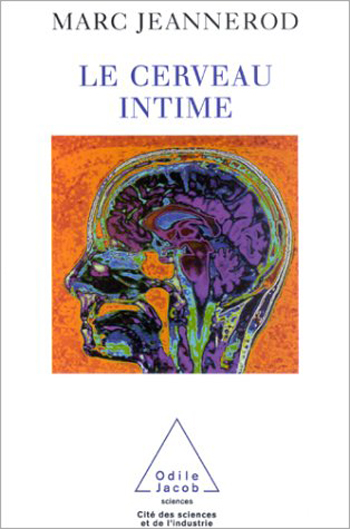
Marc Jeannerod
The Intimate Brain
Today, the brain has ceased to be regarded as existing in isolation in the human body. It is now considered in relation to its sensory, emotional and cultural environment. This book asks the question of what are the mechanisms and chemistry of the emotions? How do emotional states and the consciousness of those states permeate memory and thought? How does depression affect the emotions, and how can it be treated? How is the consciousness of self and of others constructed? Marc Jeannerod teaches physiology at the University Claude-Bernard-Lyon-I, and is the director of the Institute of Cognitive Sciences.
Catherine Clément, Tobie Nathan
The Couch and the Grigri
This work is a fascinating discussion between a practising analyst who has not ceased to confront his discipline with other disciplines of the mind, and a philosopher with great psychoanalytic experience. It aims to show how cultural heritage a debt linking each generation to its ancestors shapes both how we represent reality and our emotional universe. The authors thoughts and conclusions are thoroughly backed up with a variety of specific examples and observations. Tobie Nathan is an ethno-psychologist and teaches clinical and pathological psychology at the University of Paris VIII. Catherine Clément is a writer and philosopher.
Didier Pleux
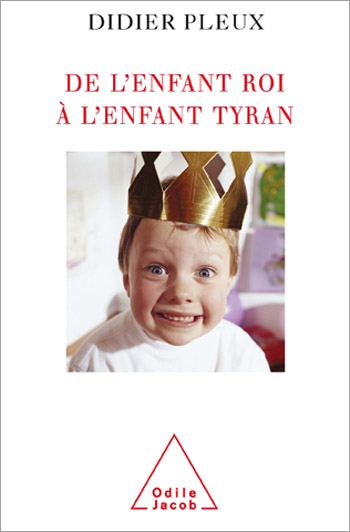
From the King Child to the Tyrant Child
More and more parents are faced with what amounts to a power take-over by their children. The tyrannical child makes constant demands, uses his parents for his own ends and creates a climate of psychological violence. The solution lies in education coupled with authority. This is a lively, clear and polemical work which shows parents how to redefine their parental authority and should enable them to feel less anxious. Besides offering practical psychological advice, it also provides an examination of what living in society means. Didier Pleux is a clinical psychologist
Robert Rochefort
A Disorientated France
This book argues that France is seeking an impossible model: on one hand, it wishes to hold fast to its exception, constituting a society which is unlike other western ones. Yet, on the other hand, France is not only obliged to accept neo-liberal globalisation, but it actively participates in doing so, through its large industrial and banking groups. Though constantly seeking to act rationally and to be the master of its fate, the future of Descartes country is probably as unpredictable as the trajectory of a billiard ball, no matter how talented the player wielding the cue may be.