
Catalog All books
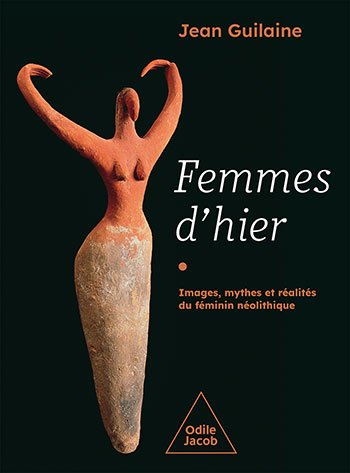
Jean Guilaine
Women of the Past Images, myths and realities of the Neolithic woman
A book by one of the most renowned specialists of the protohistoric period, to help understand women’s place in the first sedentary societies of the Neolithic period.
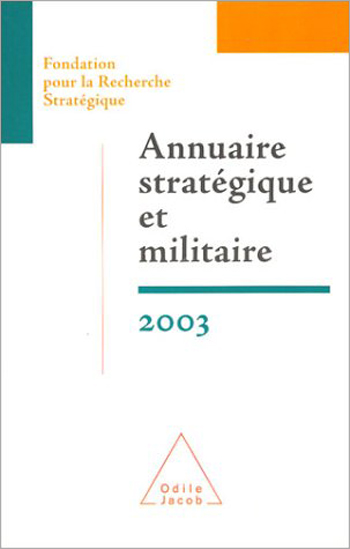
Fondation pour la Recherche Stratégique, François Heisbourg
Strategic and Military Yearbook 2003
The war in Iraq - what are the origins of the conflict and the consequences for the Middle East and Europe ? Al-Qaeda, Iran, Syria, North Korea - where are the potential conflicts and those already underway ? Europe, the United States - what place does American supremacy leave its former allies in the Cold War ? What choices can Europe make in the face of this mounting danger ? This book provides an up-to-date, concise and accurate survey of the major trends and strategic challenges facing the world today and tomorrow.
Joseph Silk
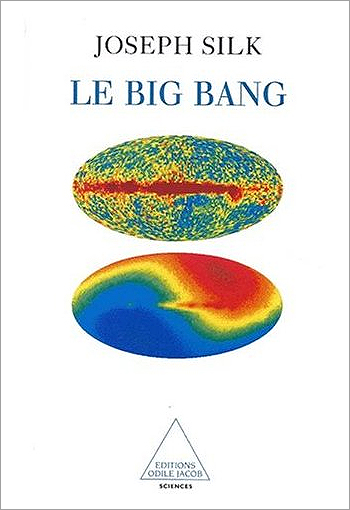
The Big Bang
Silk's story begins with the first moments of the big bang and continues though the formation of the galaxies on to the distant future of our universe. Whether you're looking for an accessible history of the universe, answers to questions about matter and antimatter, quasars, black holes, and others oddities, or simply a fascinating story spanning time and space, you will find The Big Bang hard to put down. Joseph Silk, coauthor of The Left Hand of Creation, teaches astronomy at the University of California at Berkeley.
Bertrand Roehner
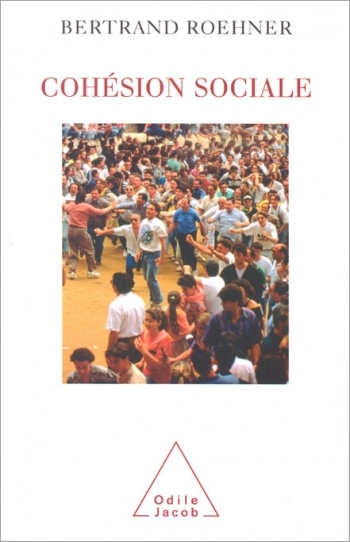
Social cohesion
The methodology of physics is now being applied to the social sciences. Social cohesion, which assures social stability and continuity, is both observable and measurable. It may be observed in events that repeat: in test events such as the destruction of the mosque in Ayodhya, India (1992), and of the twin towers of the World Trade Center in Manhattan (2001); in catastrophes such as the Great Fire of London (1666), the earthquakes and fires of San Francisco (1906) and Tokyo (1923); in the riots of rejection in Lawrence, Mass., U.S.A. (1984), and in Aigues-Mortes, France (1893); in the protest riots in Brixton, U.K. (1981); and in resistance to foreign occupation, as in France (1940). Social cohesion can be measured through the reactions of a given society in the aftermath of a shock: for example, in the number of Hindu temples that were burned down or mosques that were destroyed following the first two test events listed above. By borrowing the methods of physics, social scientists have been able to make predictions in their own field. Bertrand Roehner is a member of the Laboratory of Theoretical Physics at Pierre et Marie Curie-University of Paris VII. He is the author of Un siècle de commerce du blé en France (Economica), Theory of Markets (Springer), Application of Physics in Economic Modelling, Pattern and Repertoire in History (Harvard University Press) and Separatism and Integration (Rowman and Littlefield).