Catalog All books
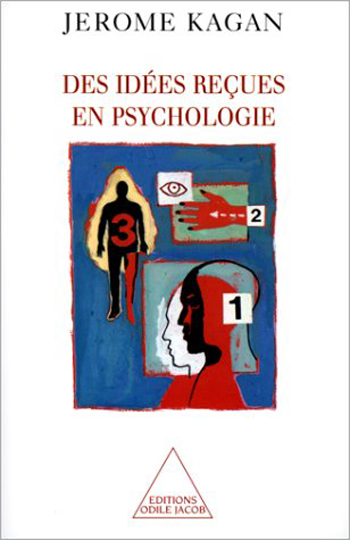
Jerome Kagan
Three Seductive Ideas
Do the first two years of a childs life really determine his or her future development? Are human beings, like other primates, solely motivated by the pursuit of pleasure? What can be concluded today about the notion of temperament? Is it stable and unchanging throughout life? This book is the culmination of a lifetime of research. Jerome Kagan, one of the founders of modern development psychology, is known the world over for the precision and originality of his work, as well as for his overall examination of the methods and meaning of psychology. Jerome Kagan teaches at Harvard University. He is the author of several works on psychology that are regarded as classics.
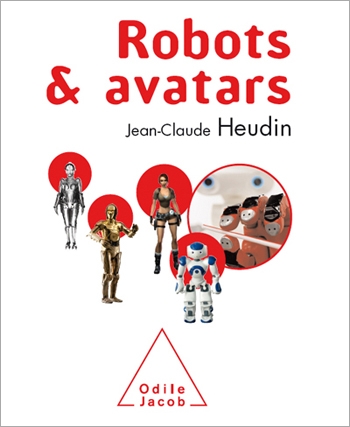
Jean-Claude Heudin
Robots and Avatars
Robots & Avatars is a highly accessible introduction to the latest technological advances that herald tomorrow’s world.

Sebastian Roché
Réformer la police et la sécurité
Demands for increased public safety are prevalent in both Europe and the United States, and they take similar forms. Do policies based on such notions as zero tolerance, local policing, partnership and mediation serve any real purpose or do they simply act as decoys? In New York City, as elsewhere, improved public safety resulted from the decentralisation of resources and power and, therefore, of responsibilities. In the articles included here, the writers, who are all experts in public safety in their respective countries, examine the issues in a dispassionate manner and offer a comparative study of the results obtained in different countries. Finally, they make some concrete suggestions to resolve the problem of petty crime and incivilities. Sébastian Roché is a professor at the Institut d'Etudes Politiques, in Grenoble. He is the author of Tolérance zéro? Incivilitié et insecurité, published by Editions Odile Jacob.
Bernard Frank
Gods and Buddhas in Japan (Work of the Collège de France)
Japanese Buddhism descends directly from the Chinese Buddhist tradition which flourished from the sixth to the eighth centuries.