Catalog All books
Michel Aglietta
Transforming the Growth System
An essential book for thinking in other ways about the relationships between finance, growth, and the climate, and for situating oneself within a long term perspective.
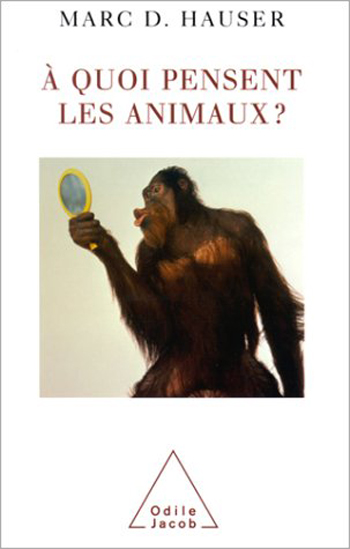
Marc D. Hauser
Wild Minds: What Animals Really Think
A slender loris comes up to a zoo keeper and hugs him. A dog lowers its head and whines when its master is unhappy. Is such behaviour a sign of affection and empathy or are other mechanisms at work, to explain the animals near-human behaviour? Why do chimps and dolphins form coalitions to defend themselves? How do lions determine, from far away, the number of gazelles calmly watering by a stream? How is it that a few species can recognise their own image in a mirror? Marc D. Hauser is a professor of psychology and neuroscience at Harvard University, where he is a fellow of the Mind, Brain and Behavior Program. Besides performing laboratory research, he has done extensive fieldwork in Kenya, Uganda and Puerto Rico.
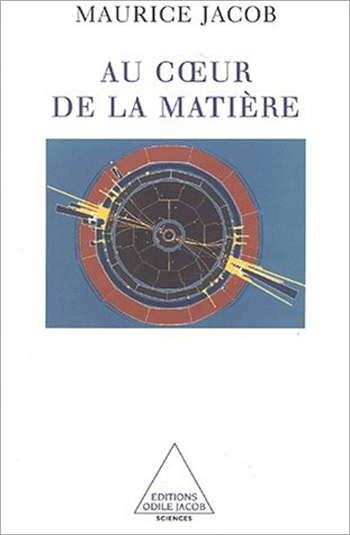
Maurice Jacob
At the Heart of the Matter
The study of elementary particle physics and high energies, undertaken in huge laboratories such as the accelerators of Stanford, Chicago, Brookhaven, CERN at Geneva, and Dubna et Serpukhov near Moscow, is one of the most astonishing scientific feats of the last half century. The field not only allows us to understand the composition of matter and the origin and evolution of the universe, but also helps prevent these scientific instruments being used as weapons of war. The Pugwash conferences, held between scientists of the East and West, won a Nobel Prize for this very reason. Maurice Jacob, the honorary director of the division of theoretical physics at CERN, recounts in this book how these objectives have been achieved. Maurice Jacob is a theoretical physician of elementary particles.

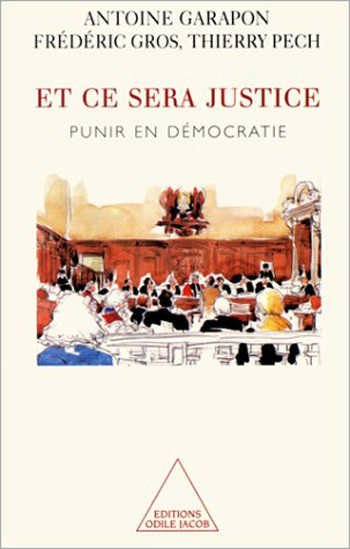
Antoine Garapon, Frédéric Gros, Thierry Pech
And this is Justice Punishment in a Democracy
What is the meaning of a sentence? This is the issue that the present book faces squarely and directly, from the philosophical, ethical and political angles. The authors goal is less to confront different viewpoints than to defend a shared belief: a just sentence is one that restores bonds. Antoine Garapon is a former juvenile judge. Frédéric Gros is a philosopher. Thierry Pech is a researcher.