
Catalog All books
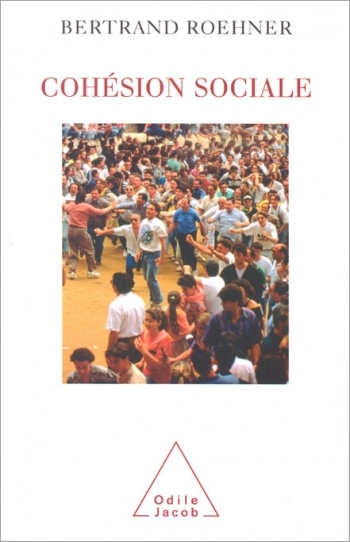
Bertrand Roehner
Social cohesion
The methodology of physics is now being applied to the social sciences. Social cohesion, which assures social stability and continuity, is both observable and measurable. It may be observed in events that repeat: in test events such as the destruction of the mosque in Ayodhya, India (1992), and of the twin towers of the World Trade Center in Manhattan (2001); in catastrophes such as the Great Fire of London (1666), the earthquakes and fires of San Francisco (1906) and Tokyo (1923); in the riots of rejection in Lawrence, Mass., U.S.A. (1984), and in Aigues-Mortes, France (1893); in the protest riots in Brixton, U.K. (1981); and in resistance to foreign occupation, as in France (1940). Social cohesion can be measured through the reactions of a given society in the aftermath of a shock: for example, in the number of Hindu temples that were burned down or mosques that were destroyed following the first two test events listed above. By borrowing the methods of physics, social scientists have been able to make predictions in their own field. Bertrand Roehner is a member of the Laboratory of Theoretical Physics at Pierre et Marie Curie-University of Paris VII. He is the author of Un siècle de commerce du blé en France (Economica), Theory of Markets (Springer), Application of Physics in Economic Modelling, Pattern and Repertoire in History (Harvard University Press) and Separatism and Integration (Rowman and Littlefield).

Iannis Roder
Recovered Children of the Republic Reflections and Practices of Network of Priority Education
A book filled with Iannis Roder’s experiences, including many portraits of students and stories that tell us a lot about the reality of schools in the banlieues.
Iannis Roder
Explaining the Shoah and Genocide to Our Children
This book desacralizes the Shoah and shows that though that genocide had specific characteristics, it can be compared to others.

Judith Rochfeld
Justice for the Climate
A book filled with examples drawn from abundant current cases: in France, of course, with the affair of the century, which, following the petition that gathered close to 2 million signatures...

Judith Rochfeld, Valérie-Laure Benabou
Who Profits When You Click? How Value Is Distributed on the Net
The battle for control over digital data
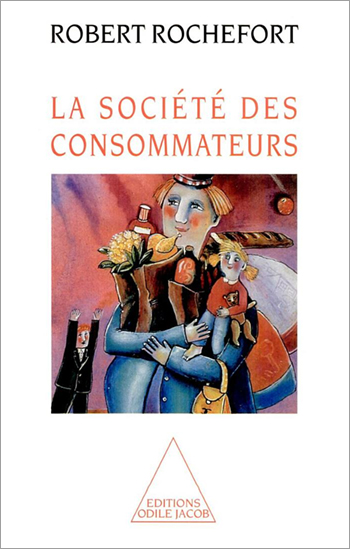
Robert Rochefort
A Consumer Society
This book demonstrates how with households equipped and individuals saturated, consumption must respond to other, more immaterial needs. The new markets are those which can reassure people : healthcare, ecology, land, family and even solidarity.

Robert Rochefort, Dominique Voynet
The Environment - A Social Question The Result of Ten Years of Research for the Environmental Ministry
This book collects 31 contributions from sociologists, legal experts, economists, and philosophers. All of these reflections point to two major motifs: that of a durable association between economy and ecology, and that of the principle of precaution necessary in and for future generations.
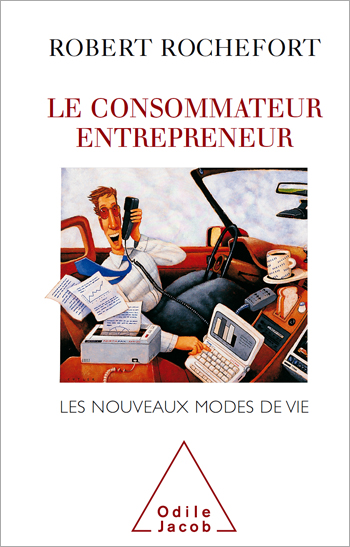
Robert Rochefort
The Consumer-Entrepreneur
The author shows in this new book how in the age of the consumer-entrepreneur professional life and private life tend to merge ; thus on one hand, the consumer tends to manage his family life as he would a company - paying attention to efficiency, cost effectiveness, optimization. On the other hand, he uses more and more products that have a professional and personal use - portable phones, computers - and buys more half finished, do-it-yourself products that he completes. This book profiles a society of individual entrepreneurs that is emerging from the previous salary society of the nineteenth and twentieth centuries. Robert Rochefort is the director of the Research Center for the Study and Observances of Living Conditions.