
Catalog All books
René Depestre, Marc Augé
Good Evening Tenderness
The life of an intellectual, revolutionary, and adventurer. An important figure in the négritude movement, alongside Aimé Césaire and Frantz Fanon. An original reflection on identity and skin color. A look back on his revolutionary dreams and the Cuba regime, in the time of Castro and Che.
Jean-Pierre Hansen, Jacques Percebois
Electricity in Transition What Europe and the markets couldn’t tell you
The history of electricity as you’ve never heard it before. A genuine mini-guide to economic issues through the example of electricity: price formation, transmission costs, monopolies.

Stanislas Dehaene
A Good Head for Maths
Did you know that babies can count? And did you know that some animals can do simple arithmetic? Whether we possess astounding mathematical talents or the most basic of counting skills, we are all born with numerical intuition. In this book, the author describes some amazing scientific experiments that demonstrate the mental foundations of numerical intuition. If you want to know why you cant remember how much 7 x 8 makes, or how a cerebral lesion can make you forget 3 - 1, or if you want to figure out the fifth root of 759,375, just follow the author in a series of tortuous mental calculations and you dont even have to be a mathematical wizard. Stanislas Dehaene is a senior research fellow at Inserm and works at the Laboratory of cognitive sciences and of psycholinguistics at the École des Hautes Études en Sciences Sociales.
Laurent Cohen
How Do You Read With Your Ears? And 40 other stories about the human brain
The new book by one of our most brilliant neurologists gives us a concise and comprehensive overview of the latest advances in neuroscience. Forty short, strange, entertaining but always instructive stories about the functioning and dysfunctioning, ordinary or extraordinary, of our brain.
Patrice Huerre, François Robine
What Our Living Spaces Say about Us
Living spaces tell a lot about their inhabitants and their psychic and social evolution. Habitats reveal the evolution of generations and of their ways of life, but they also encourage human relationships to be what they are.
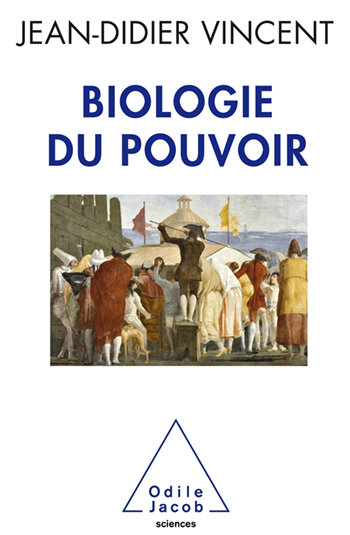
Jean-Didier Vincent
The Biology of Power
How biology explains what is going on in the brains of leaders, and in those of their subjects… Told by J-D Vincent, the strange ballet of emotions that connect power, sex, and violence.
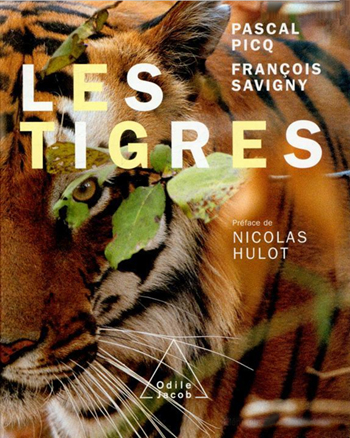
Pascal Picq, François Savigny
Tigers
The tiger is charged with symbolism. In myth and poetry it represents untamed force that can strike suddenly; it can appear stealthily out of nowhere, and vanish just as suddenly.
Nicolas Offenstadt
Shot at Dawn : The Executed of the Great War And the Collective Memory (1914-1999)
Why were some soldiers tried and executed by their own military authorities during World War I? Using previously unpublished source material, the author has been able to throw light on one of the most sombre episodes of the Great War. Besides reviewing the history of the events themselves, the author also examines the struggle with the military authorities to clear the soldiers names, beginning in the period between the two world wars. By the 1960s, the public image of the executed soldiers had begun to change. It would culminate in the British campaign to grant them an official pardon and in the French decision to remember them a ceremony. How, he asks, did these changes come about? Nicolas Offenstadt is a graduate of the Institut des Etudes Politiques, in Paris. He holds an agrégation in history and is a member of the Thiers Foundation.