Catalog All books
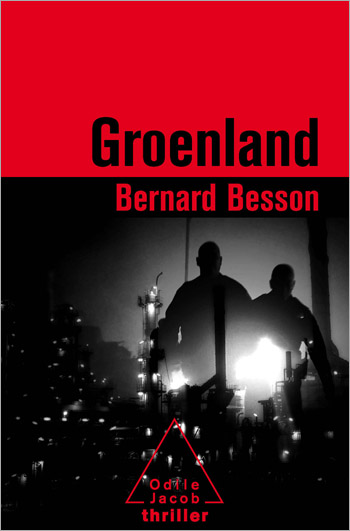
Bernard Besson
Greenland
“With an apocalyptic roar, Greenland’s Lauge Koch Kyst region had broken off from the mainland...
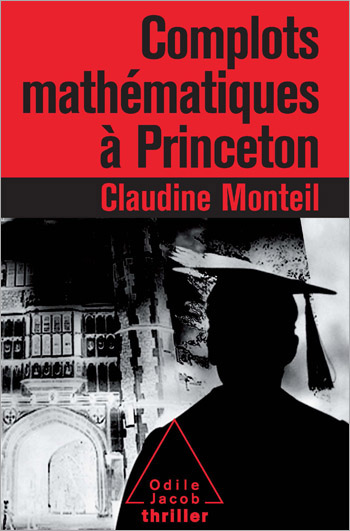

Caroline Rebstock
Amber Is Informed
Amber Materson, a young woman in her thirties, learns from a journalist that she is endowed with unique scientific properties: her blood contains stem cells still at the embryonic stage...

Gisèle Gelbert
The Illiterate Brain
Is illiteracy a social scourge, or is it an aphasia-like disorder? To find the answer, Gisèle Gelbert delves into the mysteries of the brain of an illiterate person, and teaches us the art of `repairing' it. By thoroughly breaking down each linguistic act, she is able to define and localise with great accuracy the disorders observed in both written and oral expression. She also makes use of the schema to develop exercices that are especially adapted to the clinical observation of localised disorders, thus opening the door to new therapeutic possiblilities. Gisèle Gelbert is a neurologist and aphasiologist. She is the author of "Lire c'est vivre "(Opus, 1996) and "Lire c'est aussi écrire" (1998).
Christian Saint-Étienne
Europe’s Wild Card The Real Solution to Exit the Economic Crisis
Christian Saint-Etienne argues that the European project was built on a fallacious concept from the start. The premises were false and Europe has become the world’s “soft underbelly”.