
Catalog All books
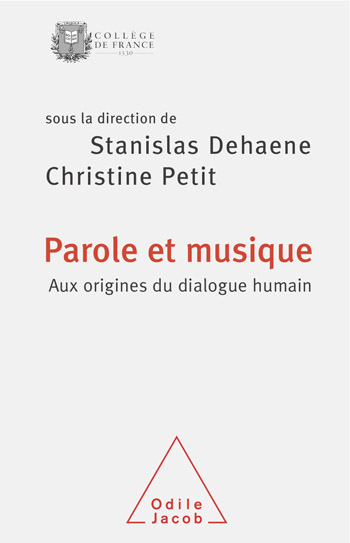
Stanislas Dehaene, Christine Petit
Words and Music Genesis of human dialogue
Speech and music shape social cognition through shared emotional states, intentions, symbols and cultures...
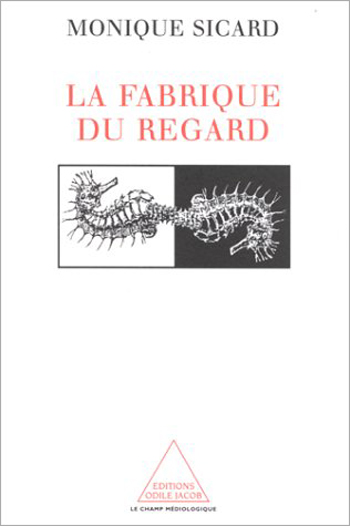
Monique Sicard
The Making of the Image
It was during the Renaissance that images and pictures were first used by anatomists, microscopists, and astronomers as scientific tools. In that era, scientific images served as a kind of inventory of the known world. In the 19th century, the popularization of scientific ideas gave science a new vigor. Photographic images gave science a new reality, explaining and legitimizing scientific concepts--movement, for example--to a fascinated public. In our days, the scientific image is often a construction--helping us to represent objects and ideas that, like fractals or black holes, cannot be defined through actual observation. Monique Sicard is Projects Director at CNRS Images Média.
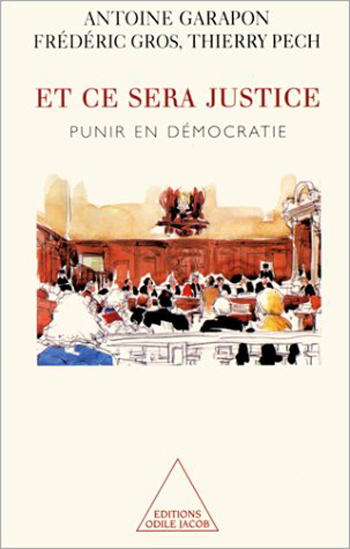
Antoine Garapon, Frédéric Gros, Thierry Pech
And this is Justice Punishment in a Democracy
What is the meaning of a sentence? This is the issue that the present book faces squarely and directly, from the philosophical, ethical and political angles. The authors goal is less to confront different viewpoints than to defend a shared belief: a just sentence is one that restores bonds. Antoine Garapon is a former juvenile judge. Frédéric Gros is a philosopher. Thierry Pech is a researcher.
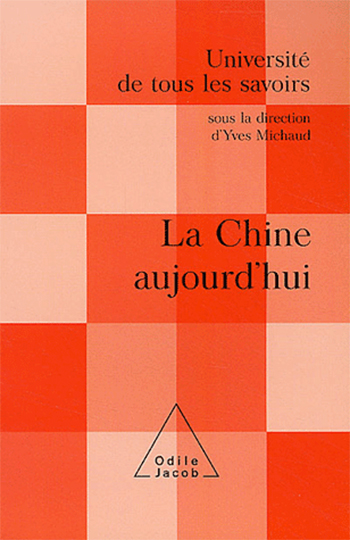
Yves Michaud
China Today Volume 8
China is a nation at the crossroads of tradition and modernity. In this previously unpublished volume in the series "lUniversité de tous les savoirs", the authors review the present-day situation and ask the following questions: How should Chinas current political system be defined? What is Chinas position in the world today? What are the different aspects of cultural and intellectual life in China? This is a novel approach to a history of contemporary China. Contributions by Marie-Claire Bergère, Michel Bonnin, Charles Chauderlot, Anne Cheng, Yves Chevrier, Jean-Luc Domenach, Françoise Ged, François Godement, Wang Shaoqi, Joël Thoraval, Léon Vandermeersch, Chu Xiao-Quan.
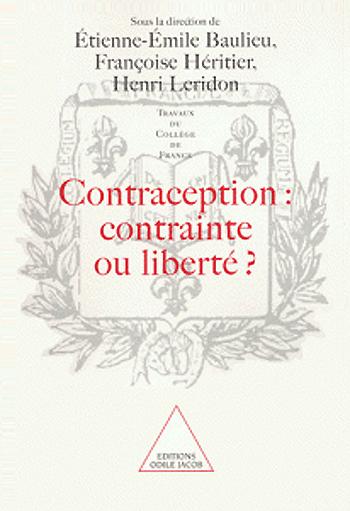
Étienne-Émile Baulieu, Françoise Héritier, Henri Leridon
Contraception : Constraint or Liberty ? (Work of the Collège de France)
It is now generally accepted that contraception should be readily available.
Bernard Chemouny
The Guide to Homeopathy New, revised edition
This is the revised third edition of the highly successful guide to homeopathy, which was first published seven years ago. Besides bringing up to date all the facts, figures, tables, prices and addresses, the new edition has been revised to account for the following: o Lower health insurance coverage, following recent French legislation which came into effect on 1st January 2004. o The French Ministry of Health's recommendation to limit the use of antibiotics (especially for minor ailments such as sore throats). A reference work on [homeopathy], which is used by one out of three French people, Le Figaro Bernard Chemouny is a homeopathic physician and acupuncturist. He teaches homeopathy at Hôpital Saint-Jacques, in Paris.
George Bush, Brent Scowcroft
A World Transformed
It was one of the pivotal times of the twentieth century - during George Bushs presidency an extraordinary series of international events took place that materially changed the face of the world. Now, former President Bush and his national secretary advisor, Brent Scowcroft, tell the story of those tumultuous years. Here are behind-the-scenes accounts of critical meetings in the White House and of summit conferences in Europe and the United States, interspersed with excerpts from Mr. Bushs diary. We are given fresh intriguing views of world leaders such as Mikhail Gorbachev, Boris Yeltsin, Margaret Thatcher, Helmut Kohl, and François Mitterrand--and witness the importance of personal relationships in diplomacy. There is the dramatic description of how President Bush put together the alliance against Saddam Hussein in the Gulf War. There are the intensive diplomatic exchanges with Beijing following the events of Tiananmen Square, and the intricate negotiations leading up to the German reunification. And there is the sometimes poignant sometimes grim portrayal of Gorbachevs final years in power. A World Transformed is not simply a record of accomplishment; Bush and Scowcroft candidly recount how the major players sometimes disagreed over issues, and analyze what mistakes were made. This is a landmark book on the conduct of American foreign policy-- and how that policy is crucial to the peace of the world. It is a fascinating inside look at great events that deepens our understanding of todays global issues. George Bush was President of the United States from 1989 to 1993. Brent Scowcroft was National Security Advisor under Presidents Ford and Bush.