
Biology All books
Alain Prochiantz
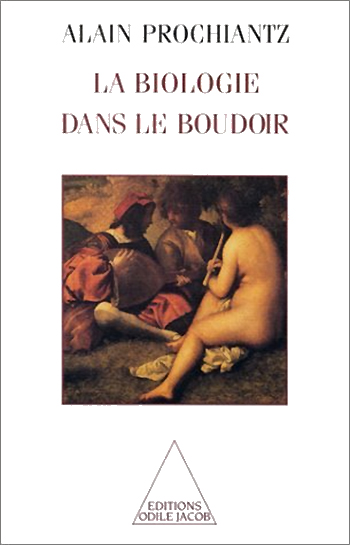
Biology in the Bedroom
Inspiring himself from La Philosophie dans le boudoir by Sade and the major philosophical works of the 18th century, Alain Prochiantz, who is a neurobiologist, explains by means of a dialogue, the progress of embryology and neurobiology and gives us the elements so that we can understand and measure the stakes of the recent discovery of the genes of development. Alain Prochiantz heads the Laboratory for the Development and Evolution of the Nervous System at the École normale supérieure. He is notably the author of Strategies of the Embryo, and Claude Bernard, the Physiological Revolution.
Israel Rosenfield, Edward Ziff, Borin Van Loon
DNA for Beginners
The amazing story of DNA is recounted here in an entertaining comic-book form...
Yves-Alain Fontaine
The Sentimental Evolution
In the course of development, our way of living is fashioned by the world around us, but it is also shaped by discrete characteristics such as nature and the intensity of emotions like anxiety and egoism. From this point of departure, the author draws analogies about the ways in which we are human individuals and members of a species, and proffers the theory that, in the evolutionary process, there is also a sort of anxiety and egoism at work. Evolution, he suggests, might very well be both sentimental and selective. Yves Alain Fontaine is an honorary professor at the National Museum of Natural History.
Alain Prochiantz
The Anatomies of Thought What do squid think about ?
When we watch a squid facing up to a predator, we see it recoil, agitate the tentacles, spray a jet of ink, and then make use of the temporary blindness of the predator in order to escape to a safe hiding place. Are we able to say what it is thinking ? Evidently, we know that this behaviour is not the result of a reflex unleashed by the sight of an enemy. The mollusc is not however conscious of its acts, at least not in the sense that we, as human beings, understand this term. It is true that we are the product of a evolution of species, and that, although this may not be welcome news for everyone, we share a common ancestry with the octopus, or even the fly. Even if the structure of our cortex, and the invention of language allows us to write about octopuses (or flies), and not the other way round, the fact remains that these evolutive roots, in the same way as other animal species, including invertebrates, have something to teach us about the nature of our thoughts. Alain Prochiantz
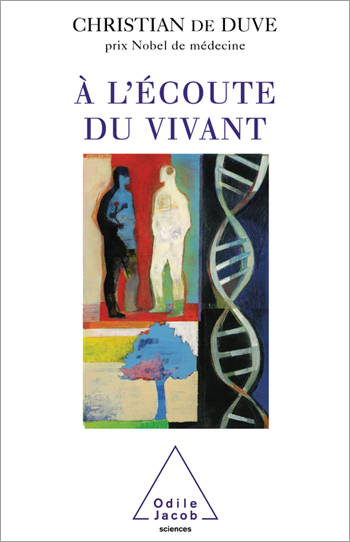
Christian de Duve
Listening to the Living
Everything one should know about biology is explained here by a Nobel Prize winner, including the origin of life, its chemical production and reproduction, the history of life, its earliest forms and also human evolution, the brain, the genius of genetics, and extra-terrestrial life. Finally, the author shows that although biology has undermined arguments in favour of the existence of God, religion and faith are a necessary product of nature selection. Christian de Duve is the director of the Brussels-based International Institute on Cellular Pathology. He was awarded the Nobel Prize in Physiology or Medicine in 1974 for his findings concerning the structural and functional organisation of cells.
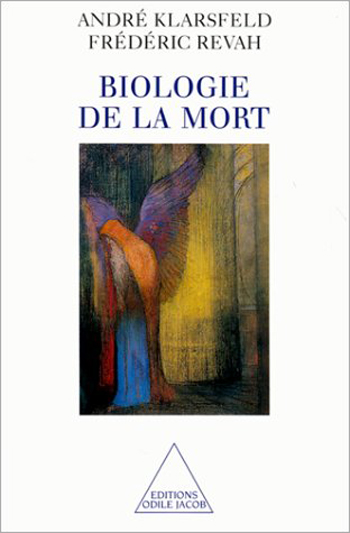
André Klarsfeld, Frédéric Revah
The Biology of Death
Why are most living organisms condemned to die a natural death, even if they are in a well-protected and highly favourable environment ? Is death a "useful" biological process or does it not correspond to any natural necessity ?
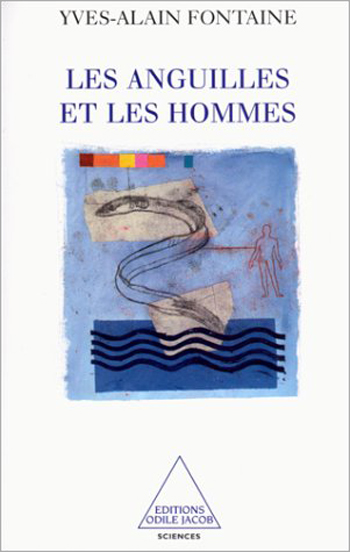
Yves-Alain Fontaine
Eels and Man
In this book, the author, an expert in his field, describes the most fascinating stages in the eels biological cycle, its migrations and the modifications it undergoes during its life. Eels interest us not only because of their life and breeding cycles, but also because of the questions they raise concerning our ideas about evolution. Does the notion of adaptation suffice to explain everything the eel has become? Doesnt a living creature maintain a certain amount of independence in relation to the world that surrounds it? Or is the relationship between a living creature and the environment which surrounds it more complex that we have generally realised ?