


Catalog All books

Raymond Boudon
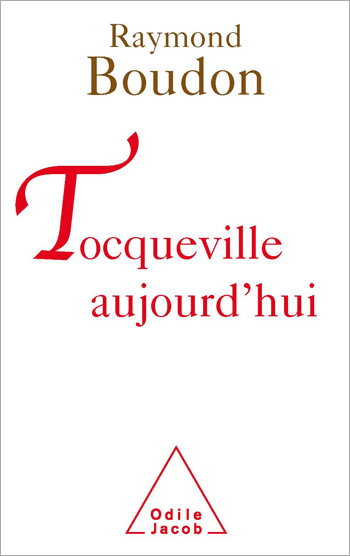
Why intellectual peoples don't like liberalism
Given the intellectual force of liberalism, its political appeal, its economic effectiveness and its historical significance, why is it so unpopular among French intellectuals? Why does it elicit so little serious discussion? And why is it the object of so much confusion, so many clichés and misunderstandings? Is it simply out of resentment, because intellectuals feel that the market does not afford them the material and symbolic rewards that they believe they deserve? Is it just because they prefer to play a critical role in a society where capitalism is triumphant? Perhaps, but these reasons do not explain everything and they certainly dont explain the systematic rejection of liberal thought in France. A sociologist of knowledge rather than of social determinism, and a specialist in belief systems, Raymond Boudon ruthlessly analyses the cognitive mechanisms that make liberalism so hateful in the eyes of French intellectuals. The result is a keen, detailed review of the clichés that have encumbered discussions for more than thirty years. Raymond Boudon, a professor at the University of Paris-IV, is a member of the Académie des Sciences Morales et Politiques. He us the author of numerous works, most notably LInégalité des chances, La logique du social, LIdéologie ou lorigine des idées reçues, LArt de se persuader, Le Sens des valeurs and Déclin de la morale? Déclin des valeurs. He is the co-author, with R. Leroux, of Y a-t-il encore une sociologie?

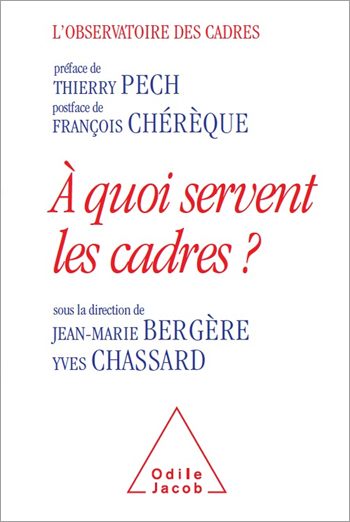
Observatoire des cadres
What Use Is Management? Questioning management tactics
What is management’s future role in a rapidly changing business world?

Alain Bentolila
All about scholl
This is a brilliant, clearly argued demonstration of how the inability of the school system to evolve and develop a critical spirit may lead to the general failure of our entire society.

Raymond Aubrac
Where the memory lingers
Discreet by nature and secretive by necessity, Raymond Aubrac has been closely involved in more than half a century of history, in France and abroad. Within France, he is one of the great figures of the Resistance, and is one of the last survivors of the meeting at Caluire, on June 21st 1943, in the course of which Jean Moulin was arrested. A confidant of Ho Chi Minh, Raymond Aubrac also played a central role in the secret negotiations which accompanied the Vietnam war. In this book he gives a new, personal account of these events and others, including his meeting with de Gaulle, his role in the reconstruction of France, and his work at the heart of the UN.

Claudine Monteil
Simone de Beauvoir Today
The author evokes her long friendship with Simone de Beauvoir and offers a detailed portrayal of women’s lives today.

Jean-Jacques Urvoas, Magali Alexandre
Survival Handbook for the French National Assembly The Art of Parliamentary Guerrilla Warfare
In the corridors of power of the National Assembly, we encounter Jean-François Copée, Arnaud Montebourg, Bernard Accoyer, among other French politicians.

Christophe André
Therapists Secrets: What You Must Know to Feel Fine
In this book, a number of renowned psychotherapists, psychiatrists and psychologists draw on their vast experience to share with the reader the numerous methods they apply to themselves, in order to feel better.

Bénédicte de Boysson-Bardies
How Does the Power of Speech Come to Children ?
How does the newborn, from his cradle, perceive the sounds that make up words? How does he hear and extract sounds, and then recognize, organize and analyze them? How does an infant come to understand and reproduce language? How does the power of speech come to children? Benedicte de Boysson Bardies invites the reader to follow the newborn from his first minute of life to his first sentence, retracing step by step the process of acquiring speech. As a psycholinguist, Benedicte de Boysson Bardies specializes in the acquisition of language by young children.