
Catalog All books
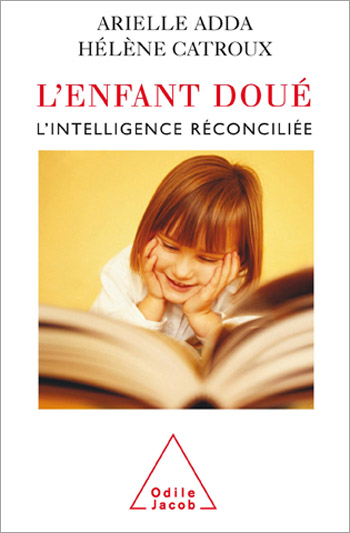
Arielle Adda, Hélène Catroux
The Gifted Child Reconciling Intelligence
Exceptionally gifted, gifted and intellectually precocious children make up as much as 5 % of any given age group. Yet they often seek failure, both at school and in their personal lives, because they suffer from being different from other children. This book is addressed to the parents and teachers of gifted children. Besides reviewing the current state of knowledge on the subject, it explains how such children can be taught to manage their potential and to overcome their excessive sensitivity and weaknesses. Arielle Adda is a psychologist. Hélène Catroux is an educational psychologist.
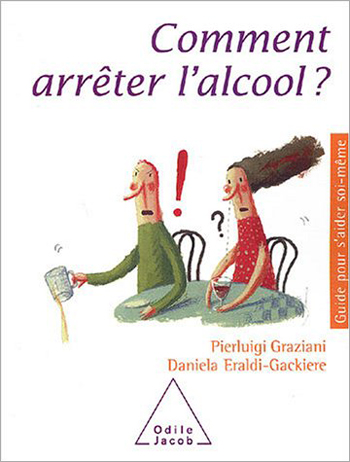
Pierluigi Graziani, Daniela Eraldi-Gackiere
How to Stop Abusing Alcohol
Not only does alcohol abuse have serious consequences for physical and psychic health, it is also destructive of personal and social relationships. But putting an end to this form of drug abuse is particularly complex, because alcohol creates a dependence that is both physical and psychological, and because it is, in many cultures, closely linked to sociability. In trying to help alcohol abusers who wish to stop drinking, one is often confronted with resistance and denial. The authors, specialists in cognitive and behavioural therapies, describe methods that have been successfully used for many years in the treatment of alcohol abuse in a hospital setting. Pierluigi Graziani is a psychologist and lecturer on clinical psychology and psychopathologies at the University of Aix-Marseille-Ain, in Aix-en-Provence. Daniela Eraldi-Gackière is a psychologist.
Jean Rosa
From one Medicine to Another From a Craft Industry to High Techology
Jean Rosa belongs to the post-war generation that transformed French medicine from a state of powerless humanism all the more "humane" because it was so often helpless to one of scientific and technical efficiency. Unfortunately, in the process, medicine seems to have lost its human face. In this book, Rosa shows how he contributed to this medical revolution: on the one hand, through the "Debré Reform", which instituted teaching hospitals, thus firmly linking medical research with therapeutic and surgical treatment, and, on the other hand, by associating medicine with molecular biology. Jean Rosa is Emeritus Professor in the medical school of the University of Paris-XII and a member of the French Academy of Science

Marie-Frédérique Bacqué
Coping with Death
Marie-Frédérique Bacqué, a psychologist, is a lecturer at the University of Lille and the vice president of the Society of Thanatology.