Catalog All books

Bernard Poulain, Etienne Hirsch
Frontiers in the Neurosciences
Along with Étienne Hirsch and Bernard Poulain, thirty prestigious contributors present an assessment of what the neurosciences will be in twenty years.

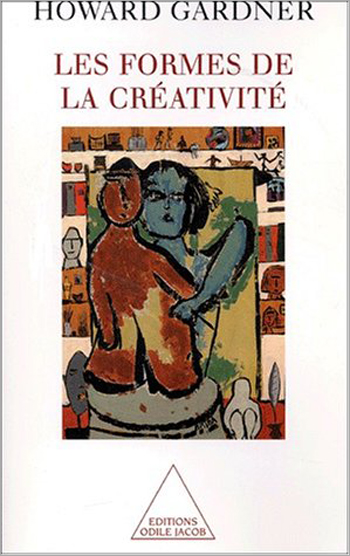
Howard Gardner
Creating Minds An Anatomy of Creativity Seen Through the Lives of Freud, Einstein, Picasso, Stravinsky, Eliot, Grah
What is creativity? Do there exist psychological traits common to all creative geniuses? Can one characterize creativity in different forms and in different areas? It is impossible to respond to these questions without examining variegated and specific cases of creative genius: artistic, literary, scientific and even political. Thus, Gardner proposes seven psychobiographies characteristic of each type of genius: Freud, Einstein, Picasso, Stravinsky, T.S. Eliot, Martha Graham, and Gandhi. What were the different paths that they chose? How did their creative spirits work? Howard Gardner is a cognitive psychologist.
Jacques Gutwirth
The Rebirth of Hasidism, from1945 to the present
In 1945, there were 20,000 Hasidim in the world. Today, there are between 350,000 and 400,000, about half of whom live in Israel. This population explosion cannot be explained simply by demographic reasons. In France alone, it is estimated that there are 10,000 to 15,000 Lubavitch Hasidim, a small but particularly active community. Jacques Gutwirth paints a vivid picture of the major centres of Hasidism - Antwerp, New York, Jerusalem, Bne Brak and Paris. He describes the main aspects of Hasidism today, its spiritual and intellectual contributions, its recent history and the influence it has. Hasidism cannot be reduced simply to a religious conception, a way of expressing one's religion, or a particular lifestyle. Its rapid development is linked to current politics and global economics, to which in turn it also contributes. In this rigorous, balanced study of one of Judaism's most dynamic communities, the author provides solid information to further the discussion on the rise of religious fundamentalism. Jacques Gutwirth is an anthropologist and an honorary research fellow at the Centre National de la Recherche Scientifique (CNRS). A pioneer in the field of urban anthropology, he has taught at the University of Provence, in Aix, and at the University René Descartes, in Paris, as well as in Germany and the United States. He is the founder of the laboratory of anthropology at the CNRS. His first book, Vie Juive Traditionnelle, about a Hasidic community in Antwerp, is regarded as a classic. He is also the author of Les Judéo-Chrétiens Aujourd'hui and L'Eglise Electronique: La Saga des Télévangélistes

Yves Michaud
New Therapeutics
Advances in medical science are constantly being made, but it is often difficult for patients to realise what these advances entail and to understand their applications. The twelve lectures collected in this new volume in the series L'Université de tous les savoirs aim to inform us about some of these recent advances by addressing the following questions: What is the procedure for putting new medication on the market? How is new medication tested? What are the policies for furthering pharmaceutical innovation? How are health care structures organised? What will the hospital of the future be like? What are biotechnologies? What has been the impact of the neurosciences on therapeutics? What advances have been made in genetic mapping? What benefits can patients hope to gain from it? Gathered here are contributions by a geneticist, a surgeon, a psychiatrist, an emergency doctor, a neurologist and a philosopher. They examine the state of medical research today and address a question that concerns us all: What will medical care be like in the future? Contributions by Yves Agid, Pierre Carli, Alain Carpentier, Patrick Couvreur, Claude Debru, Bernard Golse, Didier Houssin, Gérard Le Fur, Jacques Marescaux, Arnold Munnich, Luis Omnès and Olivier Saint-Jean. Other books in the series include Qu'est-ce que la vie?, Qu'est-ce que l'humain?, Qu'est-ce que la société?, Qu'est-ce que l'Univers?, Qu'est-ce que les technologies?, Qu'est-ce que la culture?, Qu'est-ce que la vie psychique?, Le Renouvellement de l'observation dans les sciences, La Chine aujourd'hui, Egalité et inégalités, Qu'est-ce que la diversité de la vie?, Qu'est-ce que la globalisation?, Paris and La Guerre d'Algérie 1954-1962.

Laurent Douzou
Disobedience History of the Liberation Movement
Not everybody in the world become a Pétainist after the debacle and not all the resistance movements were infiltrated by communists working for the benefit of Moscow. Drawing upon numerous archives, Laurent Dazou explains why several men and women as diverse as a freewheeling navy officer, a normalien philosopher obsessed with maths, a young militant communist from the Latin Quarter and a founding banker from an anti-Semetic league, refused to crack under pressure, joining the ranks of disenchantment, and learning to resist by organizing themselves to fight and to blaze the trail of disobedience. Laurent Douzou is a specialist in the history of the Resistance.