
Catalog All books
Irène Théry
Modern Relationships and the Family The response of the law to the transformation of the family and the couple
The melting pot where each individual is formed, but also the nucleus of communal life, the family is today a crucial institution of society. However, the current statistics show less, and later marriages, in addition to an increase in divorces and in reconstructed and one parent families, with young people becoming autonomous later as a consequence of these changes. In the face of this, what points of reference should be taken in order to construct the indispensable family policies needed by our country ? With regard to filiation, parental authority, marriage, divorce, cohabitation, and the inheritance and protection of children, how do we adapt the law to these new social realities ? Irène Théry, a sociologist, and author of Démariage, presents in this work an analysis of the state of the family and of private life today, and puts forward the foundations of a new and ambitious step for France.

Serge Renaud
A Healthy Diet
It is possible to eat in a manner that reconciles the demands of staying slim, good health, and general well being - although the steady stream of unhealthy and sometimes dangerous slimming diets would tend to make us believe otherwise. The new health diet proposed here draws much from traditional Cretan eating habits - which seem to be responsible for the populations tenaciously long life. Crete has the highest life-expectancy rate, and its people have the lowest incidence in the western world of cardiovascular diseases, that scourge of the industrialised nations. Serge Renaud is the scientist who discovered that wine can play a role in protecting against cardiovascular diseases - a finding that has become known as the French paradox. After spending much of his career in the United States, he directed a research unit of INSERM (France) for twenty years.

Françoise Salomon
Silent Child The Story of a Schizophrenic
This largely autobiographical book recounts the story of a family brutally shaken their sons violence and mental illnessthough nothing had previously seemed to distinguish him from other teenagers. It is a highly moving chronicle of the world of schizophrenia which remains little known by the general public. The mother of a schizophrenic child, Françoise Salomon is an active member of the French Union nationale des amis et des familles des malades mentaux.
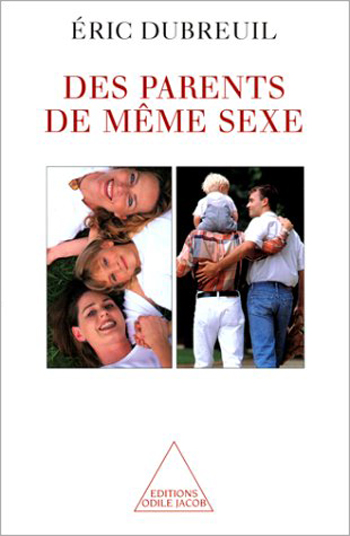
Éric Dubreuil
Parents of the Same Sex
A growing number of gay men and women have founded families and are discovering the joys of parenting. It is estimated that there are approximately 500,000 families headed by parents of the same sex. They have brought the issue of homosexual parenting into the public arena, shattering traditional notions of the family and raising fundamental questions of filiation, adoption, and medically assisted procreation (artificial insemination, surrogate mothers) which go beyond the sphere of homosexuality and concern the future of our societyand therefore of all of us. Based on 29 interviews, including seven of children and teenagers, the book explores the little-known lives of same-sex-parent families.
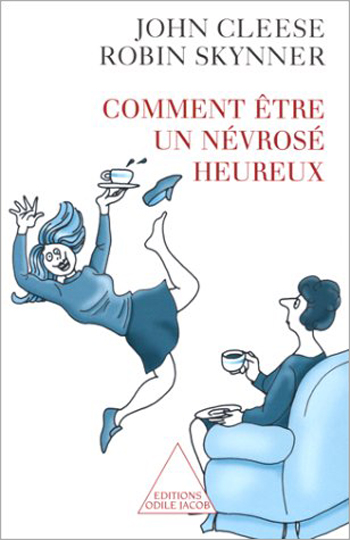
John Cleese, Robin Skynner
Life and How to Survive It
In Life and How to Survive It, the authors have given us more than 400 pages of lively, tonic humour. Their subject is the joy of living and the conditions required to enjoy life to the full. Proceeding by ever-larger concentric circles, the authors successively discuss happy families (brilliant!), companies that allow their employees to fulfil themselves, and finally countries where life is pleasurable. This is British humour at its best, brilliantlyand hilariouslyillustrated. British comic actor John Cleese is famous for the cult television series Fawlty Towers, which he co-authored and starred in. Robin Skynner is a psychotherapist specialising in group therapies.