Catalog All books
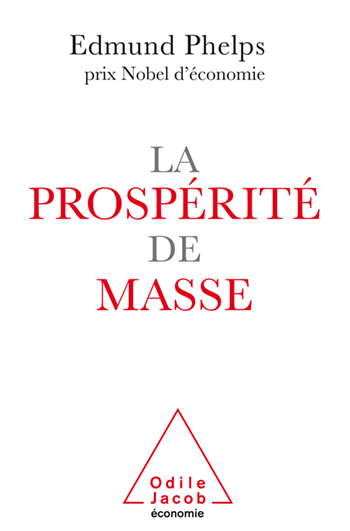
Edmund Phelps
Mass Prosperity
A profound reflection, at the meeting-point of economics and psychology, on the forces of innovation and economic well-being and the motivations of both. A view of innovation that confronts many accepted ideas — the Schumpeterian view of the entrepreneur, the development of science as a source of innovation, and so on — and which needs to be debated.
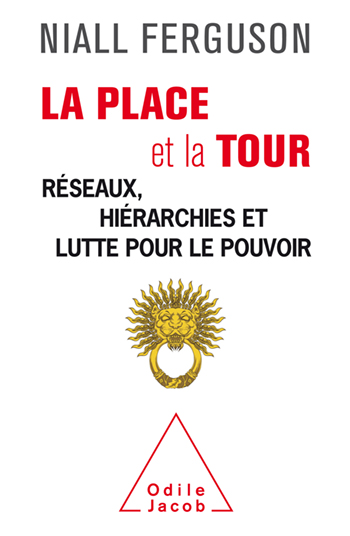
Niall Ferguson
The Square and the Tower Networks, Hierarchies and the Struggle for Global Power
Most history is about the people at the top of the towers of power. But what if the real action is in the social networks down below, in the town squares ? Niall Ferguson brilliantly recasts past and present as an unending contest between hierarchies and networks.
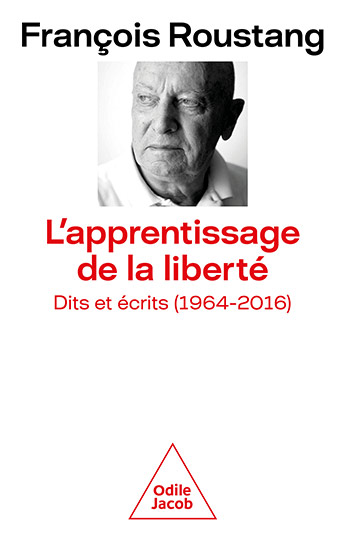
François Roustang
Learning to Be Free Spoken and Written Words (1964-2016)
The first complete volume that traces the famous therapist’s career path and embraces his entire intellectual legacy, which is a source of new and fruitful perspectives in psychotherapy.
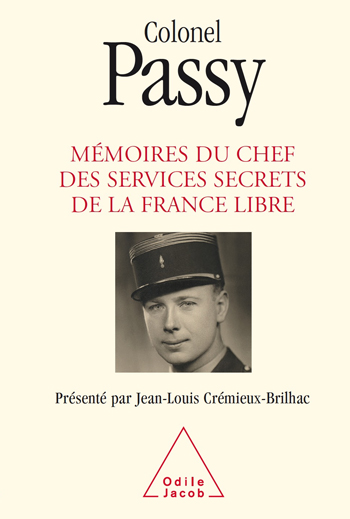
Colonel Passy
Colonel Passy Memoirs of the Chief of the Secret Services of a Liberated France
These two volumes constitute a new edition of Colonel Passys memoirs, which were first published by Plon in a three-volune limited edition (Deuxième Bureau-Londres; 10 Duke Street-Londres; Missions Secrètes en France). The new edition has been presented and annotated by historian Jean-Louis Crémieux-Brilhac, a specialist in the period. André Dewawrin, alias Colonel Passy, headed the Bureau de Contre-espionnage, de Renseignement et dAction (BCRA) of the Free French in London, from 1940 to 1944. He became General Koenigs chief of staff, in 1944. A former student at the prestigious Ecole Polytechnique, he headed the department of research and study for the French Ministry of Defence after the war.
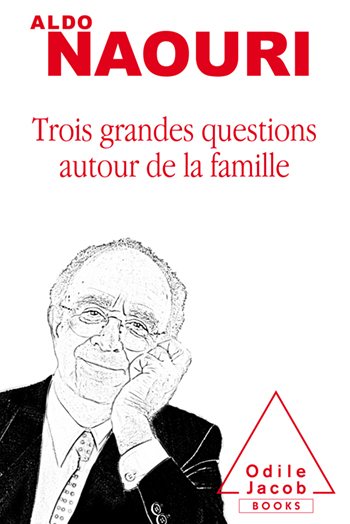
Aldo Naouri
Three Questions On The Family
Aldo Naouri’s complete reference work! The fruit of all his experience related to the fragile and essential parent-child relationship
Daniel C. Dennett
Consciousness Explained
What is it that transforms a small piece of matter into an animated being? What is it that gives to certain physical structures the enigmatic privilege of feeling sensations and having experiences? Conscience. But what do we know about conscience? Daniel C. Dennet proposes a new explicative model founded on the modern revelations of psychology, neurology, and artificial intelligence. Daniel C. Dennett directs the Center for Cognitive Studies at Tufts University. He is one of the leaders in the philosophy of the spirit in the United States.
Henry Laurens
Ernest Renan, Science, Religion and the French Republic
A tribute to the great nineteenth-century French scholar Ernest Renan, with contributions by experts from diverse fields

Philippe Conticini, Jacques Fricker
Eat Desserts Freely Pleasure Without Weight Gain
Highly unusual, delicious desserts, created by one of the most creative pastrycooks at work today. Easy-to-make desserts that open the way to creative improvisation. Light recipes: believe it or not, it is possible to eat marvellous desserts made with real sugar and butter without gaining weight. Jacques Fricker explains how you can stay in shape and eat your favourite desserts without losing your figure or your health. Philippe Conticini works for the Petrossian restaurants in Paris and New York. Jacques Fricker is a nutritionist at the Hôpital Bichat, in Paris.
Steven Pinker
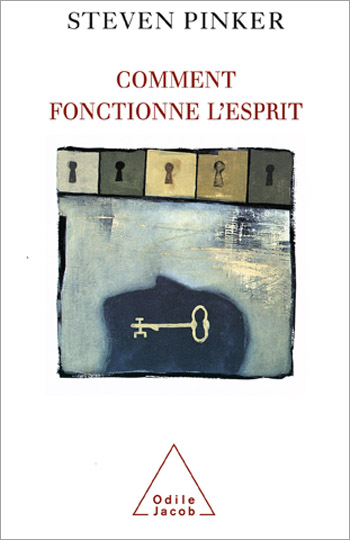
How the Mind Works
In his new book, Steven Pinker studies the human mind. What is it? How did it evolve? How does it enable us to see, think, feel, laugh, interact with others, have aesthetic experiences, and reflect on our own lives? This is the long-awaited synthesis encompassing all the major explanations offered by evolutionary biology and the cognitive sciences concerning mental life of human beings. Steven Pinker heads the Center of Cognitive Neurosciences at the Massachusetts Institute of Technology. He is the author of the highly acclaimed Language Instinct.